
Home Organizer Help for First-Time Homeowners in Norman: Cleaning Services Oklahoma City Guide
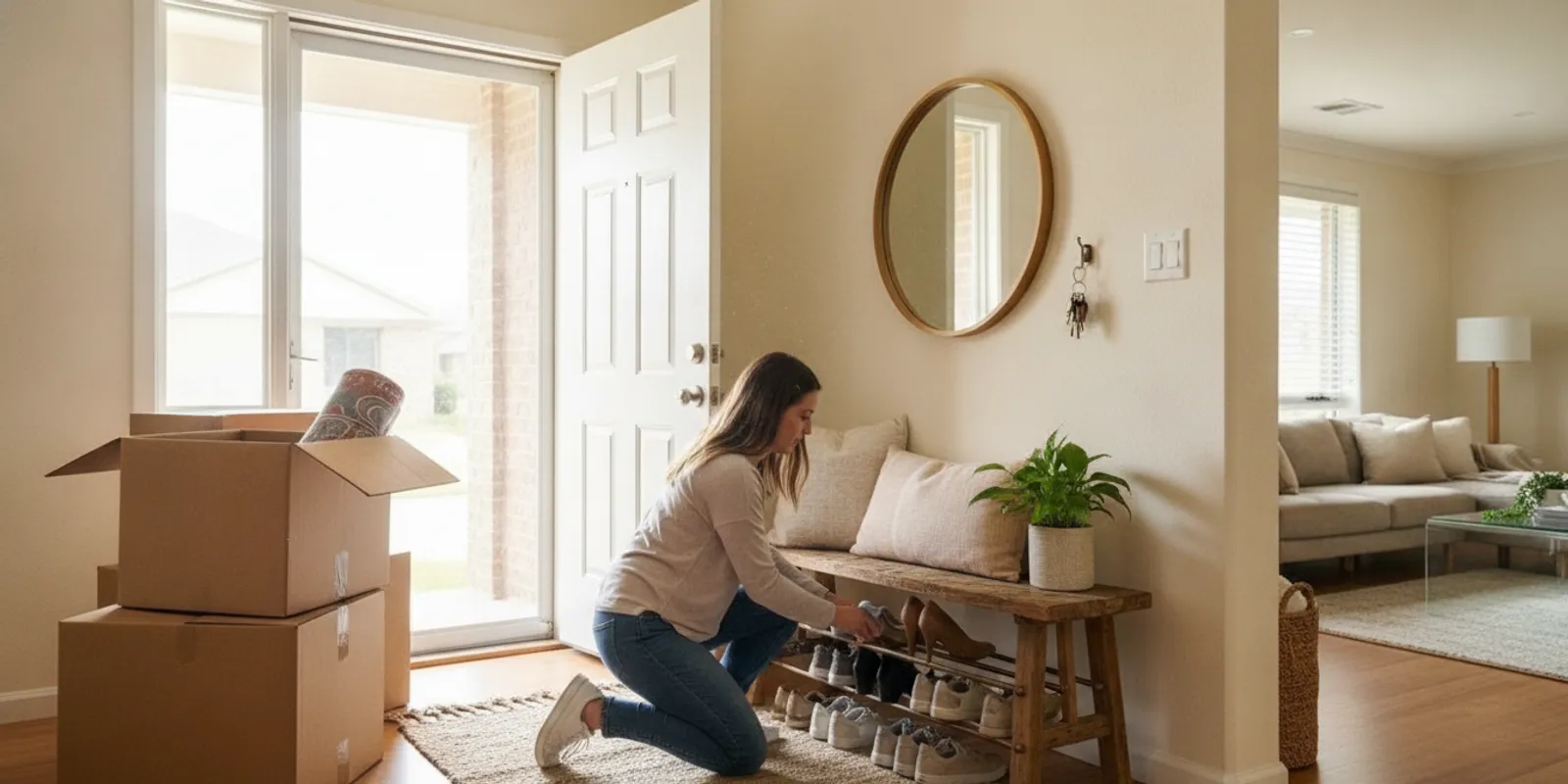
Moving into your first home is exciting, but unpacking can make every room feel like a project at once. If you are looking for cleaning services Oklahoma City households can use while settling in, start by deciding which tasks you actually need: organizing creates a place for belongings, while cleaning addresses dirt and surfaces. A home organizer near you may help turn a few priorities into a workable plan, without requiring you to finish the whole house in a weekend.
What should you decide before unpacking everything?
Take a slow walk through the home before opening boxes. Notice where you enter, where groceries come in, which closets have shelves, and where household members naturally set down keys and bags. This first look helps you choose storage around real routines instead of filling every available space just because it is empty.
Write down three lists: what needs to work immediately, what can wait, and what needs a decision from someone else. Immediate needs might include clear access to beds, a usable bathroom, food preparation basics, and a safe path through the home. Items that can wait may include décor, hobby supplies, and keepsakes. If an item belongs to another household member, leave the final decision with that person.
Make a small essentials zone for documents, medications, chargers, keys, and other things you cannot afford to lose in a stack of cartons. Keep these belongings together and accessible as you move through the first few days. Mark the boxes that contain daily essentials, but avoid putting irreplaceable or private items in a shared sorting pile.
Before you buy bins, shelves, or drawer dividers, measure the places you may use. Check closet depth, shelf height, cabinet width, and the space under beds. A container that worked in a previous home may not fit here. Use boxes or containers you already have as temporary trials. After living with an arrangement for several days, you will have a more useful list of what, if anything, to purchase.
Which areas deserve attention first?
Choose areas according to how often you use them, not how impressive they will look when finished. For many households, a helpful sequence is the entry, kitchen, bathroom, bedroom, and then storage areas used less often. Change the order if a different routine matters more in your household. The goal is to make daily life function before taking on optional projects.
Set up a simple entry landing place
Choose one place for keys, mail, shoes, and bags. A tray, a few hooks, or one basket may be enough; you do not need a complete furniture set to make the entry useful. Keep the route from the door clear. If the household tends to drop belongings in several places, try moving the landing place closer to the spot where people naturally pause rather than adding more containers elsewhere.
Give incoming mail a simple next step. For example, keep it in one inbox tray and set a regular time to review it, instead of scattering it on the counter. Separate paperwork that needs action from material you can recycle, and keep important documents in a secure, known location. A small system works best when every person understands where things go.
Make the kitchen work before perfecting it
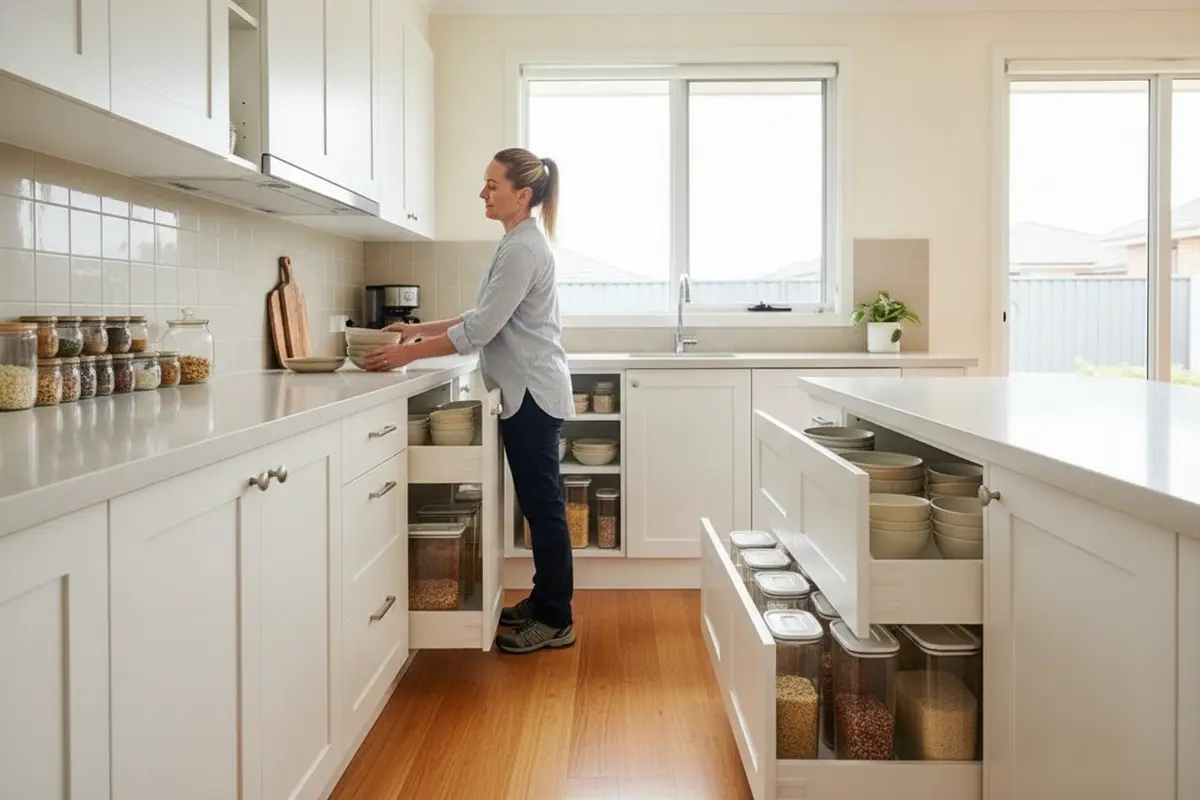
Unpack the items you use for ordinary meals first: a few dishes, drinking glasses, basic cooking tools, and the pantry goods you reach for most. Put them near the place where you use them. Keep a clear patch of counter for preparing food. Specialty appliances and entertaining pieces can wait until the everyday setup is comfortable.
Group belongings by task. Put mugs and breakfast items near the area where you prepare breakfast, and keep cooking tools near the stove if the layout allows. Leave heavier or frequently used items at a convenient height. Check what is already inside cabinets before purchasing organizers; sometimes shifting a shelf or moving rarely used items is enough.
Make the bathroom and bedroom comfortable
In the bathroom, keep daily toiletries together and choose a dry, reachable place for towels. If storage is limited, place only the items used every day within easy reach and put extra supplies elsewhere. In the bedroom, make the bed, set up a basic clothing routine, and unpack the essentials you need for the next morning. Decorative items can wait until you know how you want to use the room.
Think about access and safety as you place things. Do not create a pile in front of a door, stairway, or frequently used closet. Keep cleaning products and other household supplies in a consistent location that household members can find, while following product labels and keeping them away from children or pets where appropriate.
How can you sort belongings without spreading them everywhere?
Work in a small, defined zone: one drawer, one shelf, one box, or one section of a counter. Emptying an entire room at once can leave belongings covering the floor and make the room harder to use. Decide what you want to finish before starting, such as “put away the everyday dishes” rather than “complete the kitchen.”
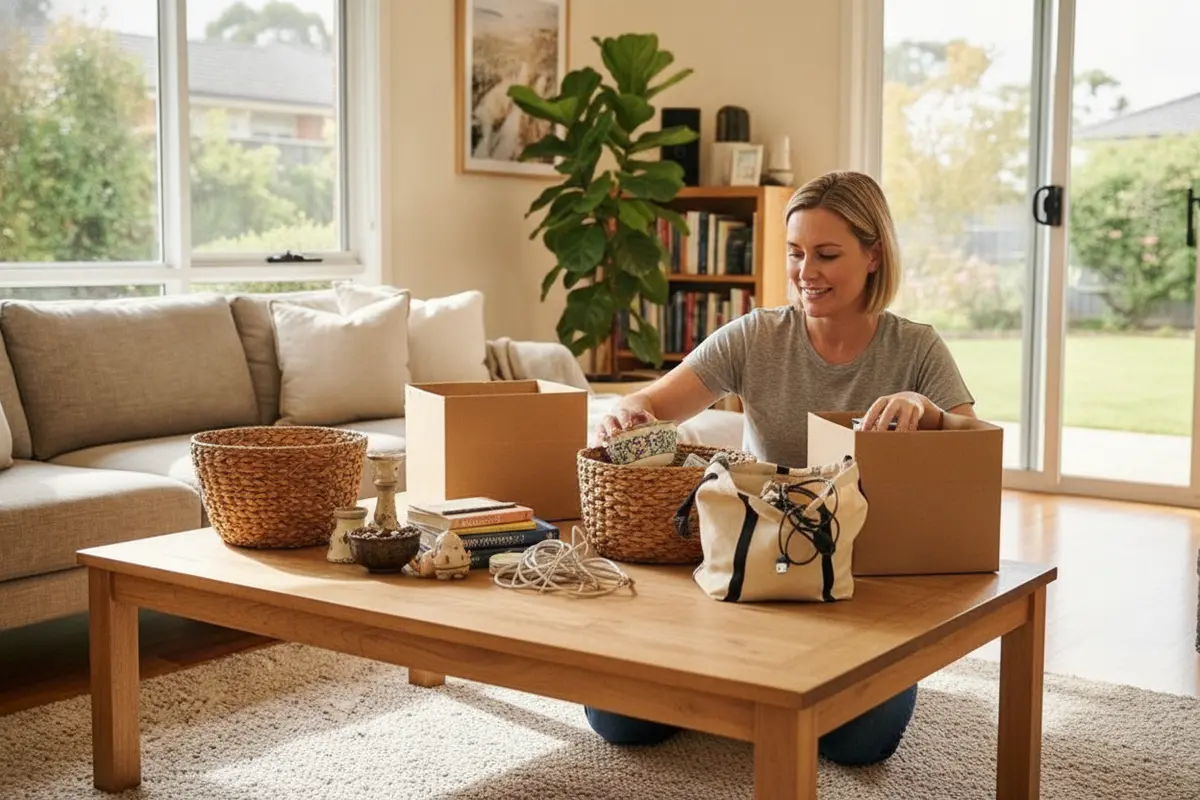
Prepare a few temporary categories: keep in this room, move to another room, give away or donate, recycle or discard where appropriate, and review later. Keep the categories physically separate. A tote or box can contain items to relocate so you do not make repeated trips for each object, but do not let the tote become a permanent mixed-storage bin.
For uncertain items, use a clearly marked review box and set a date to revisit it. That gives you time to decide without stopping the entire session. When you return to the box, ask practical questions: Have I used this recently? Do I have a clear place for it? Would I choose to keep it if I were unpacking it today? There is no need to rush a decision about family keepsakes or belongings with personal meaning.
Invite household members to sort their own personal items when possible. For shared belongings, agree on the categories before anyone starts. A simple example: one person handles their clothing while another unpacks kitchen tools; both pause before moving shared or sentimental items. This avoids turning an organizing session into an argument about who owns what.
What organizing systems are easy to maintain?
A useful system is easy to understand and convenient to repeat. Labels can help when several people share a closet or storage area, but a label cannot fix a location that is difficult to reach. Give frequently used belongings the easiest homes. Put occasional-use items on higher shelves or in less central storage, as long as you can still access them safely.
- Use one home for daily essentials. Pick a consistent place for keys, wallets, and other items that leave the house with you.
- Group things by routine. Keep the items for a common task together, such as breakfast supplies or the tools you use for a regular household chore.
- Let shelves set limits. A drawer or shelf provides a natural boundary. If it is full, review what is inside before adding another container.
- Choose open or closed storage deliberately. Visible containers make it easier to see what you have; closed storage can make a room feel calmer. Use whichever helps you find and put away items.
- Keep walkways clear. Boxes and baskets should not block doors, stairs, or access to things you use every day.
Try a new setup for a week before deciding that it does not work. Notice where items actually land and which steps people skip. If keys end up on a different surface every day, move the designated tray closer to that spot. If one shelf is difficult for a child or household member to reach, place the items they use somewhere more accessible. Adjust the system rather than adding rules nobody can follow.
How can you plan move-in organizing in manageable sessions?
Give each session a clear beginning and end. Set aside 30 to 60 minutes, choose one zone, and stop when the agreed task is done or the time is up. For example, a first session could clear the kitchen counter and put away daily dishes. A second could sort one entry closet. This approach creates visible progress without requiring you to empty a whole room or make every decision at once.
At the end of a session, return tools to their place, carry the relocation box to its destination, and write down the next small task. If you find an item that needs another person’s decision, set it aside in a designated review spot rather than interrupting the whole session. Take a short note of what storage you lack, but wait to shop until the end of the week, when repeated needs are easier to spot.
A simple first-week plan might look like this: Day one, identify essentials and clear paths; day two, set up the bed and bathroom; day three, unpack daily kitchen items; day four, create an entry landing place; day five, sort one closet or drawer. The sequence is only a starting point. If work schedules or family needs change, move a task to another day instead of treating the plan as a deadline.
| Approach | Best fit | What to decide first |
|---|---|---|
| Organize it yourself | You have time to make decisions in small sessions. | Choose one zone, set a time limit, and use existing containers while testing the layout. |
| Ask household members to help | Several people share belongings or routines. | Agree on sorting categories and let each person decide about their personal items. |
| Ask for organizing support | You want help making a plan or working through a defined area. | Name the room, your desired outcome, and any belongings that should not be moved. |
| Request residential cleaning | Surfaces or rooms need cleaning while you settle in. | Describe the home, its condition, and the areas you want included in a quote. |
How are organizing and residential cleaning different?
Organizing is the process of deciding what to keep, sorting belongings, and choosing where they belong. Cleaning addresses dust, dirt, and residue on surfaces. One does not automatically complete the other. For example, clearing a bathroom counter and deciding where toiletries should live are organizing tasks; wiping the counter after it is clear is a cleaning task.
You can do the tasks in an order that suits the room. In a crowded kitchen, first clear and sort one counter, then clean the open surface, then put back the things that belong there. If you want help with both kinds of work, explain that clearly when discussing the project. Ask what is included so your expectations match the service scope.
Maid OK offers residential cleaning and organizing services in its Oklahoma City-area service region, including Norman. Its organizing service information can help you consider whether support with a particular area makes sense. The company is family-owned and established 1987. For household planning, the Certified Financial Planner Board of Standards shares first-time homebuyer planning strategies, including considering total housing costs and an emergency reserve; those are useful reminders to leave room in a new-home budget for more than the purchase itself.
When might outside organizing help be useful?
Consider asking for help if you are not sure where to begin, have several rooms competing for attention, or want an outside perspective on the storage you already have. You do not have to hand over decisions about personal belongings. Decide in advance which choices you want to make yourself, which areas can be rearranged, and whether any items should stay untouched.
Make the goal specific. “Make the entry usable and set up the kitchen for weekday meals” gives everyone a clearer starting point than “organize the whole house.” Share practical constraints: how much time you have, what needs to remain accessible, which household members should participate, and whether a room or cabinet is off limits.
Think about your current bottleneck. If the boxes are labeled but you cannot work out where everyday items belong, you may need an organizing plan. If items already have homes but surfaces need attention, residential cleaning may be the more relevant request. If you are unsure, describe what you see and ask what kind of help fits the task rather than guessing at a service name.
If your main need is a clean home while you settle in, review Maid OK's one-time residential cleaning option. If ongoing help would make the home easier to maintain after move-in, see its recurring home cleaning information. Organizing, a one-time visit, and recurring support address different needs; ask about the scope instead of assuming they are interchangeable.
What should Norman homeowners ask before requesting help?
A useful inquiry gives the service provider enough context to understand the work you want. Describe the home in straightforward terms, name the rooms, and explain whether you are seeking organizing, cleaning, or both. You do not need to have every box unpacked before asking a question. A clear outline of the current situation is more helpful than trying to make the home look finished first.
- Which rooms or specific areas are included in the work?
- What should I clear, put away, or leave accessible beforehand?
- How is a quote determined, and what might change the estimated range?
- Should I set aside fragile, private, or personally important belongings?
- How should I explain my priorities and the home's current condition?
- If I need organizing support, what decisions should I plan to make during the session?
Maid OK provides quote-based residential pricing as a range. The stated minimum is $95 for two hours, with $40 for each additional hour; the final scope can vary with the home's actual condition. Confirm current details and the work included when you request a quote. You can review the service-area information to see the local coverage context, the company background, and its house cleaning FAQs before reaching out. For a specific question, use the residential contact page.
When comparing options, write down what matters most: a defined project, clarity about what is included, timing that fits your household, and a quote that describes the requested work. If you request help with a single room, say so; if the project may include several areas, mention that before you make plans. This makes it easier to understand whether the proposed next step fits your priorities.
Call Maid OK to discuss your home
Frequently Asked Questions
Should I organize before or after unpacking?
Start by identifying essentials and deciding where daily routines will happen. Unpack the most-used belongings first, then organize one small zone at a time. Refine the layout after you have seen how you use the space.
Do I need to buy organizers before moving in?
Usually, it helps to wait until you have measured your storage and tested where belongings fit. Use available containers temporarily, note what is missing, and buy an organizer only when it solves a specific problem.
Can organizing and cleaning happen during the same project?
They can be planned around the same room, but they are different tasks. Sorting belongings and choosing homes for them is organizing; cleaning addresses surfaces. Explain which work you want done and clarify the proposed scope before arranging help.
What if I feel overwhelmed by the number of boxes?
Choose one small area and one realistic outcome, such as clearing a counter or setting up the entry. Stop when that task is complete. If you need another perspective, identify the room or routine you want help with first.
Your first home does not need to be perfectly arranged right away; a few practical systems can make daily life easier while you settle in.
Need a hand with the actual cleaning? Get a free Maid OK quote.