Commercial Cleaning Services: Scope, Frequency, and Fit

Choosing commercial cleaning services is not just a matter of finding someone who can vacuum and empty trash. A useful plan should match the way your facility operates, the areas people use most, and the times when cleaning can happen without disrupting work. Comparing scope, frequency, and provider fit before you request a proposal makes it easier to choose service that stays dependable after the first visit.
Explore Maid OK commercial cleaning services
For Oklahoma City businesses, the right cleaning program may include scheduled office cleaning, floor care, restroom cleaning, or a combination of services. Maid OK serves businesses across the Oklahoma City metro from its Norman headquarters, providing a local option for companies that want a clear plan and consistent communication.
How should a business prepare before comparing commercial cleaning services?
A short facility brief makes provider comparisons more useful. Before requesting proposals, identify the building's approximate size, number of floors, restrooms, entrances, break rooms, carpeted areas, hard floors, and spaces that are not included. Note the busiest periods, preferred service windows, access restrictions, and any upcoming event or occupancy changes.
It also helps to separate needs into three groups:
- Every-visit priorities: areas that must be ready after each scheduled service, such as restrooms, entrances, trash points, and common areas.
- Periodic priorities: work that can be scheduled less often, such as detailed floor care, baseboards, fixtures, or carpet treatment.
- Conditional needs: tasks triggered by events, weather, renovations, unusual traffic, or a change in how a room is used.
This list prevents a proposal from being judged on a broad label alone. It also gives the provider a practical starting point for a walkthrough. If two proposals cover different spaces or use different service frequencies, the business can compare the plans fairly instead of treating the lower price as the better value.
Bring operational questions to the walkthrough as well. Who opens the building? Where can supplies be stored? Which rooms require notice before entry? Who reports an issue, and how will the provider confirm that it was resolved? Answering these questions early reduces the chance that a workable cleaning plan will fail because of access or communication gaps.
What are commercial cleaning services?
Commercial cleaning services are professional cleaning programs designed for workplaces and other business facilities. Unlike a one-time tidy-up, commercial service is organized around the building's recurring needs. A provider may handle routine cleaning on a set schedule, periodic detail work, or both.
The exact scope depends on the property. An office may need attention in reception areas, workspaces, conference rooms, break rooms, restrooms, and floors. A retail location may prioritize entrances, customer-facing floors, checkout areas, and high-traffic zones. A small business may need a focused restroom and common-area plan rather than full-building service on every visit.
A strong proposal should make those choices visible. It should explain which areas are included, which tasks happen on each visit, which services are periodic, and how the team handles changes in building use.
Start with scope: what should the cleaning plan cover?
Scope describes the work included in the service. It is the foundation for comparing proposals because two providers can use similar words while offering very different levels of coverage. Ask for a written list of spaces and tasks instead of comparing only a monthly price.
Routine areas and touchpoints
Most recurring commercial cleaning plans begin with the areas employees, visitors, and customers use regularly. Depending on the facility, routine work may include:
- Emptying trash and replacing liners
- Cleaning and disinfecting restrooms
- Wiping high-touch surfaces
- Cleaning break rooms, kitchens, or employee common areas
- Vacuuming carpets and mats
- Sweeping and mopping hard floors
- Maintaining entryways, reception areas, and other visible spaces
- Replenishing agreed-upon restroom or facility supplies
Not every building needs every task on every visit. The important question is whether the provider can connect the work to how your facility is used. A busy entrance may need more attention than a private office, while a conference room may need service before scheduled events rather than every day.
Periodic detail work
Some tasks are better scheduled monthly, quarterly, seasonally, or as needed. Examples may include more detailed floor care, carpet cleaning, cleaning baseboards and light fixtures, removing buildup in restrooms, and addressing lower-traffic areas.
Ask how periodic work is tracked. If it is not written into the plan, it can be easy for detail tasks to disappear behind daily priorities. A dependable provider should be able to explain when periodic work is recommended, how it is scheduled, and who confirms that it was completed.
Special areas and business requirements
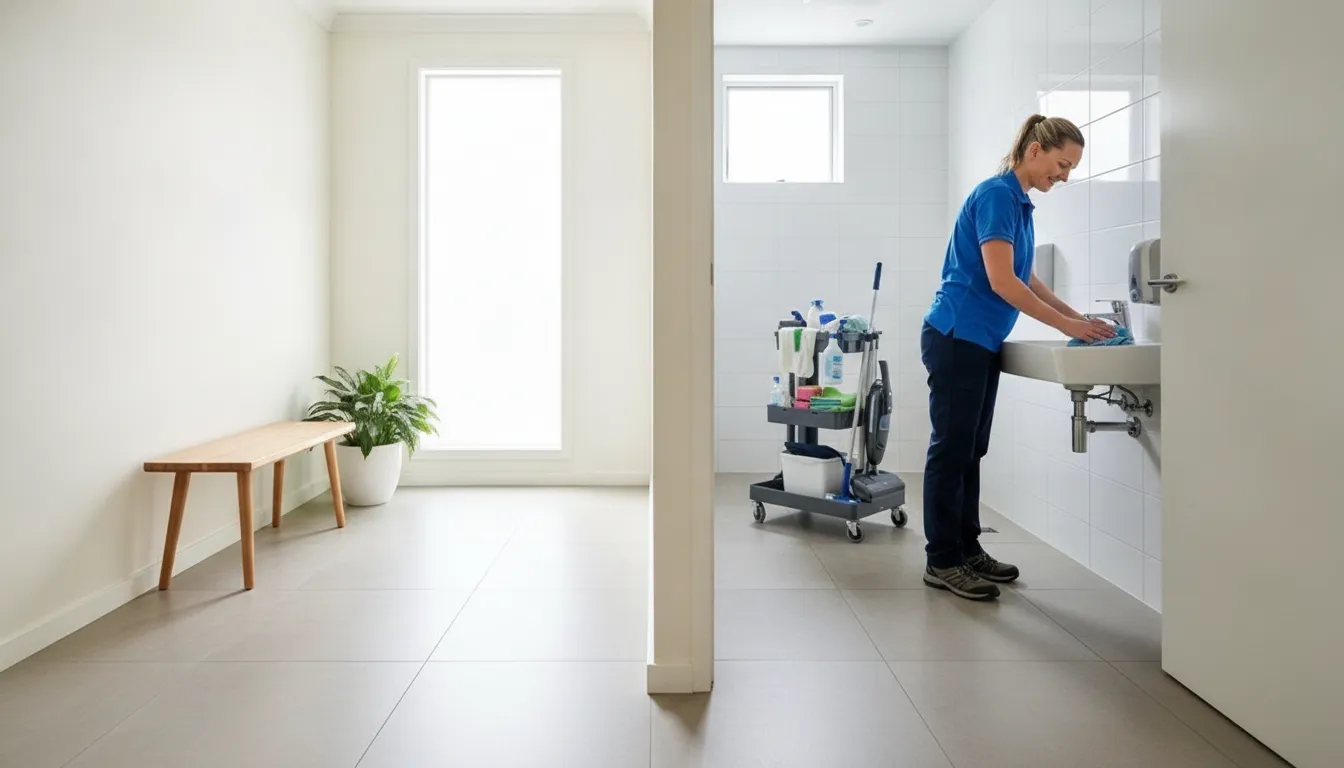
Before comparing bids, identify areas that need special handling or extra attention. These might include public-facing entrances, employee kitchens, multiple restrooms, stairways, hard floors, carpeted areas, or rooms that are accessed only at certain times.
Also note practical requirements such as alarm procedures, key or access control, supply storage, elevator access, and preferred communication. These details affect whether a provider can fit into your operation smoothly. They should be discussed before the proposal is finalized, not discovered during the first cleaning.
How often should a business schedule cleaning?
Cleaning frequency should follow traffic, occupancy, surface needs, and business hours. There is no universal schedule that fits every office or commercial property. A provider should recommend a cadence based on your facility rather than automatically assigning the same frequency to every customer.
| Facility condition | What it may suggest | Questions to ask |
|---|---|---|
| Lower-traffic office with limited public access | A focused recurring schedule may cover common areas and restrooms efficiently. | Which tasks happen every visit, and which are periodic? |
| Busy office with frequent employees and visitors | More frequent attention may be needed for restrooms, entrances, break rooms, and touchpoints. | How will the plan adjust during busy seasons or events? |
| Retail or customer-facing facility | Entrances, floors, customer areas, and visible surfaces may need priority. | Can service happen before opening, after closing, or during a low-traffic period? |
| Mixed-use or larger property | A phased scope may be more practical than treating every space identically. | How will the team document coverage across the building? |
Frequency can also vary by area. Restrooms and entrances may need attention more often than private offices. A business may choose a regular baseline service with additional floor or detail work on a separate schedule. The best plan is the one that keeps important areas ready without paying for an impractical level of service in spaces that receive little use.
When reviewing a recommendation, ask what observation led to the proposed frequency. A clear answer should reference traffic, occupancy, surface type, customer expectations, or the condition of specific areas. It should not rely only on a generic package name.
See commercial cleaning options for your facility
How do you compare commercial cleaning providers?
Once scope and frequency are clear, compare how each provider will deliver and check the work. A low proposal can become expensive if responsibilities are vague, communication is poor, or the schedule does not fit your hours.
Look for a clear scope of work
A useful proposal should identify the facility areas included, the tasks performed, the service frequency, and any periodic work. It should also make exclusions or add-on services clear. This gives both sides a shared reference point if priorities change.
Ask how quality is checked
Find out who reviews completed work and how concerns are handled. Maid OK uses a 49-point inspection as part of its quality process and offers a 100% satisfaction guarantee with a 48-hour resolution promise. These are useful questions to ask any provider: What does the inspection cover? Who follows up? How quickly can a missed task be corrected?
Confirm supplies, equipment, and access
Clarify whether the provider brings cleaning supplies and equipment, or whether your business must purchase and store them. Maid OK provides the supplies and equipment for its service. You should also discuss access procedures, preferred arrival windows, alarm instructions, and who receives service updates.
Evaluate flexibility and communication
Your facility may change after a move, renovation, event, staffing change, or seasonal rush. Ask how the cleaning plan can be adjusted and whether you have a consistent point of contact. A provider that explains how changes are reviewed is more useful than one that promises a fixed package without discussing your building.
Check professional safeguards
Businesses should ask whether a provider is licensed and insured, how team members are trained, and how quality and security are managed. These questions matter wherever employees, customers, equipment, or confidential materials are present. Maid OK is locally owned, licensed, and insured, with service designed to help businesses focus on their daily work.
What should a commercial cleaning proposal include?
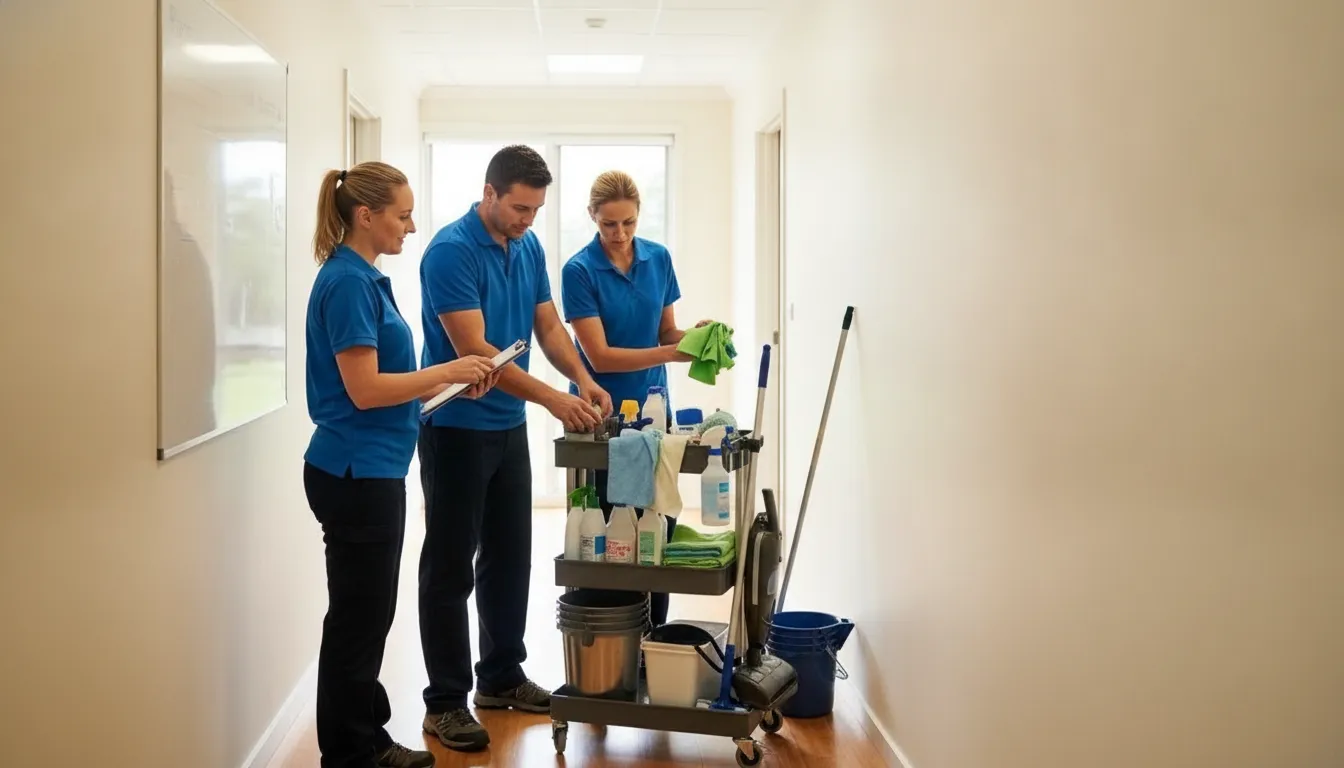
A proposal should be specific enough for a manager to understand what will happen without translating sales language into a work plan. Before signing, look for these elements:
- Facility description: the building type, approximate areas, floors, restrooms, entrances, and other relevant spaces.
- Task list: the routine and periodic work included in the service.
- Frequency: the planned schedule, service window, and any area-specific differences.
- Supplies and equipment: who provides them and how special requirements are handled.
- Access plan: keys, alarms, building contacts, storage, and after-hours procedures.
- Quality process: inspections, communication, issue reporting, and resolution steps.
- Change process: how the scope or schedule can be adjusted as the business changes.
If a proposal does not answer these questions, ask for clarification before comparing the price. A clear scope protects the business and the cleaning team from mismatched expectations.
Request information about Maid OK commercial janitorial service
Frequently Asked Questions
What is included in commercial cleaning services?
Commercial cleaning services may include trash removal, restroom cleaning, wiping high-touch surfaces, break-room cleaning, vacuuming, mopping, and entryway care. The exact scope depends on the facility, its traffic, surfaces, operating hours, and priorities. Ask for a written task list before choosing a provider.
How often should an office be professionally cleaned?
The right frequency depends on occupancy, foot traffic, restroom use, customer access, surface types, and the level of presentation your business needs. A provider should evaluate the building and explain why the recommended schedule fits those conditions.
Do commercial cleaners bring their own supplies?
Some do, and some require the business to provide supplies or equipment. Confirm this before comparing proposals. Maid OK provides supplies and equipment for its commercial cleaning service.
Can commercial cleaning happen after business hours?
Many businesses prefer service before opening, after closing, or during another low-traffic window. Discuss access, alarms, keys, and communication procedures in advance so the schedule works for both the facility and the cleaning team.
How can a business compare commercial cleaning quotes?
Compare the written scope, service frequency, included supplies and equipment, access plan, quality checks, communication process, and flexibility before comparing price alone. A proposal with a clear fit for your facility is easier to manage over time.
Choose a cleaning plan that fits your business
The best commercial cleaning services are not defined by a generic checklist or the lowest initial price. They are built around the facility's actual scope, the frequency each area needs, and the provider's ability to communicate and adjust as the business changes.
Maid OK provides scheduled office cleaning, floor cleaning, and restroom cleaning for businesses across the Oklahoma City metro. The team supplies equipment, uses a 49-point inspection, and backs service with a 100% satisfaction guarantee. Review your facility priorities, then request a commercial cleaning plan that fits the way your business operates.
Need a hand with the actual cleaning? Get a free Maid OK quote.