
Commercial Cleaning for Small Offices: A Better Plan
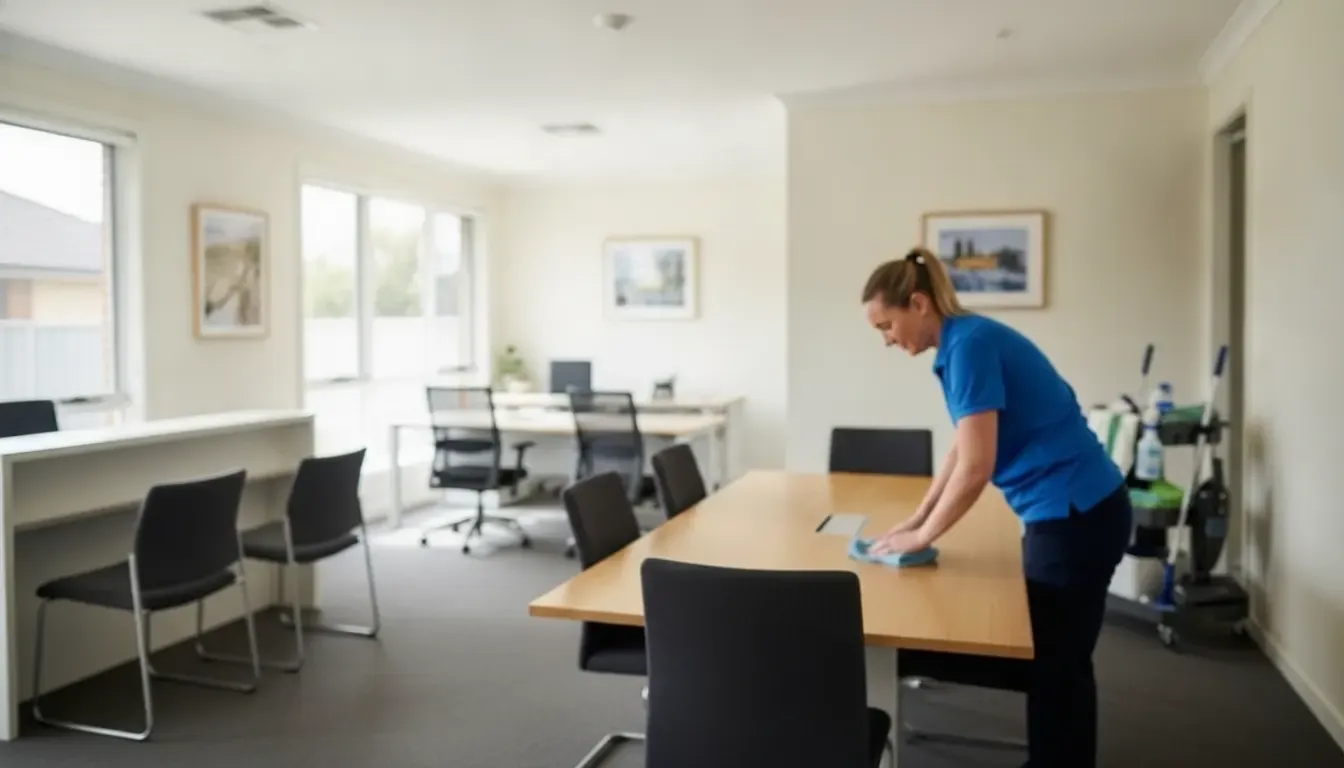
Commercial cleaning works best when it is planned around how an office actually operates, not copied from a generic checklist. A small office may need dependable attention to restrooms, floors, shared surfaces, and break areas without paying for a routine that ignores its traffic patterns or working hours. The right plan gives your team a clear standard, a manageable schedule, and a reliable way to address missed details.
Explore Maid OK commercial janitorial services
Start with the office you need to maintain
Before choosing service frequency, describe the space. A useful commercial cleaning plan begins with the details that change the work, including the approximate size of the office, number of floors, room types, flooring, occupancy, and operating hours.
- Work areas: Note private offices, open workstations, conference rooms, reception areas, and shared desks.
- Shared spaces: List kitchens, breakrooms, entrances, waiting areas, elevators, and corridors.
- Restrooms: Record the number of restrooms, usage levels, and any supply-restocking expectations.
- Flooring: Identify carpet, tile, vinyl, hardwood, or other surfaces so the cleaning approach matches the material.
- Access: Explain entry procedures, alarm requirements, restricted rooms, supply-storage space, and the approved service window.
This profile helps a cleaning company build a scope that fits the office rather than estimating from square footage alone. A compact office with a busy reception area may need a different routine than a larger space with mostly private, low-traffic rooms.
Separate routine cleaning from periodic detail work
One of the easiest ways to create confusion is to treat every cleaning task as if it should happen at every visit. A clearer plan separates routine maintenance from periodic work and assigns each item a realistic frequency.
Tasks that may belong in routine service
- Emptying waste and recycling containers
- Vacuuming or sweeping commonly used floors
- Mopping hard floors in entrances, breakrooms, and other active areas
- Cleaning and refreshing restrooms
- Wiping breakroom counters, sinks, and frequently touched handles
- Dusting reachable surfaces in shared areas
- Spot-cleaning visible marks on entry glass and other high-visibility surfaces
Tasks that may follow a rotation
- Detailed dusting of less-used areas
- High dusting and attention to corners, vents, or ledges
- Baseboard and wall spot cleaning
- More detailed interior glass cleaning
- Carpet care or floor maintenance beyond routine vacuuming and mopping
The exact list depends on the facility and the condition the business wants to maintain. Writing down the difference between every-visit tasks and rotating tasks makes the scope easier to review and reduces the chance that both sides assume a detail is included when it is not.
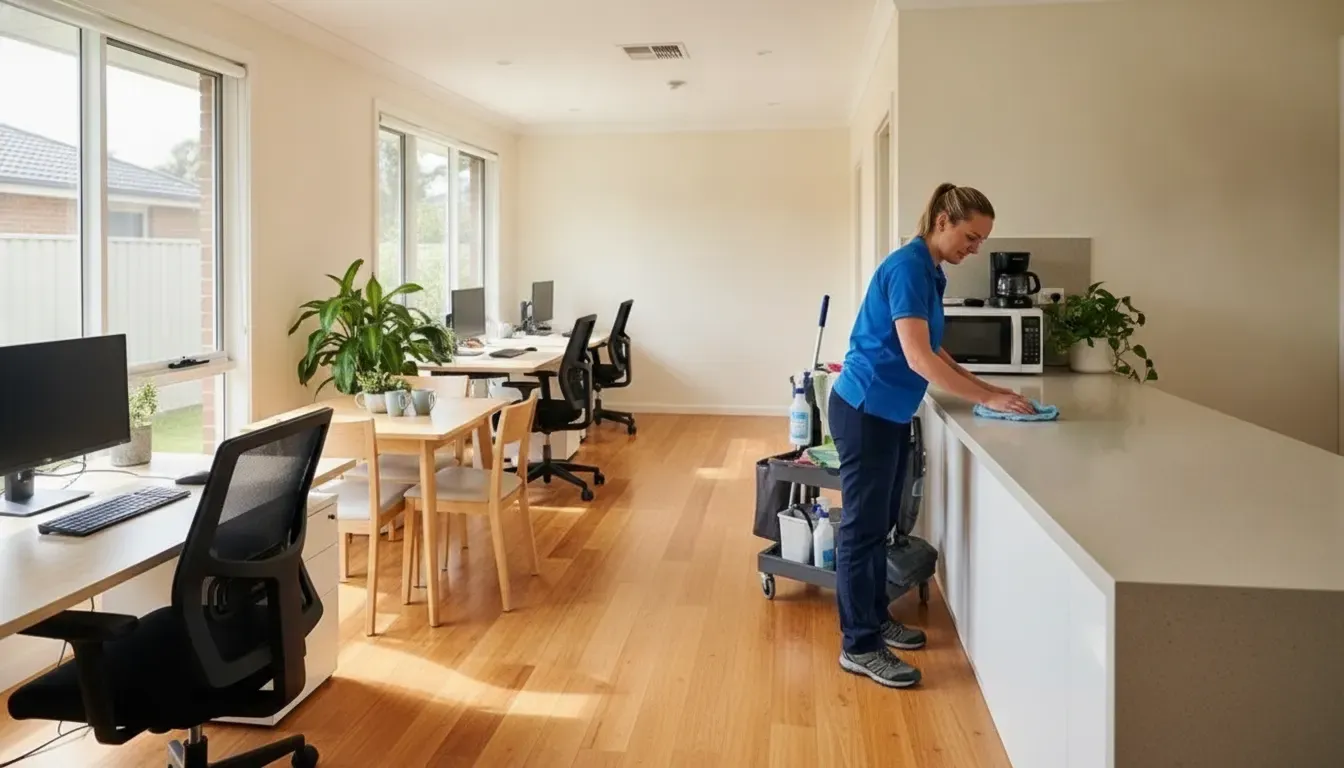
A practical office cleaning plan gives shared areas consistent attention without treating every room the same way.
Choose a schedule that follows office traffic
There is no single best schedule for every small business. The right frequency depends on how many people use the office, how often visitors arrive, how much food is prepared onsite, and which areas need to look ready throughout the day.
For many offices, the most important planning question is not simply how often the cleaning team visits. It is which tasks happen on each visit and which tasks rotate through the month. A lower-traffic private office may need regular dusting and floor care on a rotation, while a busy entrance, restroom, or breakroom may need attention at every service.
Also consider when cleaning should happen. Before-opening, evening, or other after-hours service can reduce interruptions in meetings and work areas. If the office operates across extended hours, the plan may need a defined service window and a clear process for securing the building after the team leaves.
Make responsibilities clear before service begins
A strong commercial cleaning scope explains more than what the cleaning team does. It also identifies what the office manager or occupants need to handle so the service can be completed safely and efficiently.
Clarify the cleaning provider's responsibilities
- Areas and surfaces included in routine service
- Tasks assigned to each visit or rotation
- Equipment and cleaning supplies provided
- Restroom or breakroom cleaning expectations
- Inspection, issue-reporting, and correction process
Clarify the office's responsibilities
- Providing approved access during the service window
- Sharing alarm, key, or entry instructions securely
- Removing sensitive papers and personal items from surfaces that need cleaning
- Identifying restricted rooms, fragile equipment, or surfaces with special requirements
- Communicating schedule changes, events, or temporary access limitations
Clear responsibilities protect the office and the service team. They also make it easier to identify the real cause when an area cannot be completed, instead of leaving the business with an unclear explanation.
Build a simple first-month service plan
A new office cleaning arrangement is easier to evaluate when the first month has a clear starting point. Begin with the areas that affect employees and visitors most, then use early feedback to refine the rotation instead of changing everything at once.
- Walk the space: Identify high-traffic paths, shared rooms, restrooms, break areas, and surfaces that need special care.
- Set visit priorities: Decide which tasks must happen every visit and which can rotate based on use and condition.
- Confirm the service window: Choose a time that limits disruption and document how the team will enter and secure the office.
- Review the first visits: Check whether the agreed routine is keeping priority areas ready and whether any task needs a different frequency.
- Update the scope: Record approved changes so the office and cleaning provider share the same expectations going forward.
Include quality checks and a simple feedback path
Quality should be something the office can observe and discuss, not a vague promise to keep the space clean. Define what a successful visit looks like in practical terms: waste removed, floors free of visible debris, restrooms refreshed, shared surfaces addressed, and agreed rooms serviced.
It is also useful to decide how feedback will be handled. Choose one contact for routine questions, document the area and issue when something is missed, and agree on how quickly the provider should respond. A short inspection after the first few visits can reveal whether the original frequency and task rotation fit the office's actual use.
Maid OK uses a 49-point inspection approach for quality control and backs its service with a 100% satisfaction guarantee and a 48-hour resolution promise. These details give Oklahoma City-area businesses a concrete starting point when comparing service expectations. Review the commercial janitorial service details to see how the company approaches scheduled office cleaning, floors, and restrooms.
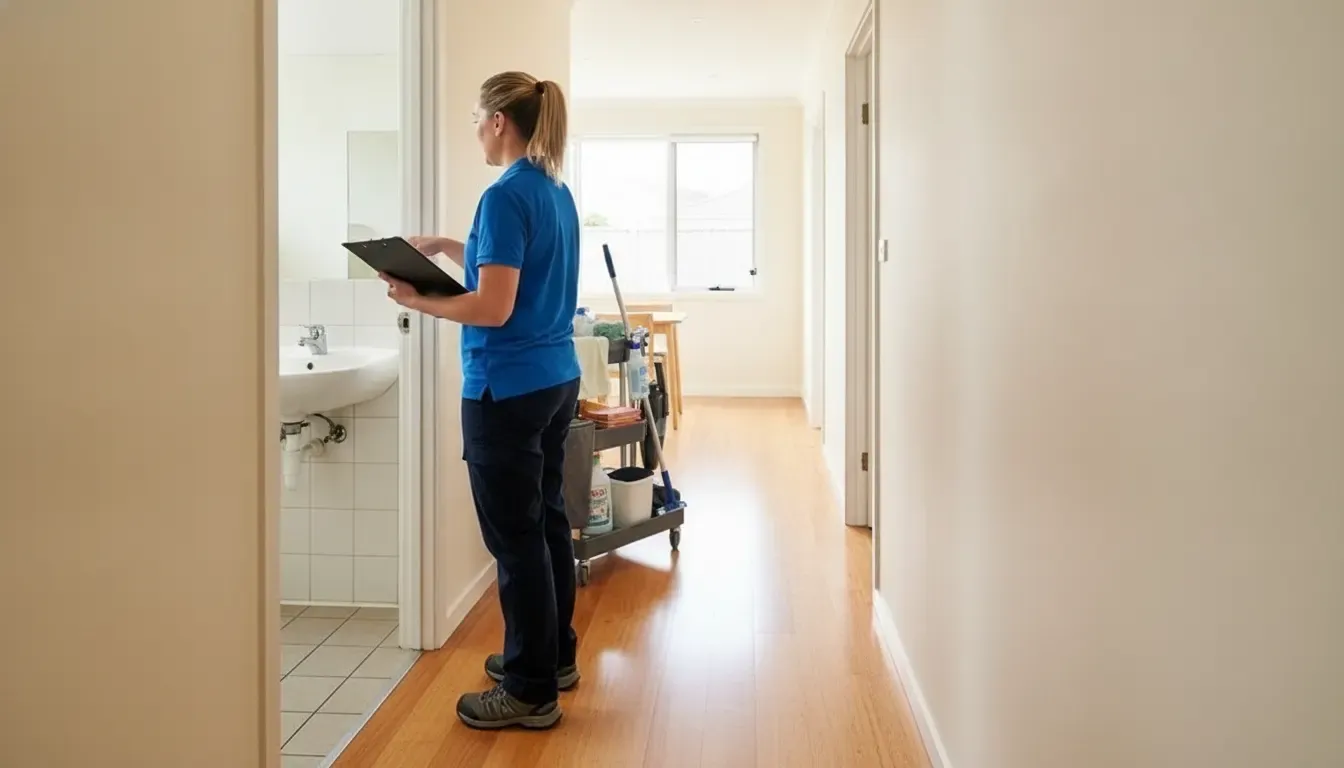
Regular quality checks help a small office confirm that the service plan matches its day-to-day needs.
Questions to ask before choosing commercial cleaning
When comparing providers, ask questions that reveal how the service will work in your particular office:
- What areas and surfaces are included in routine service?
- Which tasks happen on every visit, and which follow a rotation?
- What service windows are available before opening, after hours, or on weekends?
- Does the provider bring the required cleaning equipment and supplies?
- How are keys, alarm instructions, restricted rooms, and sensitive areas handled?
- How does the company inspect completed work and resolve concerns?
- Can the scope be adjusted if occupancy, traffic, or office use changes?
- Is the service flexible enough for a small office without a long-term contract?
These questions shift the conversation away from a generic price comparison and toward fit. The goal is a service plan your team can understand, your provider can deliver, and your office can evaluate over time.
Request a commercial cleaning quote from Maid OK
Frequently Asked Questions
How often should a small office receive commercial cleaning?
It depends on office traffic, occupancy, restrooms, food preparation, and the standard the business wants to maintain. A provider can recommend a routine after reviewing the space and priorities.
Should every office cleaning task happen on every visit?
No. Routine tasks such as waste removal, restroom care, and high-use floor maintenance may happen on each visit, while detailed dusting, high dusting, and some floor-care tasks may rotate.
What should a small office include in its cleaning scope?
Include covered areas, task details, visit and task frequencies, service windows, access instructions, supplies and equipment, exclusions, quality checks, and the process for reporting or changing the scope.
Can commercial cleaning happen after business hours?
Many providers can schedule service outside the busiest work periods. Confirm the available service window, entry procedure, alarm instructions, and building-closing responsibilities before service begins.
How can an office compare commercial cleaning providers?
Compare the clarity of each proposed scope, the provider's quality-control process, communication standards, service flexibility, included equipment, and experience with the type of office you operate.
Plan a cleaner, more dependable office routine
The best commercial cleaning plan is specific enough to set expectations but flexible enough to reflect how the office changes. Start with the facility profile, separate routine work from periodic detail, match service timing to traffic, and define how quality concerns will be handled.
Maid OK provides scheduled commercial janitorial services for businesses in the greater Oklahoma City area, with supplies and equipment provided, flexible service planning, and no-contract options. Get a free quote to discuss a cleaning plan for your office.