Daycare Cleaning Services Oklahoma City: A Facility Guide
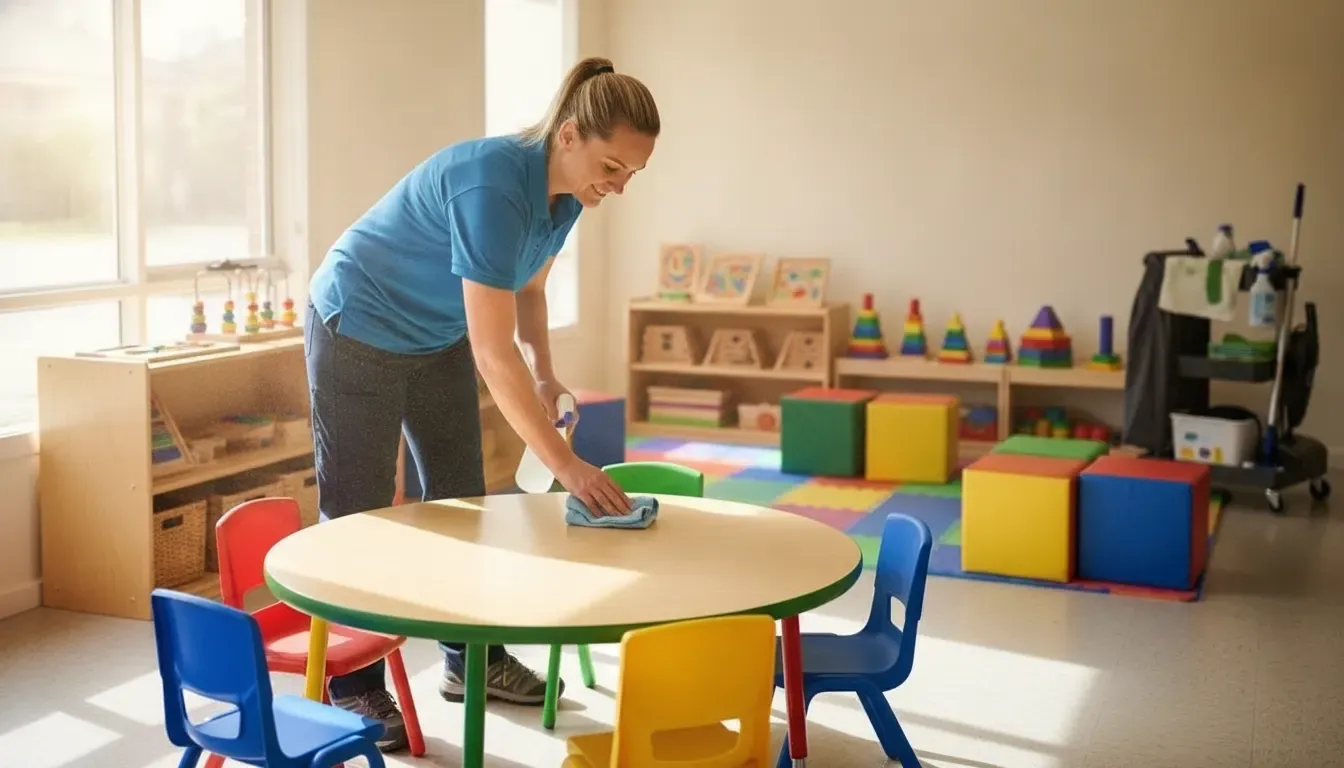
Daycare cleaning services Oklahoma City directors choose need to do more than make a facility look presentable. Classrooms, shared toys, nap areas, changing spaces, and restrooms all have different cleaning demands, while the work must fit around children, staff, drop-off, pickup, and daily activities. A practical cleaning plan helps directors protect the environment children use every day without asking teachers to carry the entire workload.
Explore Maid OK commercial janitorial services
This guide explains what to look for in a daycare cleaning program. It covers room priorities, product questions, procedures, and provider comparisons for the Oklahoma City metro.
How daycare cleaning services Oklahoma City should cover each room
Daycare cleaning services are recurring commercial cleaning programs adapted to child-centered spaces. A complete plan should address visible soil, dust, spills, high-touch surfaces, floors, restrooms, shared items, and the facility's operating schedule. The provider should confirm the exact scope during a walkthrough rather than offering a one-size-fits-all checklist. Directors should also ask how the team records completed work and reports a missed task. A clear scope turns a broad promise into something staff can review without guessing.
Separate routine cleaning from special requests
Routine cleaning usually covers the repeatable work that keeps the facility ready for the next operating day. Special requests may include a detailed floor reset, high dusting, cleaning inside a storage area, or preparing a room after a temporary closure. These tasks should be listed separately so the routine visit does not become overloaded and the occasional work is not forgotten.
| Facility area | Routine priorities to discuss | Questions for the provider |
|---|---|---|
| Classrooms | Tables, chairs, floors, waste, touchpoints, and accessible surfaces | Can the team work around occupied rooms and quiet activities? |
| Play and toy areas | Hard washable items, shelves, mats, floors, and visible spills | Which items stay under daycare staff care, and what label directions apply? |
| Nap areas | Fixed surfaces, floors, doors, shelves, and dust control | Who handles cots, blankets, mats, and laundering? |
| Changing areas and restrooms | Sinks, faucets, toilets, floors, dispensers, waste, and touchpoints | How are products stored, contact times followed, and supplies restocked? |
| Entryways and halls | Floors, tracked-in soil, doors, glass, and high-touch points | Can wet-floor work fit the arrival and pickup schedule? |
This table is not a substitute for a facility inspection. It gives a director a useful conversation guide before requesting a proposal. The final scope should identify included rooms, service frequency, access rules, supply responsibilities, exclusions, and the process for adding a task. It should also name who can approve changes when a room is renovated, a class relocates, or a seasonal event changes traffic.
Ask for the scope in writing before service begins. A written plan protects both sides because the daycare can explain its priorities, while the cleaning team can schedule the right labor and equipment. It also makes provider comparisons more useful. Two companies may both say they clean classrooms, but one proposal may include floors and touchpoints while another only includes emptying waste. Specific language helps directors compare the actual service rather than the label.
The CDC distinguishes cleaning from sanitizing and disinfecting. Cleaning removes dirt and many germs with soap, water, and scrubbing. Sanitizing reduces germs to levels considered safe under applicable standards, while disinfecting targets most remaining viruses and bacteria after cleaning. The right process depends on the surface, the product label, and the facility's policies. Read the CDC guidance on cleaning and disinfecting for the general clean-first principle.
Room-by-room priorities for an Oklahoma City daycare
A useful facility plan identifies what gets cleaned every visit, what receives extra attention during the week, and what needs periodic detailed service. Directors can use the following areas as a starting point for a provider walkthrough.
Classrooms and activity areas
Classrooms combine frequent hand contact with art materials, snacks, books, tables, chairs, cubbies, and low shelving. A cleaning team should discuss dusting accessible surfaces, wiping tables and chair backs, removing visible residue, emptying wastebaskets, vacuuming or mopping floors, and addressing door handles and light switches. The plan should also account for quiet areas where a cleaner may need to work without disturbing a class.
Ask how the provider separates cleaning tools between areas. A clear method for moving from one room to another can help reduce the chance of carrying soil from restrooms or entryways into classroom spaces.
Shared toys and learning materials
Shared toys require more than a quick wipe when they are handled throughout the day. Ask which hard, washable items the cleaning team can service, how items are handled when they are visibly soiled, and which materials should remain under the daycare's own care. Soft items and manufacturer instructions may require a separate facility procedure.
A provider should not promise that every toy or learning material can be treated with the same product. The safer approach is to confirm the material, follow the product label, and coordinate responsibilities with the daycare director.
Nap rooms and rest areas
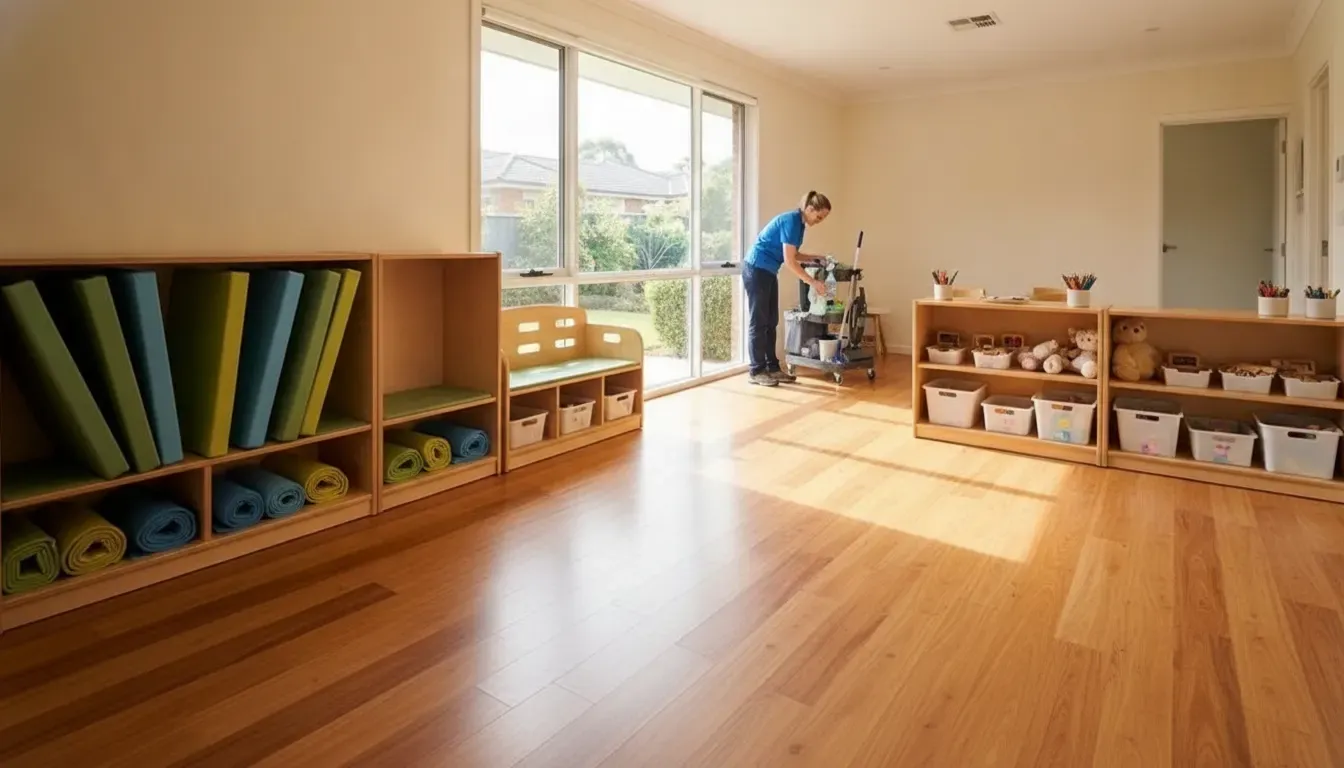
Nap rooms collect dust and contact from mats, cots, blankets, shelves, and floor surfaces. The scope should state which surfaces are cleaned by the commercial team and which items are managed by daycare staff. A provider may be able to clean floors, accessible shelves, doors, and other fixed surfaces while the facility follows its own instructions for laundering or storing child-use items.
Scheduling matters in these rooms. A director may prefer service after nap time, before children arrive, or during another predictable window. The provider should document the preferred timing instead of assuming every room is available at the same time.
Diaper-changing and restroom areas
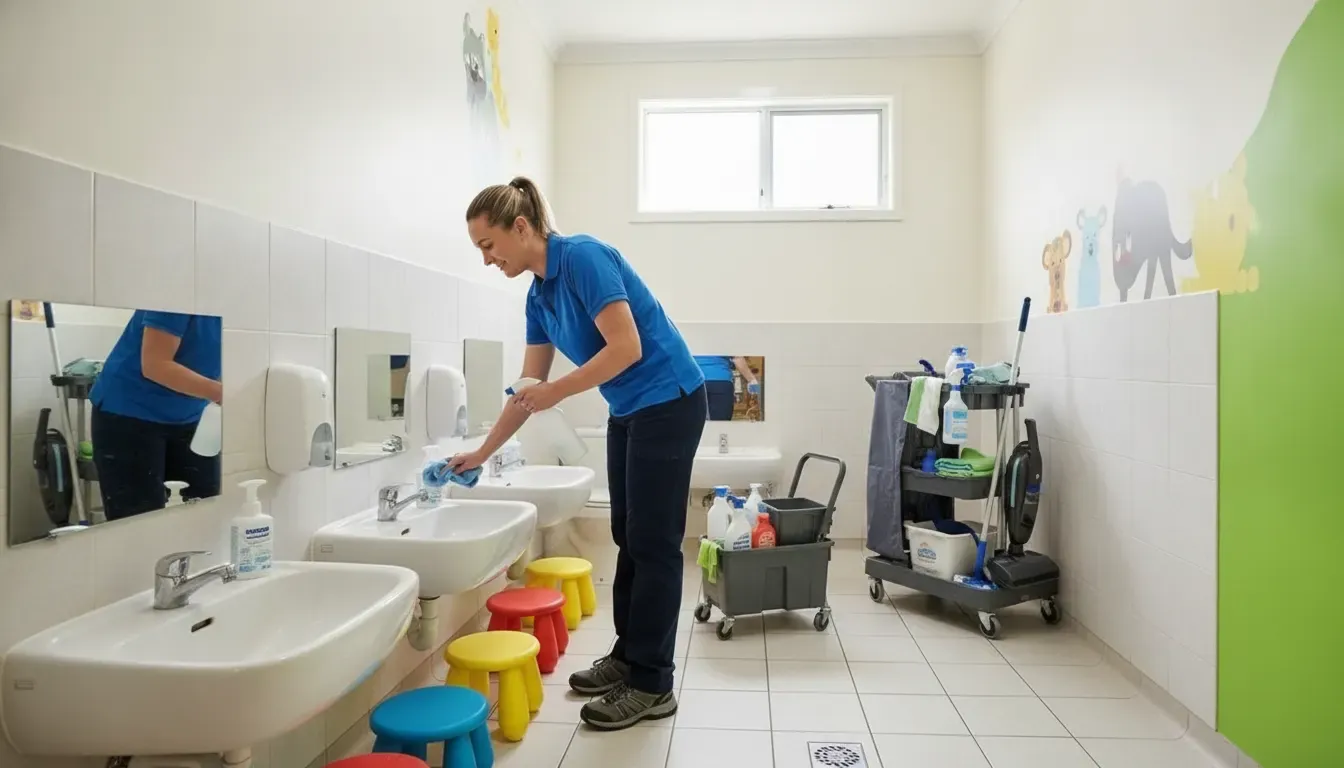
Changing areas and child restrooms need a detailed scope because they combine frequent touchpoints, moisture, waste, and surfaces used by small children. Ask the cleaning company to explain how it handles counters, sinks, faucets, toilet surfaces, floors, doors, dispensers, and waste removal. The plan should also identify who replenishes soap, paper products, and other supplies.
Product instructions matter here. The provider should identify products appropriate for each surface, follow required contact times, and keep chemicals and equipment secured away from children. Avoid vague promises such as "hospital clean" unless the company can define the actual service steps.
Entryways, hallways, and shared spaces
Entryways and hallways receive tracked-in dirt and heavy traffic from children, parents, staff, and deliveries. A practical plan can include sweeping, vacuuming, mopping, spot treatment, glass or door cleaning where applicable, and attention to high-touch points. Directors should ask whether wet-floor work can be completed before opening, after closing, or in sections that keep traffic moving safely.
How should a daycare schedule professional cleaning?
The best schedule depends on enrollment, hours, room use, flooring, staffing, and how much cleaning the daycare handles during the day. A provider should recommend a scope after seeing the facility, not promise a fixed frequency without understanding its size and activity level.
- Daily or frequent service: Consider high-use restrooms, entry areas, floors, waste removal, and other priorities that collect visible soil quickly.
- Routine recurring service: Use a consistent program for classrooms, shared areas, dusting, floor care, and touchpoints that need dependable attention.
- Periodic detailed service: Add focused work for areas that need more time than a normal visit allows, such as floor maintenance, high dusting, or a detailed reset between operating periods.
Many Oklahoma City daycare facilities prefer after-hours cleaning to limit disruption. Others need a combination of service windows, such as an early visit for common areas and a later visit for rooms that remain occupied. Ask whether the provider can document arrival preferences, access instructions, alarm procedures, and areas that must not be entered while children are present.
What should directors ask about cleaning products and safety?
Childcare operators should ask direct questions about products, storage, ventilation, surface compatibility, and label directions. "Child-safe" is not a complete product specification. A responsible provider should explain what it uses, where it uses it, how long a surface must remain wet when required, and how products are kept away from children.
Important questions include:
- Which products are used on classroom tables, toys, floors, and restroom surfaces?
- How does the team follow product labels and required contact times?
- How are cleaning chemicals, cords, and equipment secured during and after service?
- How are tools separated between restrooms, classrooms, kitchens, and entry areas?
- What happens when a surface or material cannot be treated with the usual product?
- Who supplies soap, paper products, liners, or other consumables, and how is restocking documented?
These questions are more useful than choosing a provider based only on a product label such as green, natural, or industrial. The process, training, storage, and communication plan matter just as much as the product name.
See how Maid OK structures commercial cleaning programs
How to compare daycare cleaning providers in Oklahoma City
When comparing commercial cleaning companies, ask each provider to respond to the same scope. This makes it easier to compare service quality rather than comparing vague promises.
- Confirm experience with commercial facilities: Ask how the team approaches occupied, child-centered, and high-touch environments.
- Request a facility walkthrough: The walkthrough should cover rooms, floors, restrooms, access points, storage, and preferred service windows.
- Define the checklist: Get the recurring tasks, periodic tasks, exclusions, and supply responsibilities in writing.
- Discuss communication: Ask who handles schedule changes, missed tasks, access issues, and quality concerns.
- Review trust and quality controls: Ask about insurance, staff screening and training, inspection procedures, and how follow-up is handled.
- Compare the service path: Look for a provider that can explain the quote, schedule, scope, and next step without making unsupported health promises.
Maid OK provides commercial janitorial services for businesses in the Oklahoma City metro, including scheduled office cleaning, floor cleaning, restroom cleaning, supplies, equipment, and a 49-point inspection. Review the Maid OK commercial janitorial service to see how its broader commercial program is structured. Daycare-specific tasks should be confirmed during the quote process so the final scope matches the facility.
What makes a daycare cleaning plan easier to manage?
A cleaning plan is easier to manage when responsibilities are visible. The daycare should know what the cleaning team handles, what staff handles during the day, which rooms are included, and how a concern gets reported. A simple checklist or service summary can help directors verify that recurring priorities are not lost when schedules change.
Access notes also deserve care. If the team needs a key, code, alarm instruction, or restricted-area direction, the facility should share that information through an agreed secure process. The provider should know which rooms contain sensitive materials and which areas require a director's approval before service.
Finally, establish a quality follow-up process before the first visit. Ask when the director should report an issue, who responds, and whether the team reviews recurring concerns. Reliable communication is especially important when a daycare has changing enrollment, seasonal events, or a temporary room closure.
Discuss a commercial cleaning plan for your Oklahoma City daycare
Frequently asked questions
What are daycare cleaning services?
Daycare cleaning services are commercial cleaning programs adapted to classrooms, play areas, shared items, restrooms, entryways, and other childcare spaces. The provider builds a recurring scope around the facility's hours, surfaces, traffic, access rules, and operating priorities. A walkthrough is the best way to confirm what the service includes.
How often should a daycare be professionally cleaned?
A daycare's professional cleaning frequency depends on room use, enrollment, operating hours, flooring, and the work staff handles between visits. High-use areas may need attention more often than low-traffic rooms. Ask a provider to recommend a schedule after reviewing the facility and to separate routine tasks from periodic detailed work.
Can professional cleaners work around daycare hours?
Yes, many commercial cleaning programs can be organized around a facility's operating hours. A daycare may choose after-hours service, early-morning work, or separate time windows for occupied and unoccupied rooms. Confirm access, alarm instructions, restricted areas, and the exact rooms available during each service window.
What should a daycare ask a cleaning company before hiring?
Ask about the facility walkthrough, room-by-room checklist, products, contact times, tool separation, staff screening and training, insurance, supply responsibilities, communication, inspections, and issue resolution. Also ask how the team handles shared toys, nap areas, changing spaces, and surfaces that require manufacturer-specific care.
Does Maid OK provide commercial cleaning in the Oklahoma City metro?
Maid OK provides commercial janitorial services for businesses in the Oklahoma City metro. Its commercial program includes scheduled cleaning, floor cleaning, restroom cleaning, supplies and equipment, and a 49-point inspection. Daycare directors can request a commercial quote to discuss the facility's rooms, schedule, and required scope.
Need a hand with the actual cleaning? Get a free Maid OK quote.