
How to Deep Clean House: A Professional Room-by-Room Guide
How to Deep Clean House: A Professional Room-by-Room Guide
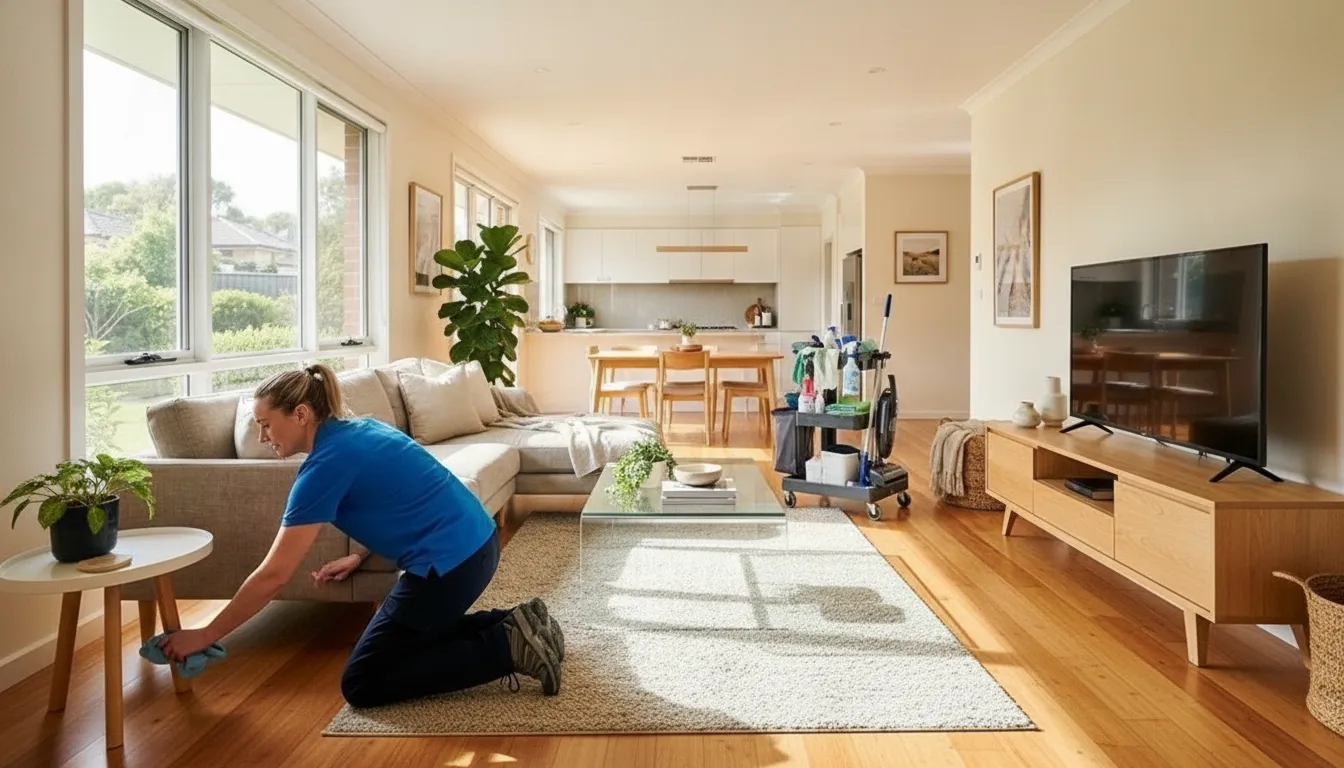
When a home feels clean at first glance but still seems dusty, dull, or overdue for attention, a routine visit may not be enough. To deep clean house rooms properly, work from high surfaces to low surfaces, handle one room at a time, and give extra attention to baseboards, fixtures, appliance fronts, high-touch points, and areas that everyday cleaning skips. For homeowners in the Oklahoma City metro, that method creates a practical reset before a new season, a move, an event, or a demanding stretch of family life.
Get a free residential cleaning quote from Maid OK
Short answer: A whole-house deep clean starts with preparation, follows a top-to-bottom room-by-room sequence, uses surface-appropriate techniques, and ends with floors plus a final inspection. DIY cleaning works when you have the time, supplies, and energy to manage the project. Professional service adds a consistent process, trained cleaners, supplied equipment, and a quality check without requiring you to coordinate every step.
The best approach depends on the condition of the home and the result you need. The guide below explains what to clean, what order to follow, where DIY efforts commonly lose momentum, and when professional help is a sensible choice.
What Does a Deep Clean House Service Include?
A deep clean goes beyond the visible surfaces handled during routine maintenance. It focuses on accumulated dust, residue, and neglected edges in addition to the everyday work of cleaning floors, counters, bathrooms, and accessible furniture. The scope can include baseboards, light fixtures, vent covers, cabinet doors, blinds, appliance exteriors, high-touch points, and other hard-to-reach areas, depending on the room and the agreed priorities.
Direct answer: A deep-cleaning service is a detailed reset for surfaces and spaces that routine cleaning may not reach. It is not simply a faster version of standard cleaning. The work is planned so the cleaner can reach more detail without repeatedly undoing finished areas.
Maid OK describes its residential quality process as a 49-point inspection. The company's deep-cleaning service page also explains the difference between standard and deep cleaning, including attention to edges, seams, fixtures, vent covers, cabinet doors, blinds, and other details. The exact scope should still be discussed before the appointment, especially when a home has delicate materials, unusual access limits, or a specific problem area.
How is deep cleaning different from routine cleaning?
Routine cleaning keeps a home manageable through recurring tasks. That usually means removing surface dust, vacuuming accessible floors, wiping counters, cleaning bathrooms, and maintaining the kitchen. A deep clean adds the less visible work that builds up over time. It may reach trim, corners, high ledges, cabinet fronts, appliance edges, and touch points that can be missed when a household is focused on daily upkeep.
Deep cleaning also benefits from a defined order. Randomly switching between rooms can lead to repeated trips, missed surfaces, and dust falling onto areas that were already finished. A room-by-room process makes the work easier to check and makes it clear which areas need extra time.
How to Deep Clean House Rooms Without Repeating Work
The order matters as much as the products. Begin by preparing the home, then work from high to low and from dry tasks to wet tasks. Complete one room or zone before moving to the next, unless a shared task such as vacuuming is intentionally grouped at the end. This sequence reduces backtracking and keeps loosened dust from landing on clean lower surfaces.
Direct answer: To deep clean house rooms efficiently, clear workable surfaces first, dust ceiling-level and upper surfaces, clean furniture and fixtures, address baseboards and touch points, then vacuum or mop last. Finish with a room-by-room inspection rather than assuming the job is complete when the center of the room looks tidy.
- Prepare the space. Put away loose items, move small furniture when practical, and identify rooms or surfaces that need special attention.
- Start at the top. Dust ceiling fans, upper ledges, light fixtures, vent covers, and cabinet tops when they are safely accessible.
- Work downward. Clean furniture, doors, trim, switches, handles, cabinet fronts, and other surfaces at working height.
- Handle wet tasks carefully. Use products and techniques that match the material. Do not assume one cleaner is safe for every finish.
- Finish with floors. Vacuum or mop after higher surfaces are complete, including edges and accessible areas under furniture.
- Inspect each room. Check the places most likely to be missed, including corners, baseboards, high-touch points, and appliance edges.
This approach is useful whether you are completing the work yourself or preparing for a professional appointment. It also makes it easier to explain priorities. For example, a homeowner might request extra focus on kitchen buildup, bathroom fixtures, or dust along bedroom trim instead of treating every surface as equally urgent.
How Professionals Move Through a Whole House
Professional cleaning begins with a quick review of the home's condition and the homeowner's priorities. Clearing access to counters, floors, and furniture helps the team clean the surfaces underneath rather than working around loose items. It also helps identify areas where access, material type, or buildup may change the safest technique.
Direct answer: Professional cleaners create consistency by following a planned route, using the right tools for each surface, and checking the finished work. The benefit is not just speed. It is a repeatable process that makes overlooked details less likely to disappear from the plan.
Cleaners generally work high to low. They address ceiling fans, upper ledges, cabinet tops, and light fixtures before lower furniture, baseboards, and floors. They also avoid treating the home as one undifferentiated surface. Painted trim, sealed floors, stainless finishes, glass, tile, and wood may all require different handling.
Surface awareness prevents avoidable problems
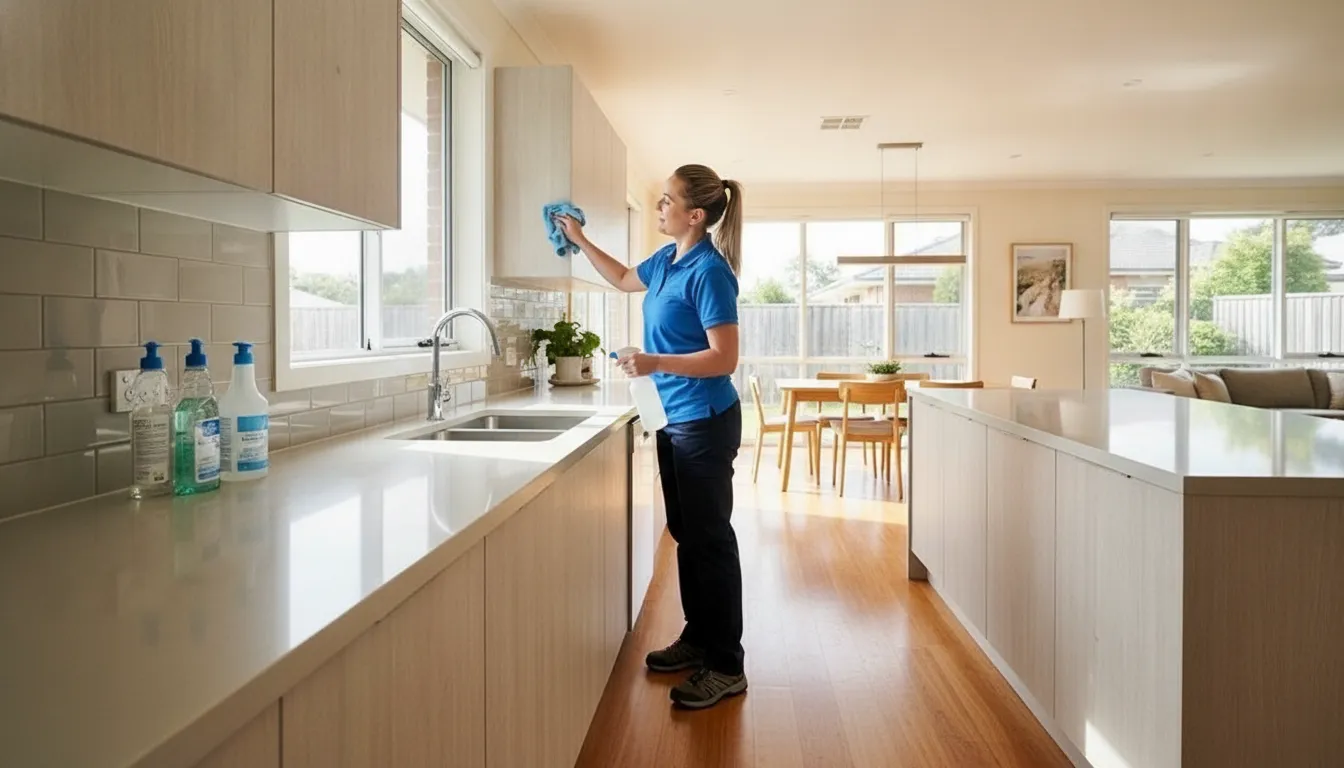
A thorough cleaning is not a contest to use the strongest product available. The cleaner must consider the finish, the amount of buildup, and whether moisture or agitation could damage the surface. That is especially important in kitchens and bathrooms, where grease, soap residue, minerals, and frequent contact can appear together.
Hard-to-reach areas deserve deliberate attention too. Tops of cabinets, corners, edges behind furniture, vent covers, and spaces beside accessible appliances can hold dust that ordinary maintenance does not reach. A systematic route turns these areas into checklist items instead of optional details.
Supplies and inspection support consistency
When you hire a professional, the company provides the supplies and equipment needed for the service. You do not have to build a specialty cleaning kit or guess which tools belong on each material. The team can also work from the priorities discussed before the visit and adjust the order around the home's condition.
A final inspection is the last control point. It should include a look at high-touch surfaces, baseboards, appliance fronts, corners, and floor edges. Maid OK's 49-point quality-control process is designed to support that kind of consistent review, and its service information explains that issues can be addressed within 48 hours when work is not to standard.
The Room-by-Room Deep Cleaning Process
Each room has different surfaces and different types of buildup. The same broad sequence still applies: prepare, work high to low, clean detail surfaces, finish floors, and inspect. The practical checklist below keeps the process focused without turning every home into the same template.
Living areas, entryways, and bedrooms
Start with upper surfaces such as ceiling fans, light fixtures, vents, ledges, and the tops of tall furniture when accessible. Move down through shelves, tables, doors, trim, switches, handles, and baseboards. Pay attention to furniture edges and the places where dust collects along walls. If furniture can be moved safely, clean the newly exposed floor edges and corners before returning it.
Bedrooms benefit from the same detail. Clean nightstands, dressers, headboards, doors, trim, and other frequently touched surfaces before vacuuming. Under-bed and behind-furniture areas may need special planning because access varies. A deep clean should not require unsafe lifting or moving. Note those limits in advance so the plan remains realistic.
Bathrooms
Bathrooms need careful work around sinks, counters, mirrors, tubs, showers, toilets, cabinet fronts, doors, and floor edges. Soap residue and mineral deposits can make a surface look dull even after a quick wipe. Use a method suited to the material, and keep attention on the areas around plumbing fixtures, corners, baseboards, and handles.
High-touch points deserve their own pass. Door handles, light switches, faucet handles, and cabinet pulls are easy to overlook when the main goal is a visibly bright fixture. A final inspection should confirm that the room was cleaned from the upper surfaces down through the floor, not just polished in the center.
Kitchen
The kitchen usually requires more than cleaning the counters and sink. Include appliance exteriors, handles, cabinet fronts, backsplash areas, baseboards, and the spaces beside or beneath accessible appliances. Tops of cabinets can collect dust, while cooking residue may build up around handles and nearby surfaces.
Use a product and tool appropriate for the finish. A professional process avoids applying the same technique to painted cabinets, stainless steel, sealed stone, tile, and wood. The agreed service scope should make clear whether the request includes interiors, specialty appliances, or areas that require the homeowner to empty shelves first.
Floors and final inspection
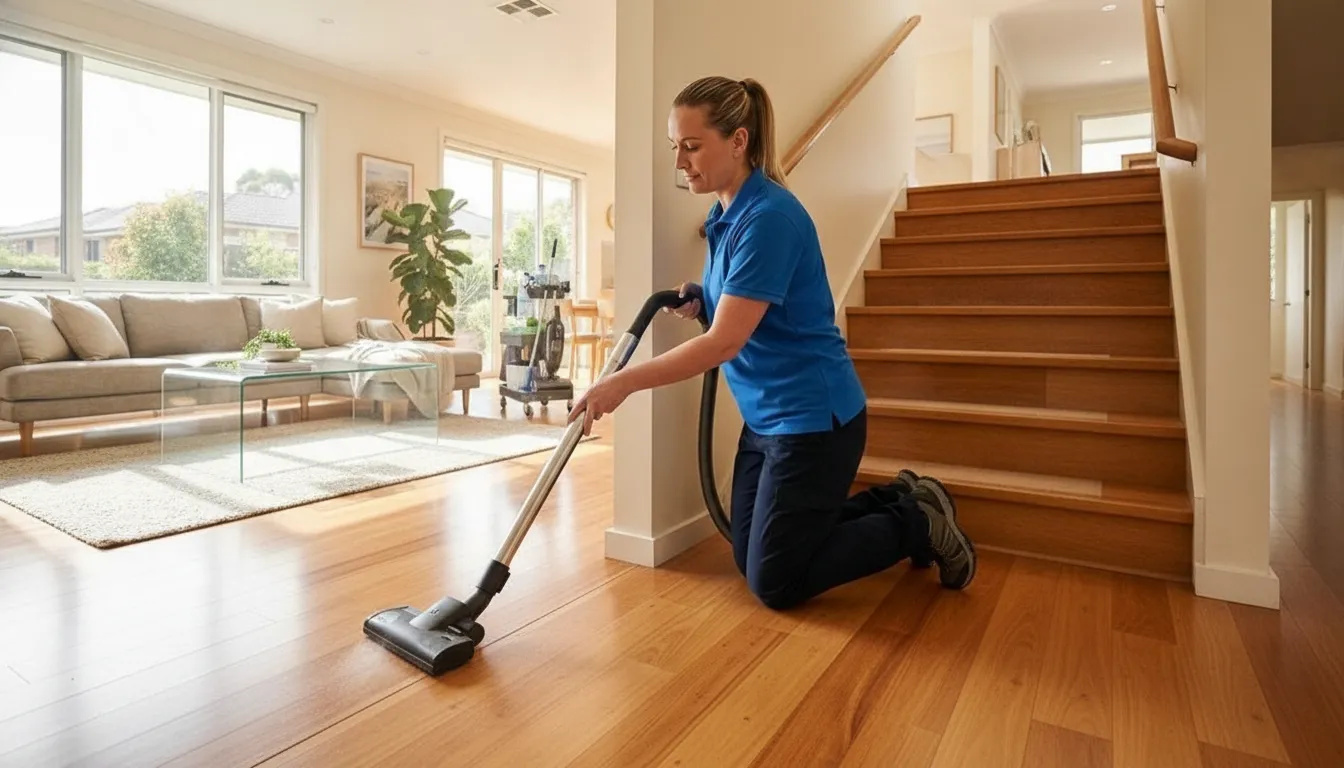
Floors come after higher surfaces. Vacuum carpeted areas and hard floors according to their material, then mop only where the floor and finish allow it. Work along edges and corners rather than stopping at the open center of the room. If a surface is damaged, delicate, or unsafe to wet, identify it before cleaning begins.
Finish by walking through the rooms with the original priorities in mind. Look for dust on trim, residue around fixtures, missed touch points, appliance edges, and debris that settled after upper surfaces were cleaned. This is the difference between a visual quick pass and a deliberate whole-house reset.
DIY Deep Cleaning vs. Professional Service
DIY and professional cleaning can both produce a meaningful improvement. They solve different constraints. DIY gives you complete control over the schedule, product choices, and room order. Professional service gives you a trained team, supplied equipment, a defined process, and less personal time spent managing the project.
| Consideration | DIY deep cleaning | Professional service |
|---|---|---|
| Time | You control the schedule, but a whole-home project can stretch across several sessions when work and family responsibilities interrupt it. | A team follows a planned route, so the project does not depend entirely on one homeowner finding uninterrupted time. |
| Technique | You can handle familiar surfaces confidently, but unfamiliar finishes may require research before you start. | Trained cleaners use techniques suited to different household surfaces and can clarify unusual areas before work begins. |
| Supplies | You provide tools, cleaners, and equipment, including anything needed for high or hard-to-reach areas. | The company provides the necessary supplies and equipment for the agreed service. |
| Consistency | Results can vary when energy runs out or the project is paused between rooms. | A room-by-room process and inspection create a more repeatable result. |
| Customization | You choose exactly where to spend time and can stop whenever needed. | You can identify priority rooms or problem areas before the service so the work reflects the home's needs. |
When DIY makes sense
DIY is reasonable when the home is manageable, you have enough uninterrupted time, and you are comfortable choosing methods for each surface. It can be a good way to maintain one room at a time between larger resets. Start with a short plan, protect delicate finishes, and avoid taking on unsafe lifting or ladder work simply to complete a checklist.
When professional help is the better fit
Professional help makes more sense when the backlog has grown, the home needs consistent detail, or your schedule leaves little room for a full project. It is also useful when you want a focused service before an event or transition. A professional can discuss which rooms need the most attention rather than forcing you to spend equal time everywhere.
For ongoing upkeep after a deep clean, Maid OK offers recurring house cleaning with weekly, biweekly, and monthly scheduling options, no required contract, and potential recurring discounts. Recurring visits are maintenance, not a substitute for every detail of an initial reset, but they can make the next deep clean less demanding.
When Should You Hire a Professional Cleaner in the OKC Metro?
The right time to hire a professional is usually when the home's needs exceed the time, equipment, or energy you can reasonably provide. A deep clean house service is especially useful when you want a clear baseline for normal maintenance rather than another rushed round of visible chores.
Direct answer: Consider professional help before moving into a home, after a demanding period when chores have accumulated, before listing a property, when preparing for new occupants, or when hard-to-reach areas have gone too long without attention. You can also schedule a one-time reset and decide later whether recurring service fits.
Transitions and fresh starts
Move-in and move-out appointments can be easier to plan when the home is empty or nearly empty. Cleaning before unpacking exposes floors, trim, cabinets, and fixtures that become harder to reach once belongings are in place. At move-out, detailed work can help present the property carefully for its next occupants. If you are preparing a rental or sale, confirm the requested scope and any property-specific requirements in advance.
Busy schedules and accumulated detail
Work, family responsibilities, travel, and other commitments can turn a few missed chores into a larger project. If you keep postponing the kitchen, bathrooms, floors, or baseboards, a professional visit can return that time and establish a more manageable baseline. Maid OK's organizing and decluttering service may also be relevant when loose belongings need to be sorted before cleaners can reach the underlying surfaces.
Local service and realistic expectations
Maid OK is a locally owned company established 1977 and serving residential customers across the Oklahoma City metro. Its service area uses a 50-mile radius centered on Moore, which includes communities such as Oklahoma City, Norman, Edmond, Moore, Yukon, Mustang, and nearby areas. The company is licensed and insured, provides supplies and equipment, and offers a 100% satisfaction guarantee with a 48-hour resolution promise according to its service information.
Those details should be confirmed against the scope of your home before booking. Commercial or office needs belong on the commercial janitorial services page, while residential homeowners can review the house cleaning service overview and request a quote. Clear expectations about rooms, surfaces, access, and priorities help the appointment run smoothly.
Request your free Maid OK residential cleaning quote
Frequently Asked Questions
What does a full-house deep clean include?
A full-house deep clean typically includes routine visible surfaces plus detailed attention to baseboards, high-touch points, fixtures, appliance exteriors, cabinet fronts, floor edges, and other areas that regular maintenance may skip. The exact scope depends on the home's condition, access, materials, and the priorities agreed before service.
What is the best way to deep clean an entire house?
Prepare the rooms first, then work from top to bottom and from dry tasks to wet tasks. Clean one room or zone at a time, use products suited to each material, and leave floors until higher surfaces are complete. Finish with a deliberate inspection of corners, trim, touch points, and areas that are easy to overlook.
Should I deep clean my house myself or hire a professional?
DIY cleaning can work when you have time, suitable supplies, and confidence working across different surfaces. Professional service is useful when your schedule is full, the home needs consistent detail, or the project includes hard-to-reach areas that you do not want to manage alone. A professional can also focus on selected priority rooms.
When should I schedule a professional deep cleaning?
Consider it before moving in or out, before listing a home, after a busy period, or when routine cleaning no longer reaches neglected areas. A one-time reset can also be practical before hosting guests or beginning a recurring maintenance schedule. Discuss the home's condition and priorities so the service matches the result you need.