
Garage Organization: A Practical Plan for Reclaiming Space
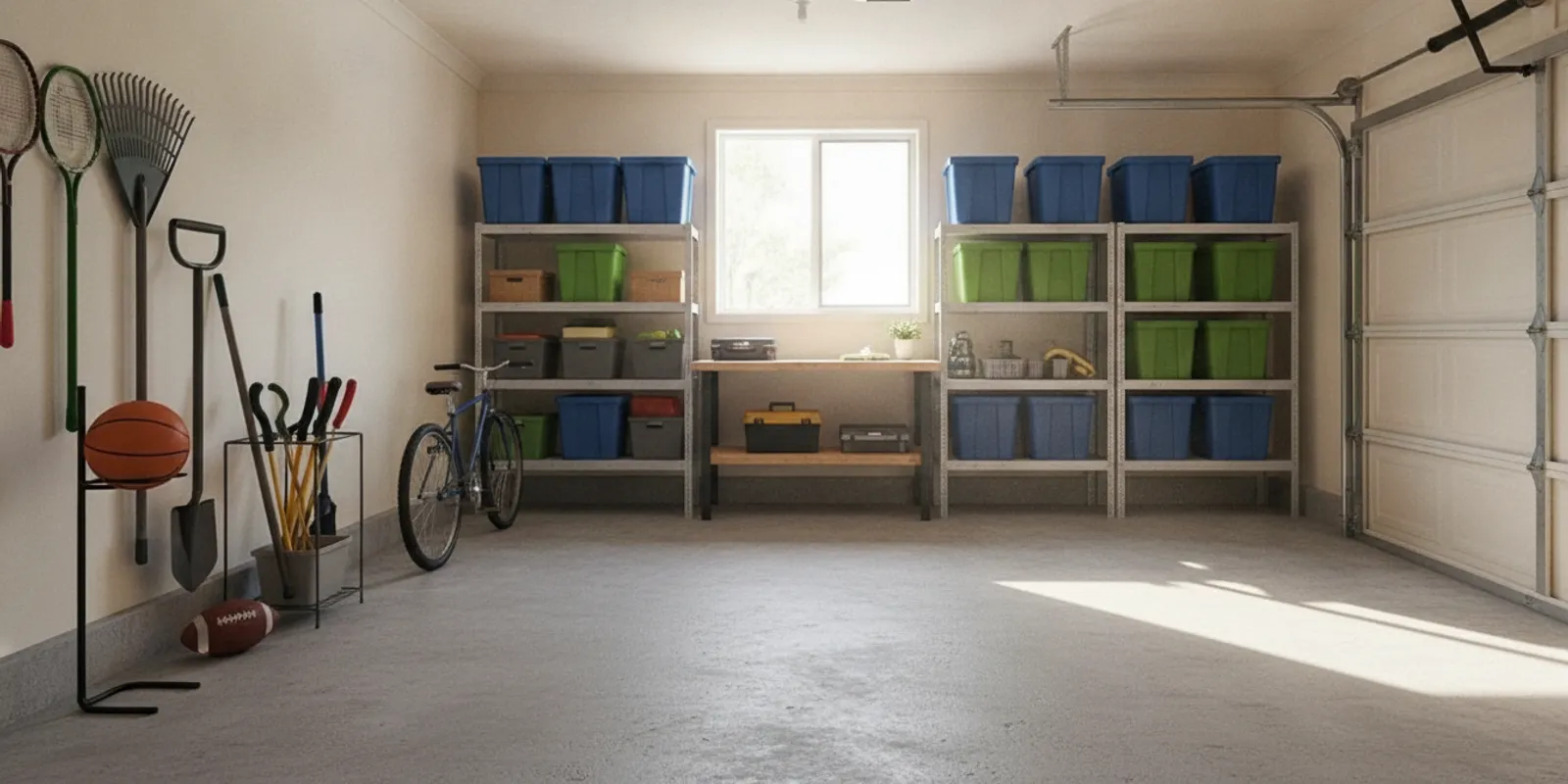
Garage organization works best when you plan for how your household uses the space, not just how many bins fit on a shelf. Start by deciding what the garage needs to do, sort belongings in manageable groups, and set up zones that make everyday items easy to reach. This practical plan helps you reclaim floor space without turning the project into an all-day upheaval.
What should you decide before you start?
Before moving anything, take a few minutes to define the job. A garage may need to hold a vehicle, bicycles, garden supplies, seasonal decorations, sports equipment, household overflow, or several of these at once. If every item is treated as equally important, the space can quickly return to a crowded mix.
Write down the three main uses you want the garage to support. Be specific: “park one car and reach the garden tools” is easier to plan for than “make it less cluttered.” Measure the area needed for a parked vehicle, door swing, walking path, and any work surface. Mark those areas with painter’s tape or chalk so you can see the space you are protecting.
- Set a must-have: Decide what needs to fit and remain accessible every week.
- Set a boundary: Identify how much wall, shelf, or floor space household overflow may use.
- Set a stopping point: Choose a section or time block to finish before you begin another.
- Take a before photo: It helps you compare progress and remember where stored items came from.
Make a quick sketch of the garage before buying anything. Mark doors, windows, steps, fixed equipment, outlets, and any areas that must stay open. Then draw the vehicle and the walking path at approximate scale. This simple map helps reveal whether a shelf will interfere with a car door or whether a frequently used item is too far from the house entry. You do not need a perfect floor plan; the purpose is to catch conflicts while shelves and boxes are still movable.
Check for conditions that affect the plan before bringing belongings out. Look for damp areas, signs of pests, unstable shelving, exposed wiring, or anything that needs a qualified repair. Do not stack items against a water heater, furnace, electrical panel, or other equipment that requires clearance. If you are unsure whether a location is safe, consult the equipment instructions or a qualified professional rather than guessing.
How can you sort belongings without making a bigger mess?
Work in small sections, such as one shelf, a corner, or a single category. Emptying the whole garage at once can block access, expose belongings to weather, and leave you with more to manage than you planned. Keep a clear route to the house and garage door as you work.
Set up temporary destinations before sorting: keep here, move elsewhere in the home, donate or give away, recycle or dispose of according to local guidance, and decide later. Use a box or a clearly separated patch of floor for each destination. Avoid creating a large “maybe” pile with no review date; it tends to become another permanent storage zone.
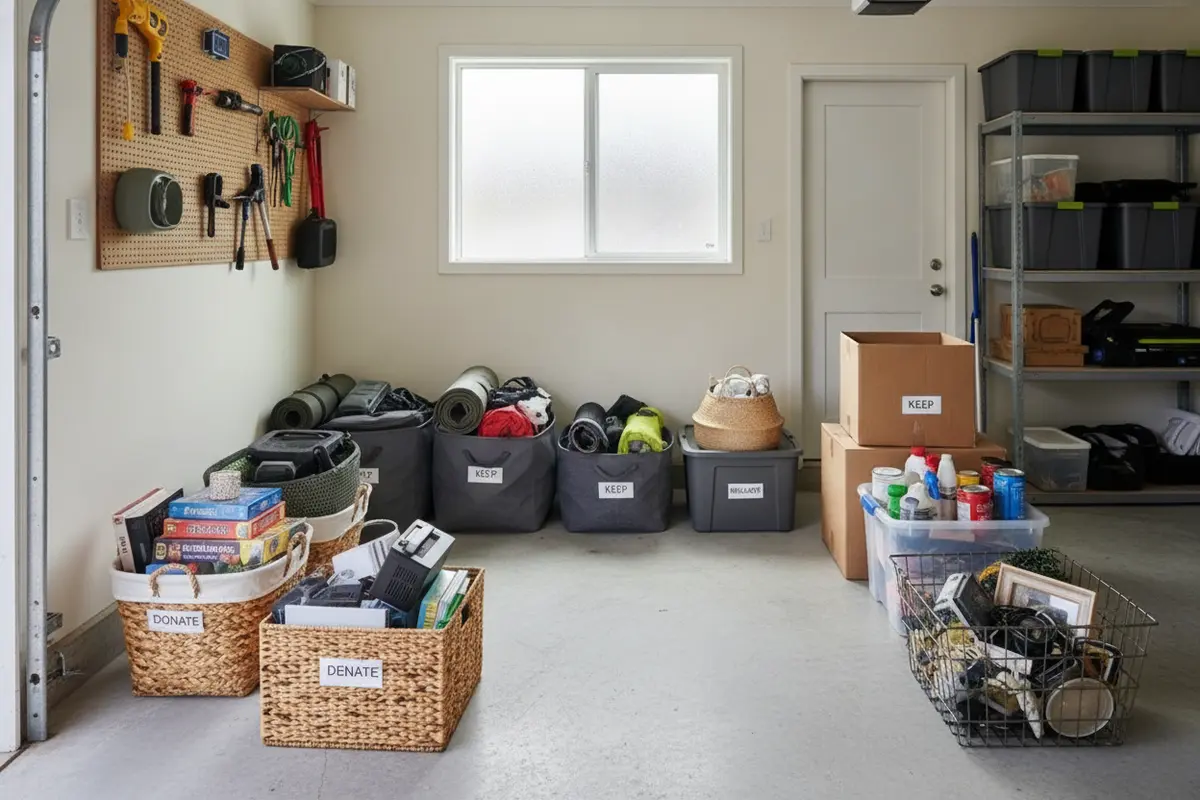
Pick up one item at a time and ask a few practical questions:
- Have we used it in the last year, or do we know when we will need it?
- Is it in working condition, complete, and safe to keep?
- Does it belong in the garage, or would another room protect it better?
- Would we choose to store it again if we were starting with an empty shelf?
Keep necessary items that support the uses you chose. Move indoor belongings to a more suitable location when temperature or moisture could damage them. Set aside items that need repair only when you have a realistic next step and a date to take it. For donation, recycling, and disposal, follow the receiving organization’s rules and local requirements; do not assume every item can go in the same bin.
Use the “decide later” option sparingly. Put a date on the container and review it within a few weeks. If a decision depends on another household member, take a photo or make a short list rather than leaving the item scattered in a walkway. For a broader approach to sorting and creating functional spaces, Maid OK describes its home organizing services.
Which garage zones make daily use easier?
Group belongings by task and frequency of use. The point of a zone is not to make every shelf look identical; it is to make it obvious where an item belongs and how to put it back. Place frequently used belongings between waist and shoulder height when practical. Store occasional-use items higher or farther from the main path, as long as they remain safe to retrieve.
| Zone | Good candidates | Placement and access |
|---|---|---|
| Entry and daily use | Reusable bags, shoes, pet-walking items, frequently used tools | Near the door, in a contained area that does not block the walkway |
| Sports and outdoor | Balls, helmets, folding chairs, recreation gear | Near the garage door or on a dedicated wall rack, grouped by activity |
| Garden and home projects | Hand tools, gloves, small supplies, project materials | On a stable shelf or wall system, with small parts contained |
| Seasonal storage | Decorations and weather-specific items used a few times a year | Higher or less central shelves, protected in suitable containers |
| Household overflow | Items with a clear owner and future use | A defined shelf or cabinet, not spread across the floor |
Leave room for a clear walking route and the movement of car doors, equipment, and household members. Keep a practical landing area near the entry if bags and everyday items tend to collect there. Store small accessories in containers that fit the shelf, and group related items together so one open box does not become a mixed catch-all.
Consider how each person will use the system. A heavy bin placed overhead may technically save floor space but make retrieval difficult. A child’s ball or helmet should be reachable by the person expected to put it away. If tools are shared, return them to a visible, consistent location rather than hiding them in several deep boxes.
What storage choices are practical and safe?
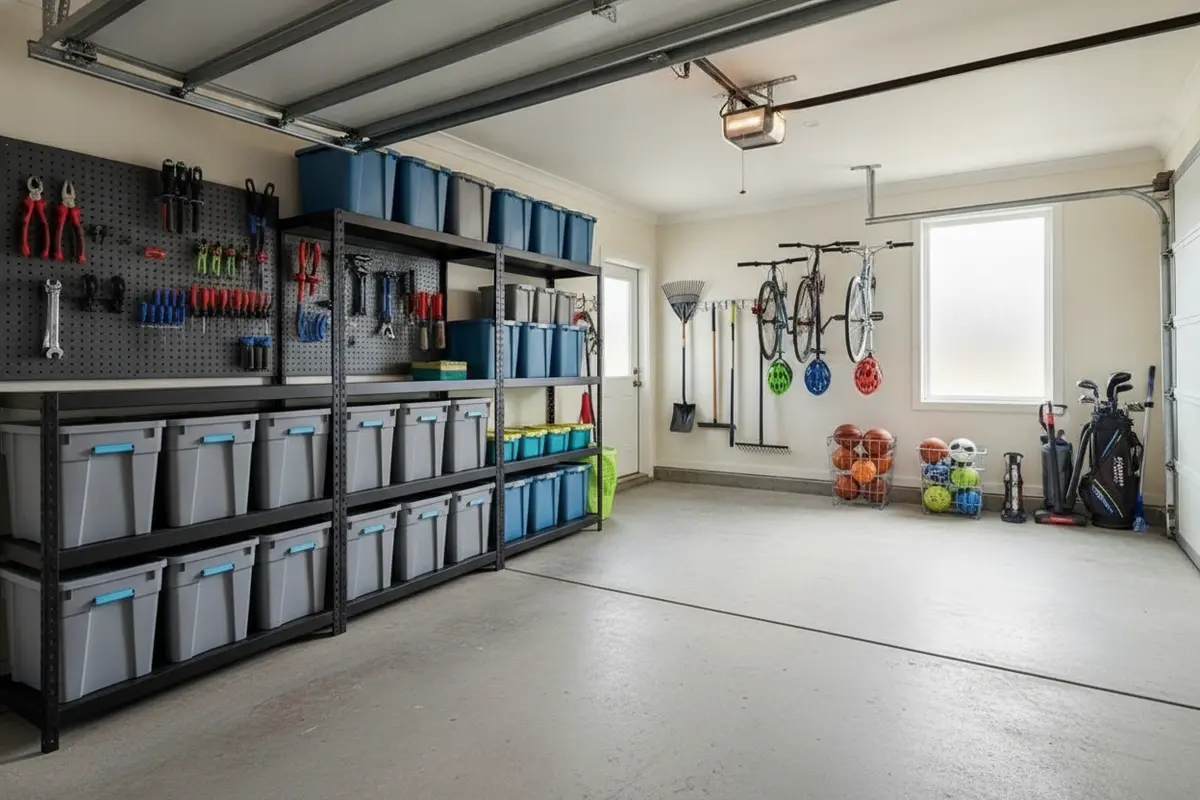
Choose storage based on the item, the garage conditions, and how often you need access. A sturdy shelf can hold everyday bins without taking up much floor area. Wall hooks or purpose-built racks can help with suitable equipment, while a closed cabinet can contain smaller supplies. Check product weight limits, mounting instructions, and the condition of the wall before loading a shelf or rack.
Match the storage method to the shape and frequency of use. A shallow open shelf can make small frequently used items visible, but it may collect dust and look busy. A lidded bin keeps seasonal items together and can be stacked when the manufacturer permits, but label it on more than one side so the contents remain identifiable when stored. Hooks help keep suitable long-handled tools or sports equipment off the floor; check that each item is secure and does not project into a walking path. A cabinet can contain small supplies, but it should not conceal a leak or make essential equipment hard to reach. Try one setup with a small group of items before repeating it across the whole wall.
Use containers that are easy to identify and lift. Clear bins can help you see contents; opaque bins can work when labeled in a way your household understands. Keep labels short and accurate, and group like items instead of packing unrelated belongings into one large tub. Avoid filling containers so heavily that they are difficult to move safely.
- Store items you use often on accessible shelves or hooks.
- Keep heavy containers low and avoid placing heavy belongings above head height.
- Protect items from moisture and temperature swings. Many household products, paper goods, fabrics, and electronics may not be suited to an unconditioned garage; check manufacturer guidance.
- Follow product labels for paints, fuels, batteries, pool supplies, and other household chemicals. Keep them in their original containers when possible, away from heat or ignition sources, and secured from children and pets.
- Maintain required clearances around appliances, vents, panels, and doors. Follow applicable instructions and local safety requirements.
Do not store anything in a way that could fall onto a person or vehicle. Anchor shelving as directed by its manufacturer, distribute weight evenly, and avoid makeshift overhead storage. Keep sharp tools covered or secured. If an item is leaking, damaged, or has special handling requirements, use the product’s instructions and local guidance to decide what to do instead of putting it in an ordinary bin.
For space planning, a Stanford resource on garage organization in a smaller home also outlines steps such as assessing storage needs, decluttering, and using shelves. Use such general ideas as a starting point, then make choices that fit your own garage and the items you own.
How do you keep the plan workable as needs change?
A garage is a working space, so maintenance matters more than a one-time perfect arrangement. Give every zone a simple reset rule. For example, put hand tools back after a project, return sports gear to its area after use, and keep the entry landing area limited to what is needed that day. A small routine prevents temporary piles from spreading across the floor.
Try a ten-minute reset once a week or after a busy project. Walk the main route, return misplaced items, flatten boxes for appropriate recycling, and check whether any shelf is becoming overloaded. At the end of each season, review the items that were stored for that season and make room for what is coming next.
Make seasonal changes a short, repeatable job rather than a full re-sort. Bring the next season’s gear down to an accessible zone, check that it is complete and usable, and move the just-finished season’s items into their assigned containers. Before stacking or storing anything, remove items that no longer fit the household’s needs and leave a small amount of open shelf space for newly arriving belongings. If a zone repeatedly overflows, change its boundary or reduce what belongs there instead of adding another row of boxes.
- Use a one-in, one-out check: When a new bulky item comes in, decide where it will live before it is left on the floor.
- Review the overflow shelf: If it no longer has a clear limit, sort it again rather than adding a second overflow area.
- Keep a short inventory: Note where seldom-used items are stored, especially if they are in closed containers.
- Adjust for real use: Move a zone if people repeatedly leave its belongings somewhere else.
If the household’s needs change—a new hobby, a different vehicle, or a move—revisit the original priorities. The layout does not have to stay fixed. Maid OK serves the Oklahoma City area; see the service-area information for the communities listed. You can also review the company’s house-cleaning FAQs or contact details when deciding what service questions to ask.
When might organizing support be useful?
Consider asking for help when belongings are difficult to sort alone, household members disagree about where things should go, or the project keeps stalling at the same stage. Before you arrange any support, clarify the scope: which area you want to work on, what decisions you want help making, and what tasks you will handle yourself. Ask what is included and what is outside the service before scheduling.
Organizing is different from repairs, hauling, or handling items that require special disposal. If the garage has a maintenance or safety issue, address that separately with the appropriate qualified provider. If you are comparing household service options, the Maid OK website explains the company’s residential focus, and the quote page is available for a service estimate.
Frequently Asked Questions
How long does garage organization take?
It depends on the amount of sorting, the size of the space, and how many decisions are ready to make. A single shelf or category may fit into one work session. A full garage may be easier to handle over several sessions, with a clear stopping point each time.
Should I buy storage containers before I sort?
Usually, sort first and measure the remaining items and shelves before buying containers. This prevents purchasing bins for belongings you no longer need and helps you choose sizes that actually fit your storage system.
Is it okay to store everything in sealed plastic bins?
No single container suits every item or every garage. Consider moisture, heat, ventilation needs, weight, and manufacturer instructions. Keep chemicals and other products in their original containers when possible, and follow their labels and local safety guidance.
What should stay easy to reach?
Keep items used every week in an accessible zone, along with anything needed to reach the house or operate the garage safely. Store less frequently used seasonal belongings farther away, but do not place heavy or awkward items where retrieving them could cause a fall.
How can I stop the garage from becoming cluttered again?
Give each category a defined home, avoid unlimited overflow space, and reset the main zones regularly. When a new item arrives, decide where it belongs before it settles on the floor. A brief, repeatable routine is easier to sustain than another major cleanout.
A useful garage organization plan is one your household can follow on an ordinary day: keep important routes clear, store belongings where they are safe and accessible, and make returning items simple. Start with one manageable section, then adjust the zones as you learn what works.