
Garage Storage: How to Clean, Sort, and Set Up Better Zones
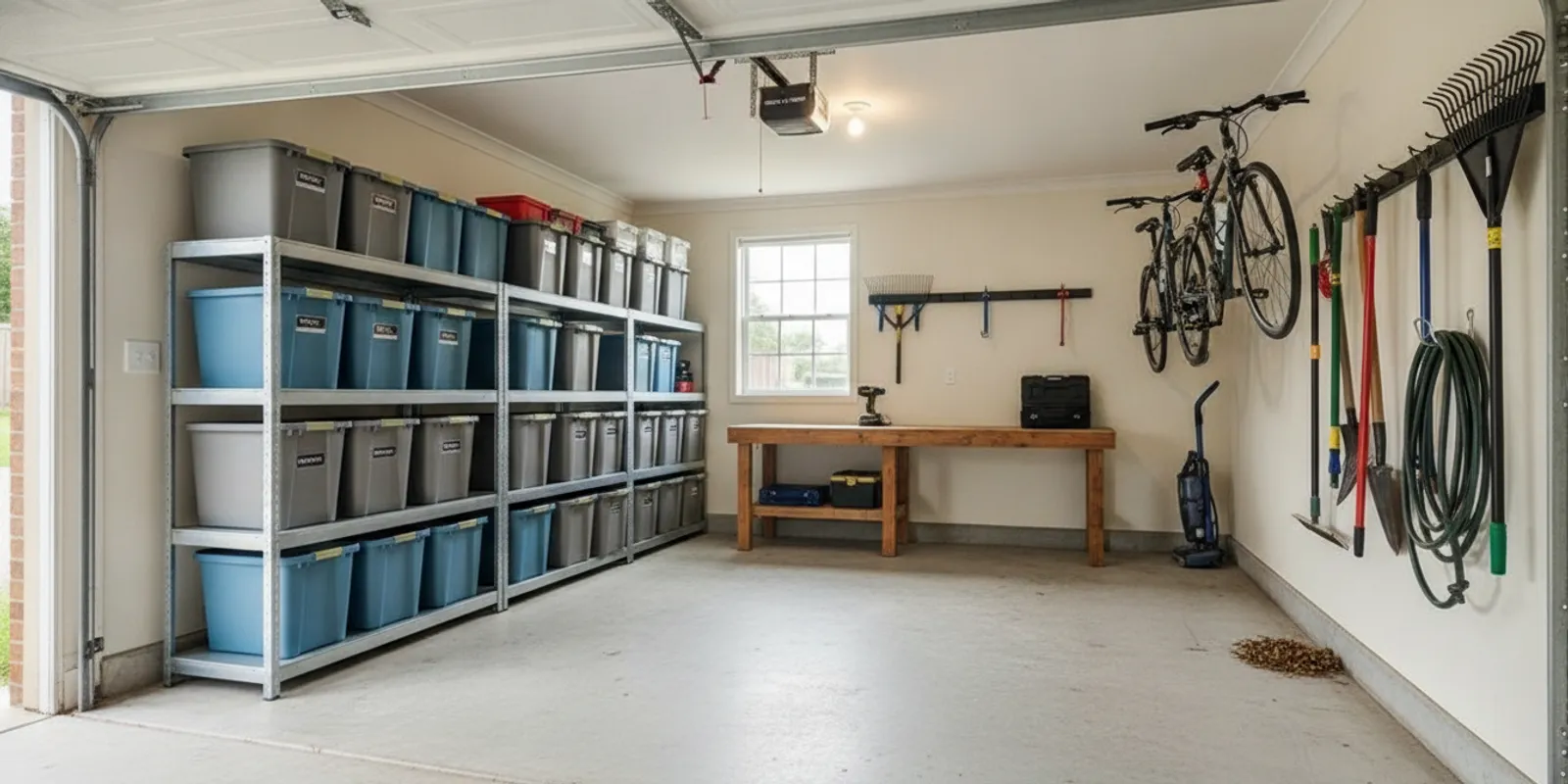
Good garage storage starts with a clear idea of what belongs in the space and how you need to reach it. Before buying shelves or bins, sort what you own, decide which activities the garage should support, and give each group a sensible home. A little planning can make the space easier to use without turning every wall into a storage project.
What should you decide before changing garage storage?
Start by naming the jobs your garage needs to do. It may hold a vehicle, tools, outdoor gear, sports equipment, seasonal decorations, or household overflow. Most garages do several jobs, but each one needs a reasonable amount of space. If you skip this step, the easiest solution is often to fill the floor with more containers.
Write down the three or four most important uses. Then note what must remain easy to reach. For example, you may need daily access to a stroller, recycling containers, or a set of hand tools. Items used once a year can go farther from the door, as long as they remain safe and accessible.
- Protect the primary function: If you park in the garage, measure the parking area and keep doors, walking paths, and vehicle access clear.
- List regular activities: Think about hobbies, yard work, repairs, or family equipment that happens in the garage.
- Notice friction points: Identify piles that block access, items that migrate, or things you cannot find when needed.
- Set a limit: Decide how much space each activity can use before you start sorting.
Take a few photos before moving anything. Pictures help you see crowded corners and can make it easier to compare the finished arrangement with the original. If the garage also needs a broader home reset, Maid OK offers professional organizing services for household spaces.
How can you clear and sort the garage without making a bigger mess?
Choose a time when you can finish a manageable section. Avoid emptying the entire garage onto the driveway unless you have enough time, suitable weather, and a plan to put everything away. A safer approach is to work one wall, shelf, or category at a time. Keep a clear route to the home entrance and do not block the garage door or other exits.
Set up simple sorting groups
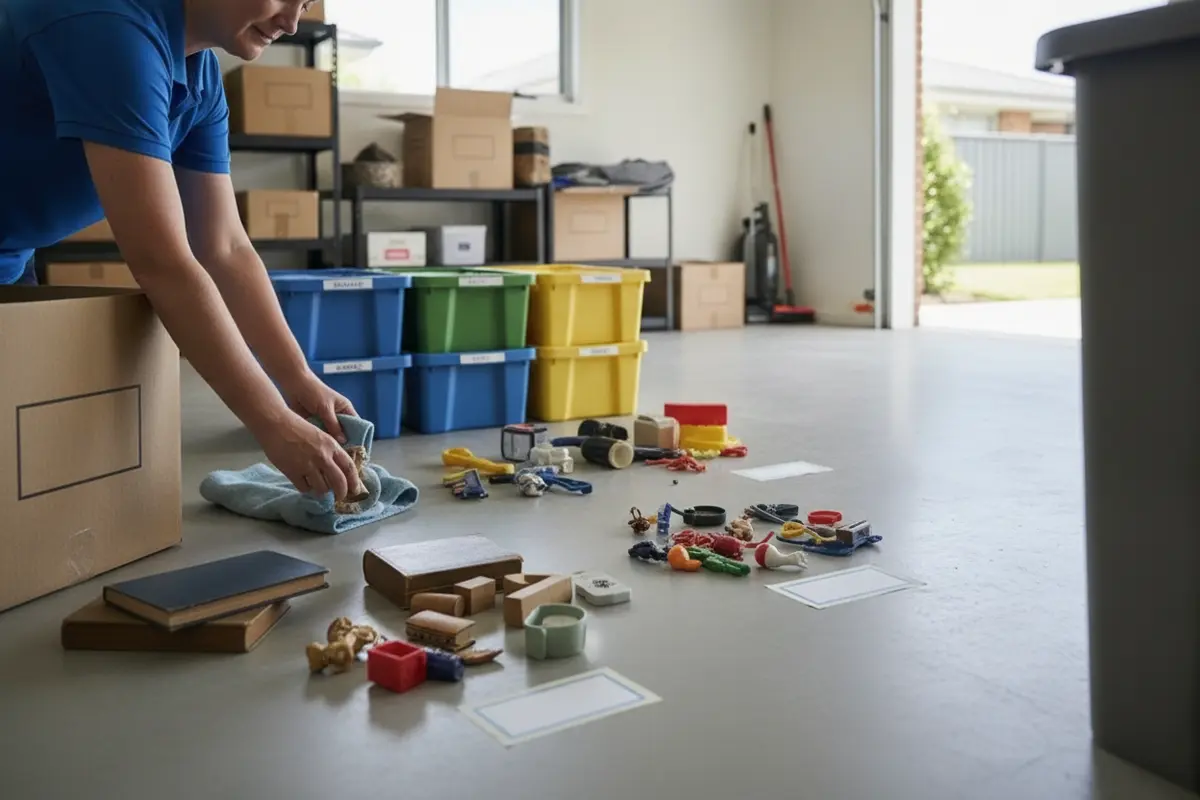
Use clear areas or containers for items to keep, donate, recycle, and discard. Add a separate temporary group for things that belong somewhere else in the house. Do not let the temporary group become a new permanent pile. Return those items before ending the session.
For each object, ask a few direct questions: Do we use this? Is it in working condition? Does it belong in this garage? Would we choose to keep it if we had to find room for it today? If an item is useful but belongs in another room, move it there. If you are unsure, put it in a dated review box and set a specific time to revisit it.
Handle uncertain or sensitive items carefully
Check product labels and manufacturer instructions before deciding where to store household products, equipment, or supplies. Keep items in their original containers when appropriate, and do not combine products. Place anything that needs special handling according to its label and local disposal guidance rather than putting it in a regular donation or discard pile. For broader information about waste and environmental topics, consult the U.S. Environmental Protection Agency and check local disposal guidance.
Do not place heavy objects where they could fall onto people or vehicles. Keep frequently used items within comfortable reach, and avoid climbing on unstable boxes or furniture. If you cannot move an item safely by yourself, pause and ask for suitable help. The goal is a more useful garage, not a rushed cleanout.
How do you plan garage zones that fit daily life?
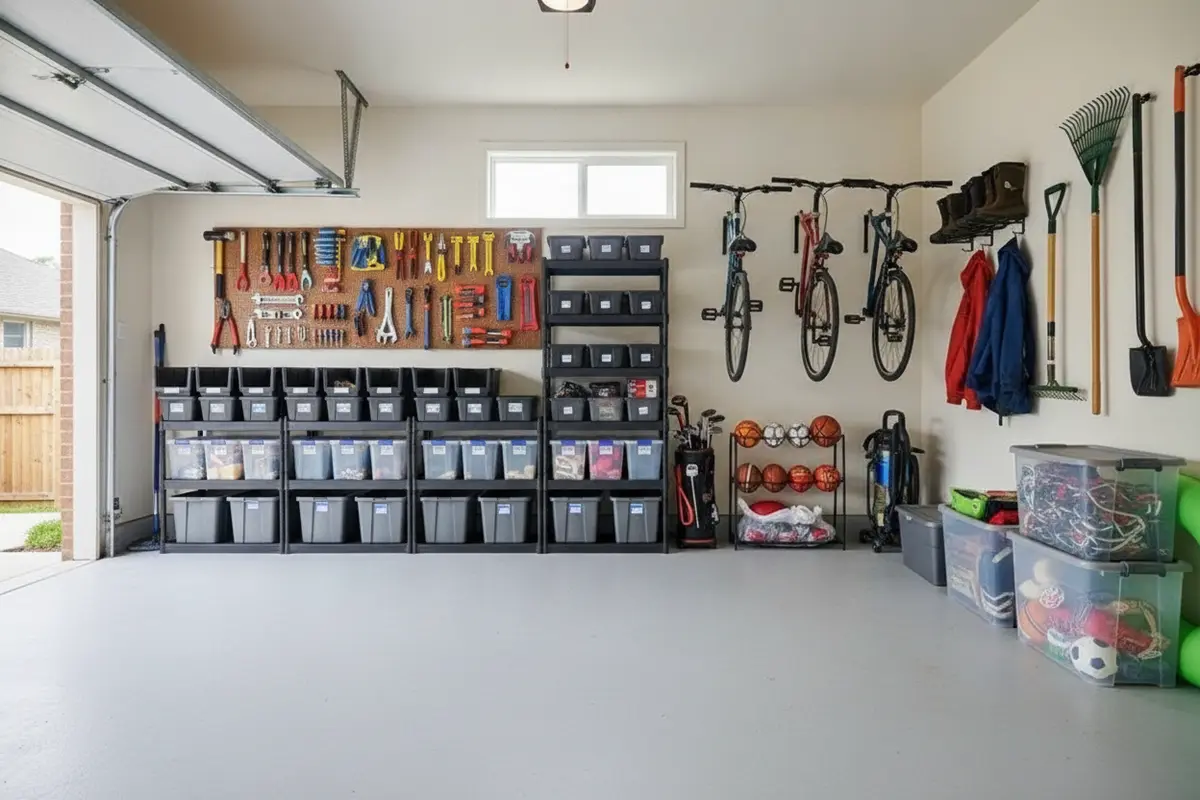
After sorting, group what remains by purpose and frequency of use. Zones work best when they match the way people move through the garage. For instance, place frequently used outdoor gear near the door it uses, while keeping holiday decorations together in a less-accessed area. Leave enough room to take an item out without unloading several others.
- Entry zone: Reserve a small area for items carried in and out often, such as reusable bags or sports gear. Keep the floor clear.
- Tool and repair zone: Group hand tools and basic supplies together. Return them to the same drawer, shelf, or wall location after use.
- Outdoor and yard zone: Store equipment together, following its safety and storage instructions. Keep long-handled items secured rather than leaning where they may slide.
- Seasonal zone: Place occasional-use items together and keep the current season's belongings easier to reach.
- Household overflow zone: Give this category a defined shelf or cabinet. If it keeps expanding, review what is being stored and why.
Make the zones visible through consistent placement, not complicated labels. Similar containers and a simple category name can help, but you should be able to recognize what is inside without decoding a long system. For ideas on reducing excess before assigning storage, see this guide to decluttering a home.
Which garage storage systems are worth considering?
Choose a system after you know the items, available wall and floor space, and how often each category is used. Measure the area first, including doors, windows, utility equipment, and the space needed to park or walk. Follow product instructions for installation and weight limits. If you rent, check what changes are allowed before attaching anything to walls or ceilings.
| Storage option | Works well for | Before choosing | Common drawback |
|---|---|---|---|
| Open shelving | Sturdy containers and items used regularly | Measure the footprint and confirm shelves are properly assembled and secured as directed | Items remain visible and can collect dust |
| Clear, stackable bins | Small grouped items and seasonal belongings | Choose sizes that fit the shelf and can be lifted safely when filled | Opaque or overfilled bins make contents hard to find |
| Wall hooks or racks | Suitable tools or equipment with compatible hanging points | Check the wall material, fasteners, and product instructions | Improper installation can cause items to fall |
| Freestanding cabinet | Small supplies that benefit from being enclosed | Check clearances, stability, and the manufacturer's guidance for stored items | Uses floor space and can hide forgotten contents |
| Small drawer organizers | Fasteners, craft supplies, and other small parts | Sort by category before choosing drawer sizes | Many tiny compartments can become difficult to maintain |
Keep heavy items low and stable. Do not overload shelves, hang items above a vehicle unless the system is designed and installed for that use, or store belongings where they obstruct doors, walkways, or access to household equipment. Storage hardware should match the item and the surface it is attached to. When in doubt, follow the manufacturer's directions or consult a qualified installer.
Storage containers are most useful when they support a category rather than replace sorting. A box labeled for a particular activity can keep its pieces together. Several boxes marked only as miscellaneous can conceal the same clutter in a tidier shape. Leave some open capacity so an item can be put away without forcing the lid or stacking things precariously.
How can you arrange items for easy access?
Place everyday items where they are easy to reach, and reserve less convenient spots for belongings used rarely. Keep a clear walking path from the house entry to the vehicle and garage door. Make sure that opening doors, using equipment, and carrying items through the space does not require moving a stack first.
Use a simple access test as you arrange each zone. Can you take out the item you use most without moving several other things? Can you return it to the same place? Can another household member understand the arrangement? If the answer is no, reduce the layers or move the category to a more practical location.
Think about the height and weight of each item. Frequently used objects should not require reaching over a vehicle or balancing on a stool. Store heavier belongings on stable, lower shelves, and keep fragile objects protected from impacts. Do not rely on a container lid or a leaning stack to support other items.
What should you do with items that do not belong in the garage?
Some possessions may be better suited to another part of the home, a donation center, or local disposal options. Keep decisions practical. If you have not used something for a long time, it is damaged beyond reasonable repair, or you have duplicates you do not need, consider whether keeping it is worth the space.
Do not assume every item can be donated or put in household waste. Check the item's condition and local rules, especially for products with disposal instructions. Set a deadline for taking donations out of the garage. A donation box that sits for months is still taking up room.
If sorting the whole home feels overwhelming, focus on one manageable category at a time. Maid OK also provides home organizing help; a quote can help you understand available service details. Cleaning and organizing are different tasks, so decide which kind of help fits what you want to accomplish. You can also review available home service add-ons when planning a cleaning visit.
How can you keep garage storage from slipping back into piles?
A maintenance routine should be short enough to repeat. After using an item, return it to its assigned zone. When something new comes in, decide where it will live before setting it down. If the zone is already full, remove or relocate something instead of starting a second pile beside it.
- Do a quick reset: Spend a few minutes putting stray items back in their zones after a project or busy week.
- Review one category: Every few months, check the items you use seasonally and remove things that no longer serve a purpose.
- Keep the floor visible: A clear floor makes it easier to notice spills, obstacles, or categories that are expanding.
- Adjust the system: If an item repeatedly lands in the wrong place, move its assigned spot closer to where it is used.
- Limit incoming overflow: Before storing a new item, identify the category it belongs to and confirm that the zone has room.
One visit will not create a permanent system unless it fits household habits. Make the return path obvious and avoid rules that depend on perfect memory. If several people use the garage, agree on the category names and where everyday things go.
What should you do first if your garage feels too full?
Begin with a small, visible win: clear one walkway, free one shelf, or sort one category such as sports gear. Set a time limit and finish by returning kept items to a temporary but sensible home. Then repeat with the next section. This keeps the project from becoming an all-day attempt to solve every storage problem at once.
If the garage is full because belongings from many rooms have accumulated there, pause before buying containers. First decide what needs to remain, what can move elsewhere, and what can leave the home. If the items are in good shape but you are unsure where they belong, a broader organizing plan may help you make those decisions across rooms rather than shifting the same piles from one place to another.
For household cleaning needs alongside your organizing plans, review Maid OK's one-time cleaning option or recurring cleaning service. Cleaning can support a refreshed home, while the garage storage plan itself depends on sorting, assigning zones, and maintaining the arrangement.
Frequently Asked Questions
Should I buy storage bins before sorting?
Usually, sort first. Once you know which items you are keeping and how they group together, you can measure and choose containers that fit. Buying bins too early can create pressure to keep items simply because a container is available.
How do I make small items easier to find?
Group small items by task or purpose, then use drawers or smaller containers that fit the category. Keep frequently used items accessible, and make the contents clear with a consistent naming system. Avoid splitting one category across multiple containers unless you have a reason.
Can I store everything in a garage?
No. Temperature, moisture, product instructions, and safety needs differ. Check manufacturer labels and local guidance before storing household products or sensitive belongings in a garage. Keep exits and access paths open, and do not place items where they can fall or interfere with equipment.
What if I do not have wall space for racks?
Use the available footprint carefully. A small freestanding shelf or cabinet may work if it does not block parking, doors, or walkways. You can also reduce the number of stored items and use vertical space only where a suitable product can be safely installed.
How often should I review the system?
Do a brief reset whenever a project leaves items out, then review seasonal categories when their use changes. If a zone repeatedly overflows or items are hard to retrieve, adjust it sooner rather than waiting for another full cleanout.
Garage storage works best when it reflects what your household actually uses, with clear zones and a safe path through the space. Start small, choose systems after sorting, and keep the routine simple enough to maintain.