
How to Clean Washing Machine at Home Safely
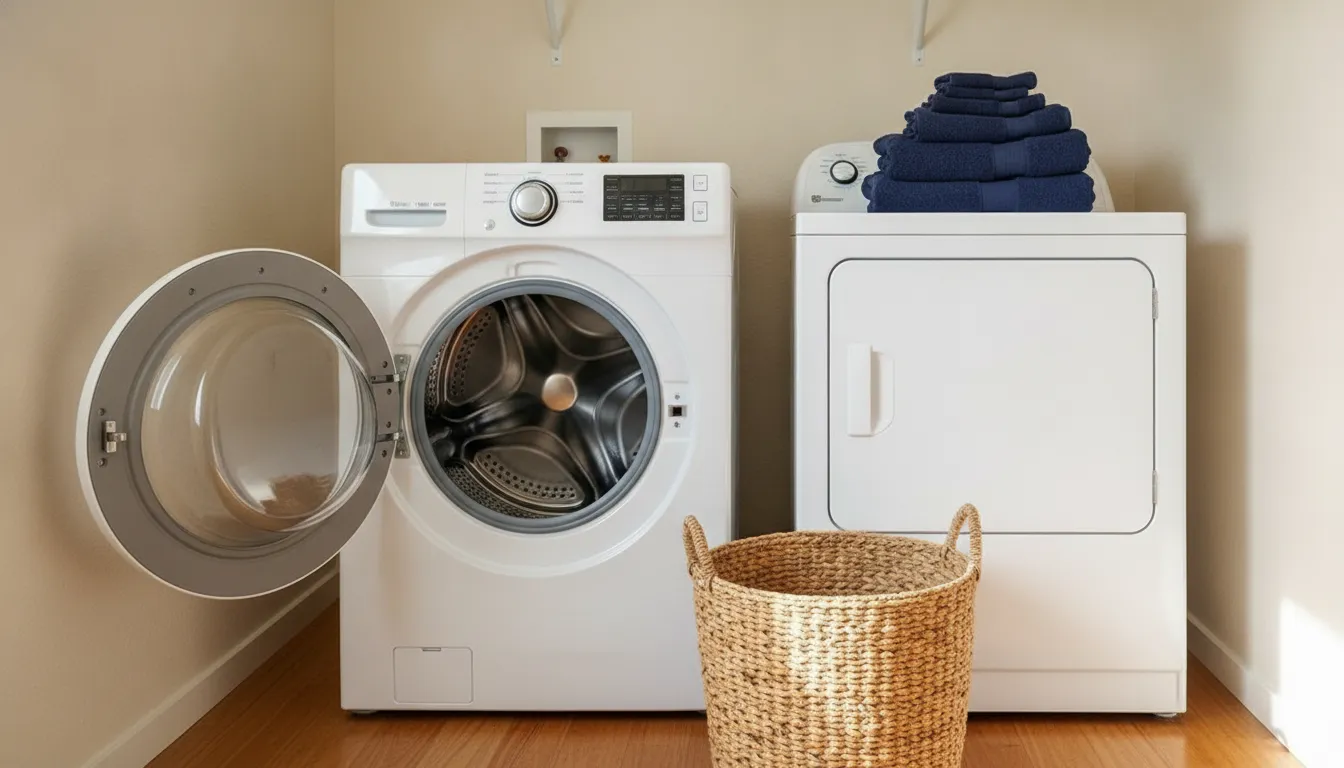
A musty load is usually the machine, not the detergent. Here is how to clean washing machine residue without internet hacks. Start with an empty tub, use only the cleaner your guide allows, and leave the door open so the drum can dry. That routine takes one cycle plus a few minutes of wiping.
Whirlpool's washer odor guide says to run a clean-washer cycle about every 30 days or every 30 wash cycles, whichever comes first, and to check the model guide before you add anything to the drum. Maid OK has cleaned Oklahoma homes since 1987, and the same idea applies in a Norman laundry room: follow the surface, use the right product, and do not mix chemicals.
Call (405) 447-4964 to talk with Maid OK about professional home cleaning
How to clean a washing machine without damaging it
The safe order is the same for a front loader and a top loader. Empty the tub first. Use a washer-cleaner tablet in the drum, or liquid chlorine bleach only if your guide allows that amount. Then wipe the parts a cycle cannot reach, and leave the door open.
Do not pour vinegar into the drum as a standing clean. Whirlpool says vinegar's acidity can weaken rubber seals and hoses over time. Vinegar is fine for a pulled-out dispenser you soak in the sink, and for a damp wipe on the outside of the cabinet. Never mix vinegar with bleach. That mix can release chlorine gas.
Also skip thickened, easy-pour, or no-splash bleach on a clean-washer cycle. Whirlpool warns that those formulas can create excess suds. If you use liquid chlorine bleach, the odor-removal procedure calls for 1 cup (236 mL) in the bleach compartment, not a free pour into the tub, and not more than that amount.
Run the clean cycle on an empty machine
Pull out socks, dryer sheets, and pet hair before you start. A cleaner cannot work around a forgotten towel, and a tablet trapped in fabric will not reach the pump and hoses.
- Open the lid or door and remove every item from the basket.
- Place one washer-cleaner tablet in the bottom of the empty drum, not in the detergent drawer. If your guide allows bleach instead, add 1 cup of liquid chlorine bleach to the bleach compartment only.
- Add no detergent, softener, or other chemical on this cycle.
- Close the door and run Clean Washer if you have it. Otherwise run a normal hot-water cycle.
- Let the cycle finish. If you have to stop it, run a rinse and spin afterward so cleaner does not sit in the machine.
- Leave the lid or door open so the interior can dry.
Affresh, the cleaner Whirlpool points to for this job, says a neglected machine may need up to three cycles. One monthly cycle is the maintenance habit. Three in a row is for a washer that already smells, not a weekly project.
HE detergent matters between cleans. Use a high-efficiency detergent and the amount on the bottle. Extra detergent does not make clothes cleaner. It leaves film that holds soil and odor. A warm or hot wash now and then also slows that film. Cold-only laundry is fine for many clothes, but it should not be the only water temperature the machine ever sees.
Clean the dispenser, gasket, and drum by hand
The cycle handles the hidden plumbing. The smell people notice usually sits where water pools: the detergent drawer, the door fold, and the rim of the drum.
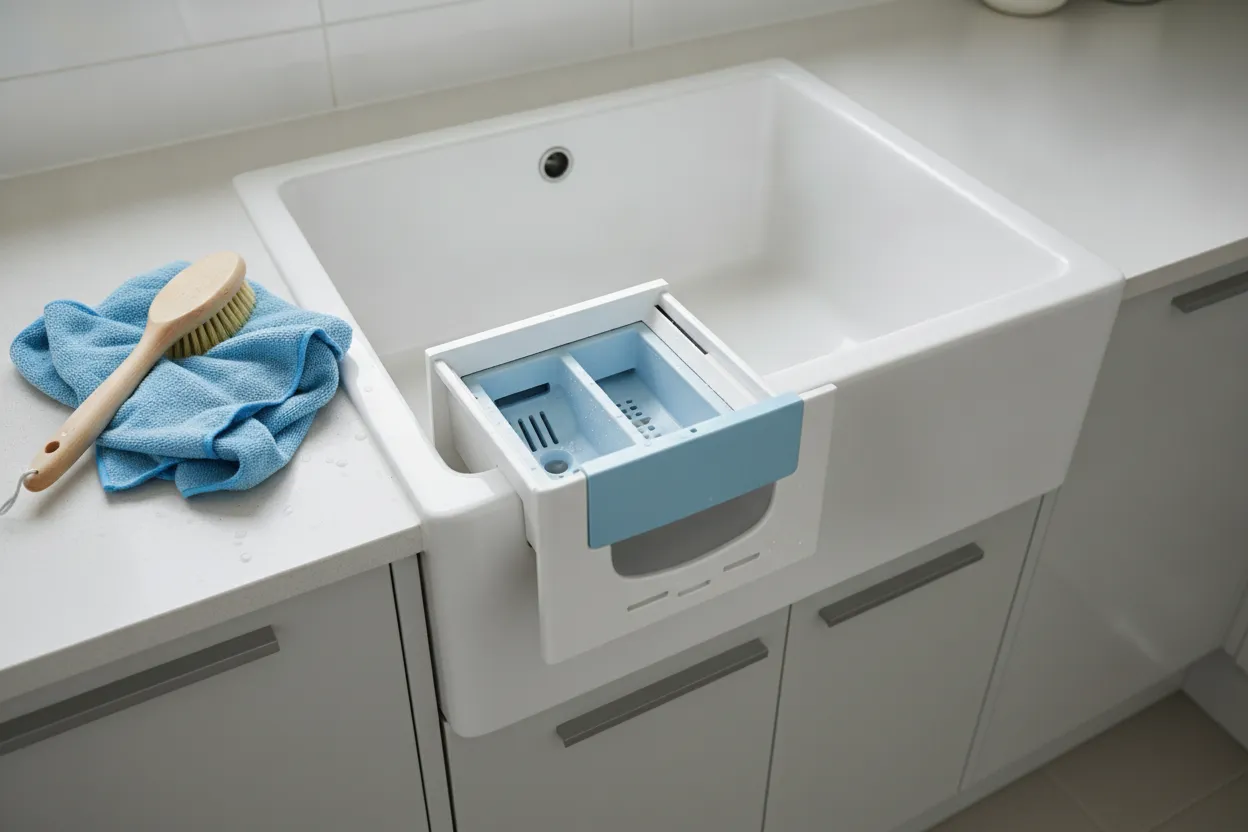
Detergent drawer
Clean the dispenser about once a month. Pull the drawer until it stops. If it lifts out easily, take it to the sink. Do not force a drawer that is not meant to come out, and do not assume it is dishwasher safe.
Wipe every compartment with a damp cloth or a washer-cleaning wipe. A removable drawer can soak in hot water, then get a soft brush on the softener residue. Whirlpool also allows a sink soak of equal parts white vinegar and water for a drawer you have removed. Rinse it, dry it, and put it back only when it is dry. A wet drawer put straight back into the machine starts the film again.
Door gasket or lid rim
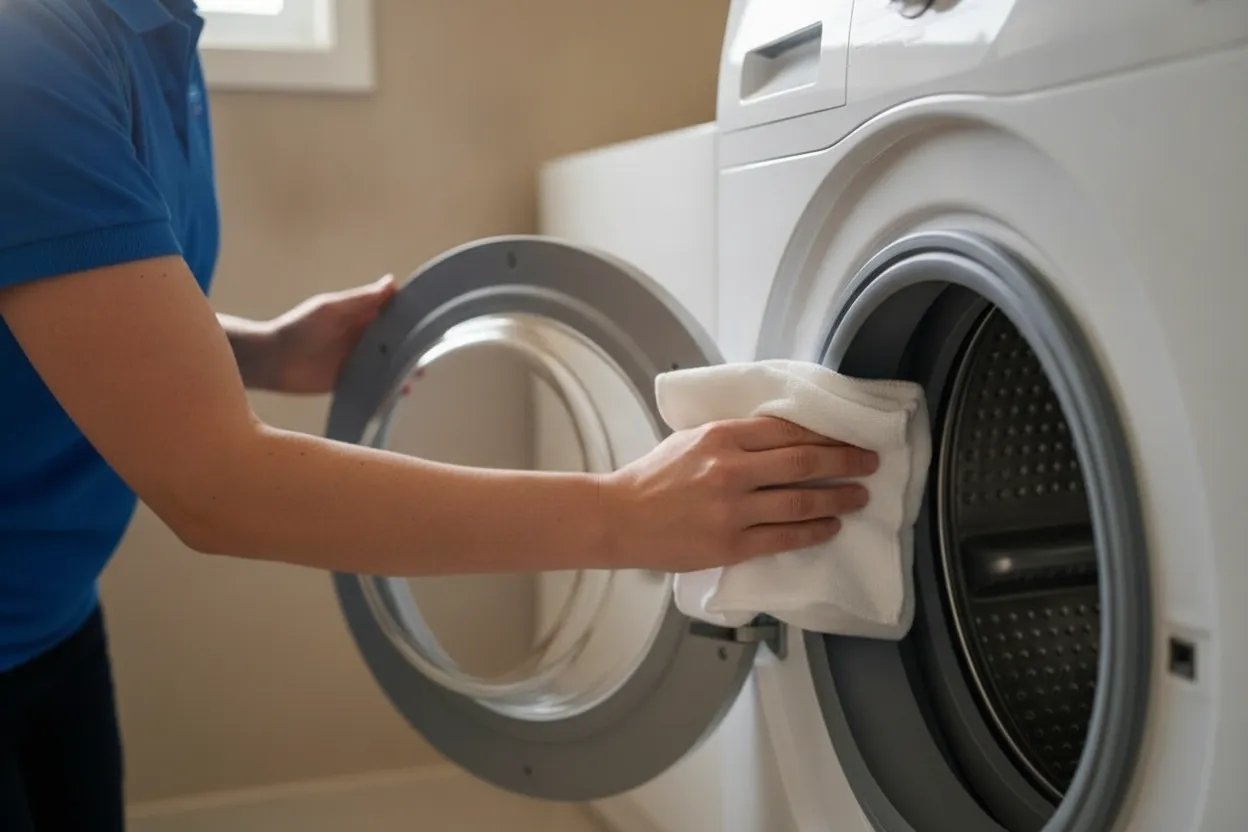
Front-load doors hide a rubber fold that traps lint, hair, and coins. Pull the gasket back gently and wipe the fold with a cloth. Skip vinegar on this rubber. That is the part Whirlpool says acidity can weaken. A top loader has no gasket, so wipe under the lid rim and around the opening instead.
If a top-load agitator has a cap that lifts off with light pressure, wipe underneath it. If the cap resists, stop. Not every cap is removable, and a forced cap becomes a repair.
Drum and cabinet
After the cycle, wipe the drum and the door glass with a dry or barely damp cloth. On the outside, use a soft cloth with mild soap, then dry it so the cabinet does not streak. Leave the door or lid ajar between wash days. That single habit does more for odor than any extra product.
Front load and top load: what changes
The cleaner and the empty-tub rule stay the same. The hand work changes with the machine you own.
| Step | Front-load washer | Top-load washer |
|---|---|---|
| Where smell hides | Door gasket fold and lower drum. | Under the lid rim and around the agitator. |
| Hand wipe | Pull the gasket back and wipe the fold. | Wipe the rim. Lift an agitator cap only if it comes off easily. |
| Cleaner placement | Put the tablet in the empty drum. Never put it in the drawer. | Use the same tablet placement, or bleach only in the bleach compartment. |
| After the cycle | Leave the door open so the seal dries. | Leave the lid open so the basket dries. |
| Vinegar | Use it only in the sink, on a removed drawer or the cabinet. | Keep the same limit. Do not pour it into the basket. |
Filters are model-specific. Some Samsung and LG machines have a small pump filter behind a lower front panel. If yours does, the manual shows the twist-out cap and a towel for the water that spills. Do not open a panel the guide does not mention.
A monthly washer habit that fits a real laundry week
Most homes in Norman and Oklahoma City do not fail this job from lack of products. They fail it because laundry never fully stops. Pick a day the basket can sit empty for a full cycle. A Sunday evening works for a lot of families. So does the morning after sheets come off the bed.
Between monthly cleans
Unload as soon as the cycle ends. Damp clothes left overnight feed the smell you are trying to remove. Shake out pet hair before the wash if the dogs sleep on the couch. A lint film in the gasket is often hair, not mold.
Measure detergent with the cap, not by eye. HE machines use less water, so a heavy pour has nowhere to rinse away. If you see suds sitting in the door after a normal load, you are using too much. Cut back before you buy another cleaner.
Keep a small cloth in the laundry room for the 30-second wipe. After the last load of the day, run the cloth around the gasket or lid rim, then prop the door. That is the whole midweek job. Save the tablet for the monthly cycle.
When a smell survives the clean cycle
Run the clean cycle again only if the first one left a visible film or the odor is still strong the next day. Affresh notes that a long-neglected washer can take up to three cycles. If the smell remains after that, stop adding products. Check the manual for a drain-pump filter, and look for a clogged dispenser that did not actually get dry.
A sour smell that returns within a week is usually wet rubber, not a failed machine. Confirm the door is actually staying open. A front loader in a tight closet often swings shut. A wooden spoon across the opening, or a magnetic door prop if the manual allows one, keeps the seal drying.
Call for appliance service if the tub will not drain, the machine leaks during the clean cycle, or you see standing water you cannot explain. Cleaning tablets do not fix a pump. They also do not belong in a washer full of clothes. Wait until the basket is empty.
Keep the routine separate from whole-home cleaning
Washer care is a one-hour household task. It is not a substitute for the floors, baths, and kitchen around it. Oklahoma dust and pet hair settle on baseboards whether the drum is fresh or not. If you want a rhythm for the rest of the house, use a recurring visit on its own schedule and keep this washer clean on the 30-day mark.
Deep cleaning is the right ask when a home needs baseboards, vent covers, and cabinet fronts, not when a gasket needs a cloth. Move-in and move-out visits cover an empty home during a move. They are a different job from a monthly appliance cycle. Window cleaning and organizing are separate too. Ask for those when the glass or the closets are the actual problem.
The office at 3200 Broce Dr in Norman answers the phone. You are not booking through a national call center. Licensed and insured crews bring their own supplies, so you do not need to leave vinegar, bleach, or a washer tablet out for them. Tell the team what matters in your home, including pets, and they plan the visit around that.
What to skip, and when the house is the bigger job
Baking soda, Epsom salt, and a vinegar-then-bleach double cycle show up in a lot of videos. They are not the procedure in the use-and-care guide, and the vinegar-then-bleach version is the mix to avoid. A tablet or the stated cup of bleach, plus wiping and drying, is the household-safe routine.
Clean the washer on its own schedule even if the rest of the house is fine. The reverse is also true. A fresh machine does not reset baseboards, bathrooms, or a kitchen that has gone past a weekly wipe. If the laundry room is the easy part and the rest of the home is the project, a one-time cleaning service covers a guest week or a reset without locking you into a contract.
Maid OK brings supplies and equipment, checks the visit with a 49-point quality-control process, and backs the work with a 100% satisfaction guarantee. If something is off, tell the team and they address it within 48 hours at no cost. Recurring visits can run weekly, every other week, or monthly, with up to 15% savings and no contract. Teams serve Norman and the greater Oklahoma City metro, about 50 miles around the Norman office, including Edmond, Moore, Yukon, and Mustang.
For the rooms around the laundry, the kitchen deep cleaning checklist and the bathroom deep cleaning checklist keep appliance work in its lane. If you are deciding how often a whole house needs help, read how often to schedule house cleaning rather than stretching this washer routine into a whole-home plan. Recurring visits include the cleaning supplies, so you are not stocking a caddy for every room.
When the washer is done and you want the rest of the house handled, professional home cleaning from a Norman crew is the next step. Home organizing helps if the laundry pile is really a sorting problem. Preparing for a house cleaning visit is a short list if you book help for the first time.
Get a free house cleaning quote or call (405) 447-4964.
Frequently asked questions
How often should I clean my washing machine?
About once a month, or every 30 wash cycles, whichever comes first. Run it sooner after a dye bleed or when loads start smelling musty. Leave the door open between washes so you are not starting from a wet drum.
Can I use vinegar to clean the washing machine?
Not in the drum. Whirlpool says vinegar can damage rubber seals and hoses. You can soak a removed dispenser drawer in equal parts white vinegar and water, and you can wipe the outside cabinet with a vinegar-and-water cloth. Never combine vinegar and bleach.
Where do I put the cleaning tablet?
In the bottom of the empty drum. Do not drop it in the detergent drawer, and do not add detergent on the same cycle. If you use bleach instead, put 1 cup of liquid chlorine bleach in the bleach compartment only, and only if your guide allows it.
Why does my front loader smell if I already run hot cycles?
Hot water slows film inside the machine. It does not wipe the gasket. Pull the rubber fold back, remove lint and hair, and leave the door ajar after every wash. Overfilled detergent is the other common cause. Use HE detergent at the labeled amount.
Does Maid OK clean washing machines?
This guide is the at-home routine. Maid OK's residential visits cover the home around the laundry room: recurring, one-time, deep, and move-in or move-out cleaning, plus organizing. The crew brings supplies, and you can see the Norman service area before you request a quote.
Need a hand with the actual cleaning? Get a free Maid OK quote.