
Paperwork Organization Help in Norman: A Homeowner Guide
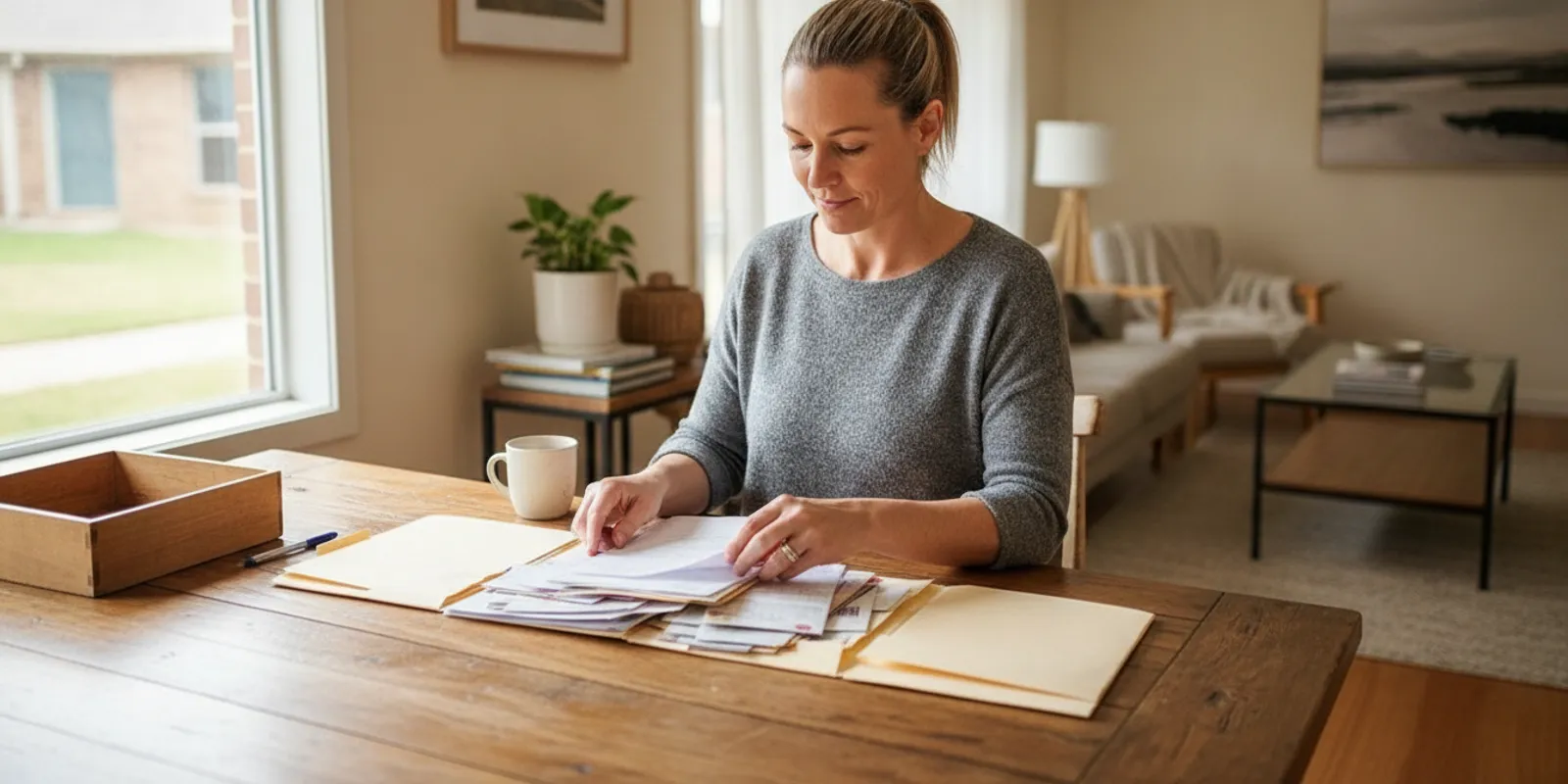
Paperwork organization help in Norman can begin with a small, defined goal: make the documents your household uses easier to find and act on. Mail, school forms, bills, warranties, health papers, and home records often land in separate places. A simple system can bring them together without requiring you to empty every drawer at once.
What should you gather before sorting household papers?
Start by noticing where paper already collects. Check the kitchen counter, entry table, desk, mail basket, car, reusable bags, and the places where family members drop school or appointment papers. Gather only what is in those everyday landing spots for the first session. Boxes in closets and old filing drawers can wait until you have a workable process.
Before sorting, decide what a successful first session means. It might be clearing one counter, finding an upcoming bill, or creating a home for new mail. Pick a time limit and a work surface with enough room for a few temporary piles. Have folders or containers, a pen, a recycling container, and a secure disposal option ready. Do not start by buying a large filing system; first learn what kinds of documents you actually handle.
Use broad groups for the first pass. These are organizing categories, not rules about how long to retain any record.
- Needs action: bills, forms, renewals, notices, and papers with deadlines.
- Home: purchase or rental documents, repair receipts, appliance information, and warranties.
- Family and health: school notices, activity schedules, medical information, and instructions you may need to reference.
- Financial and tax: statements, receipts, and records you are keeping for reference.
- Reference: manuals and other useful information that does not fit a more specific group.
- Review before removing: duplicates, old notices, and papers you think may no longer be needed but have not checked.
When a document raises a legal, tax, financial, or medical retention question, do not guess. Put it in a review folder and check with the issuing institution or an appropriate professional. If you have a tax-record question, start with the Internal Revenue Service and look for guidance that applies to your situation. A general organizing routine cannot determine which originals your household should keep.
How can you sort without spreading papers through the house?
Contain the work to one small area and move one item at a time. Opening several drawers, bags, and boxes together can turn a few stacks into a room-wide project. A boundary makes it easier to pause, restore the surface, and resume later.
- Set up a temporary work zone. Put your broad-category folders within reach. Keep documents that need a decision in a separate review pile rather than mixing them with items you have already sorted.
- Check for a next step. For each paper, ask whether it calls for payment, a signature, a phone call, a submission, a renewal, or a question. Place it in the action spot and note the deadline in the calendar or reminder system your household already uses.
- Group related records. Keep papers about one household subject together. A repair estimate, warranty, and service receipt might belong under “water heater” within a home folder, rather than in three unrelated piles.
- Make removal decisions carefully. Set aside obvious unwanted inserts or envelopes, but do not discard a record just because it looks old. Resolve retention questions before choosing a disposal method.
- Close the session deliberately. Put sorted papers in their temporary homes, return undecided items to the review folder, and leave a note about where you stopped. A clear stopping point makes the next session easier.
For example, imagine that a school form, a utility notice, and a home repair receipt are mixed on the entry table. The form and notice may need action, so each goes to the visible action tray with its due date recorded. The receipt belongs with home records. You have made progress without deciding the permanent location of every document in the house.
Which filing setup fits your household?
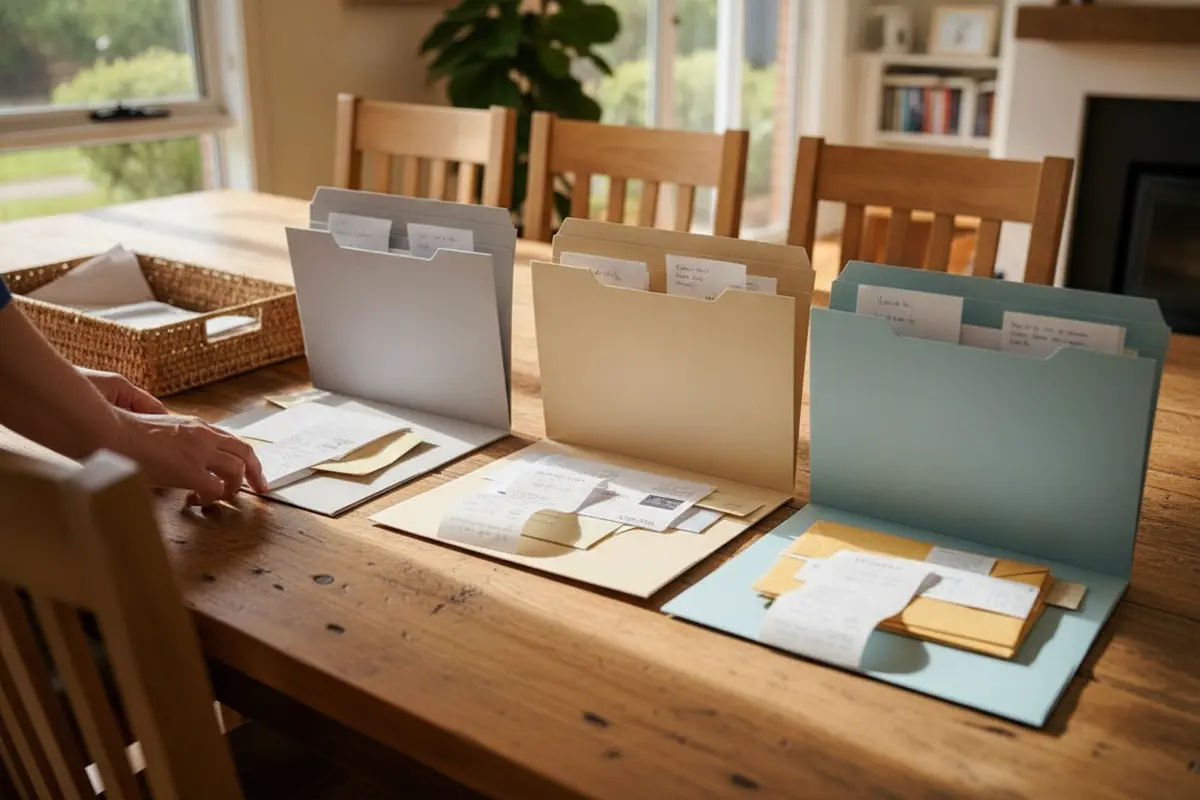
A useful filing method is one people in the household can understand and keep using. Consider how much paper you retain, where you have room, and whether you need to carry records to appointments. Keep active tasks separate from reference documents so a bill or form does not disappear into long-term storage.
| Setup | Good fit when | Simple way to begin | Potential drawback |
|---|---|---|---|
| Portable file box | You want a contained home for a growing set of records. | Use broad hanging folders and one separate action folder. | Overfilling can make retrieval difficult. |
| Drawer or cabinet | You have a dedicated spot and a moderate amount of paper. | Label a few sections by household topic and leave open space. | Closed doors can hide an unsorted backlog. |
| Accordion folder | You need a light option that is easy to carry. | Use a small number of clear sections and date active papers. | Large files may not fit comfortably. |
| Digital copies plus selected paper originals | You already have a secure way to save and retrieve files. | Choose consistent file names and a reliable backup routine. | Scanning and upkeep take time; a copy does not always replace an original. |
Do not create a separate folder for every single paper type at the start. A short list of familiar labels is easier to use. If “home” becomes too crowded, split it into recurring subjects such as repairs and appliances. Add a category when it solves a real retrieval problem, not simply because a filing guide lists it.
Place the system near the point where mail is handled if practical. If there is no room there, choose one known storage spot and make the route to it easy. An inbox near the entry can catch incoming papers; a short, regular sorting session can move them into action or reference folders. A small tray can be useful, but it should not quietly become the permanent file cabinet.
How should you protect papers that contain personal information?
Some records contain account details, identification information, health information, or other private material. Keep those papers out of casual view and store them in a place household members can access without leaving them exposed to visitors. Decide who needs access and where important documents belong before an urgent moment arrives.
When you decide a paper can be removed, choose a disposal method appropriate to the information on it. Separate sensitive papers from ordinary recycling if you use a secure disposal method. For digital copies, use a storage location you trust, protect access, and consider how you will retrieve the file if a device changes. Scanning everything can create extra work and does not automatically mean the original should be discarded.
It can help to make a simple index for records that are stored securely. The index might say that a particular category is in a labeled folder or a chosen digital location, without copying sensitive account details into a less secure list. Keep the index current when you move records. The goal is to know where to look, not to duplicate private information unnecessarily.
How can you keep deadlines visible?
Separate follow-up from filing. Use a visible action tray or folder for papers that call for a response, and write down the next step in plain language. “Call about renewal” is more useful than a vague note such as “handle this.” Add a date when a deadline or appointment is involved, and identify another household member if they need to act.
When you review an action item, ask:
- What is the next specific action?
- Is there a date by which it must happen?
- Does someone else need to see, sign, or provide information?
- After the task is complete, should the paper be filed, retained for review, or securely disposed of?
Keep the action tray small enough to review. If it fills up, take a short pass through every item and give each one a next step. Completed documents should leave the active tray promptly. This protects the difference between “still needs attention” and “kept for reference.”
What routine prevents another paper pile?
Maintenance can be brief and attached to something you already do. Choose a recurring moment, such as after a weekly household reset, and spend ten or fifteen minutes processing new papers. Open mail near the inbox, remove obvious inserts, route deadlines to the action spot, and file completed items. The exact day matters less than having a repeatable cue.
Make the system visible and easy to reach. Keep a pen, a few folders, and the recycling container nearby. If more than one person handles household mail, agree on one landing place and a simple way to flag urgent items. A system that depends on one person remembering a complicated set of rules is likely to break down when life gets busy.
Try a short weekly sequence:
- Clear the incoming-paper spot and sort by action, home, family, financial, reference, or review.
- Move deadline papers to the action tray and add dates to the household calendar.
- File finished items in their assigned location.
- Review anything marked “check first” and identify who can answer the question.
- Reset the inbox so it is ready for the next week.
If the paper flow is large, adjust the frequency rather than waiting for a huge cleanout. A brief twice-weekly review may be easier than a long monthly session. If the flow is light, a weekly check may be enough. The key is to keep the incoming pile from becoming the place where decisions go to wait.

What should you change when the system stops working?
A filing method often needs adjustment after a few weeks of use. If the inbox is always full, the landing spot may be too far from where papers arrive, or the review time may not suit your schedule. Move the inbox closer or add a second brief review during a busy period. If papers labeled “miscellaneous” are difficult to find, replace that catchall with one or two specific groups based on what you actually retrieve.
If deadlines are still being missed, make the action tray more visible and attach a calendar reminder to the review itself. If household members keep placing papers in different locations, agree on a shared intake point and post a simple note nearby. If a folder is overflowing, review whether it contains a mix of active tasks and records for reference before adding storage. A small change to the workflow is often more useful than buying more containers.
After a move, school-year change, or major home repair, take a short inventory of what has changed. Update folder labels, move records to their new secure location, and revise the index. Do not assume a former system still matches new household responsibilities. A brief reset keeps familiar papers findable while leaving room for the new documents that come with a change.
How can you adapt the system to a real household week?
A filing plan has to fit the paper that arrives, not an idealized household routine. Consider a family that receives school notices, appointment summaries, utility bills, and repair paperwork in the same week. Instead of asking everyone to file each item perfectly as soon as it arrives, agree on one shared landing tray. During the scheduled review, separate the items that need action, decide who owns each next step, and file the finished records together by topic. The agreed landing place reduces the chance that a paper disappears in a backpack or on a different counter.
For a renter, the home category might hold lease-related correspondence, move-in condition records, appliance instructions, and maintenance requests. For a homeowner, it might include repair receipts, warranties, and documents about major household equipment. These examples are starting points, not a list of records everyone must retain. Keep categories broad at first, and follow any retention guidance that applies to your own documents.
For a household with limited storage, keep only active papers close at hand and move less frequently used reference files to a designated secure place. Use a short index to identify where those records live. For a household with several people handling incoming papers, add a simple routing rule: urgent or dated items go directly into the action spot, while other papers wait in the inbox for the next review. The arrangement should make the next decision obvious without forcing anyone to learn a complex filing code.
It is also useful to test the setup before adding more folders. Choose a few ordinary examples and ask another household member to locate them: an upcoming bill, a school form already completed, and a home repair receipt. If the person cannot tell where each belongs, simplify the labels or move the folders closer to the point of use. A system is practical when a person can put away and retrieve a document without asking the original organizer to interpret it.
When might organizing help make the project easier?
Outside organizing help may be useful when papers have spread across several rooms, a move or household change has disrupted the old system, or you want support making a specific area more usable. Before asking for help, define a practical result: clear one work surface, set up a filing area, sort a named category, or decide where incoming mail will go.
Set the boundaries in advance. You remain the decision-maker about personal records, what to keep, and whether a document can be discarded. A helper can support the physical sorting and system setup, while questions about retention belong with the appropriate professional or issuing organization. For a focused home project, explore Maid OK's professional organizing services. Its home decluttering guide offers related ideas for approaching household belongings in manageable steps.
Organizing and residential cleaning are different tasks. Sorting personal documents calls for your choices about sensitive information and filing; residential cleaning addresses household spaces and surfaces. If you are looking for help with the latter, review Maid OK's residential home services and the service area information to see whether your household is covered. You can also read the house cleaning FAQ for common service questions or visit the about page for company background.
For local households, the Norman service page provides location-specific information. When you are ready to ask about residential service, the quote form is the direct next step. Keep a project request specific: explain which area you want to address and what would make it easier to use afterward.
Call Maid OK at (405) 447-4964
Frequently Asked Questions
What should I do with a document if I am unsure whether to keep it?
Put it in a clearly marked review folder and identify who can answer the question. For tax, legal, medical, or financial records, check with the relevant professional or issuing institution before discarding an original.
Do I need to scan every household paper?
No. Scan or photograph a document when a digital copy will make it easier to retrieve or share, and store it securely. Keep originals when appropriate; a digital copy is not automatically a substitute.
How many folders should I create?
Begin with a few broad categories such as action, home, family, financial, and reference. Split a category only when its volume makes a smaller group genuinely easier to search.
Can an organizing helper choose which records to discard?
You should make the final decisions about personal papers. An organizing helper can assist with sorting and setting up a system, but retention questions should go to the relevant professional or institution.
What is the best first step if the paperwork feels overwhelming?
Choose one landing spot and set a short timer. Sort only the papers there into broad groups, separate anything that needs action, and stop at the planned time. A contained first session is easier to repeat than an attempt to organize the entire home at once.
A dependable paperwork system does not need to be elaborate; it needs to help your household find important documents, notice deadlines, and put new papers away with less effort.
Need a hand with the actual cleaning? Get a free Maid OK quote.