Professional Commercial Cleaners: OKC Vendor Guide
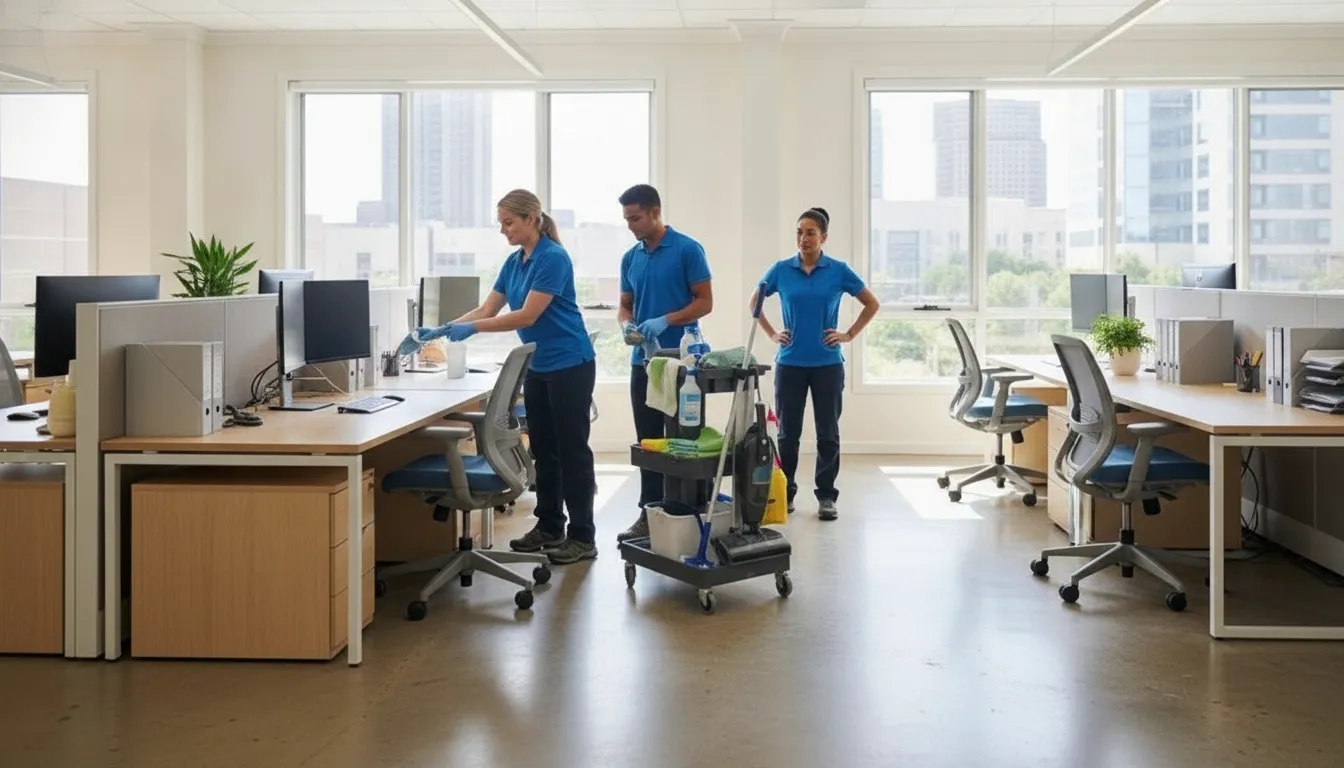
Choosing professional commercial cleaners is a business decision, not just a facilities chore. An Oklahoma City office needs a provider that can document its scope. Protect access to the building, communicate around operating hours, and respond when the agreed standard is missed.
Request an Oklahoma City commercial cleaning quote
The best professional commercial cleaners give an office manager a specific scope, a dependable staffing plan, supplied equipment, documented safety practices, and a clear inspection and issue-resolution process. Compare those systems, not just a promise to keep the office clean.
The goal of this guide is to help a business evaluate a cleaning partner before signing an agreement. It focuses on vendor evidence, operational fit, and accountability, while leaving room for each office to define its own priorities.
What should professional commercial cleaners prove before you hire them?
A strong vendor conversation starts with evidence. A provider should be able to explain how it learns a facility, turns that information into a written scope, assigns responsibility, and checks the completed work. That evidence is more useful than a long list of generic tasks because it lets an office manager predict how the relationship will work after the first visit.
Start with a facility walk-through
Ask the provider to walk through the actual workplace before finalizing a proposal. The visit should identify entrances, reception areas, corridors, private offices, shared workspaces, conference rooms, breakrooms, restrooms, storage areas, and any restricted rooms. It should also note floor materials, high-traffic paths, access instructions, waste locations, and hours when cleaning can occur.
For an Oklahoma City metro business, the walk-through is also a practical test of communication. Does the representative ask how employees use the space? Do they ask about visitors, food areas, security, or special events? Do they distinguish a recurring maintenance plan from a one-time reset? Those questions reveal whether the provider is designing a service or simply repeating a sales script.
Require a scope that another manager can understand
A useful scope states the area, task, frequency, and responsibility. For example, it can identify who cleans restroom fixtures, who replenishes approved supplies, where waste is staged, and how a missed task is reported. It should state whether desks and counters must be cleared by staff before surface cleaning and whether interior appliances or other specialty work is included.
Keep the scope specific without assuming every office needs the same list. The right question is not whether a proposal contains the most tasks. It is whether the proposed work matches the facility's traffic, schedule, surfaces, and priorities. Businesses can use Maid OK's commercial janitorial service information as a starting point when defining the conversation, then confirm the exact scope for their own property.
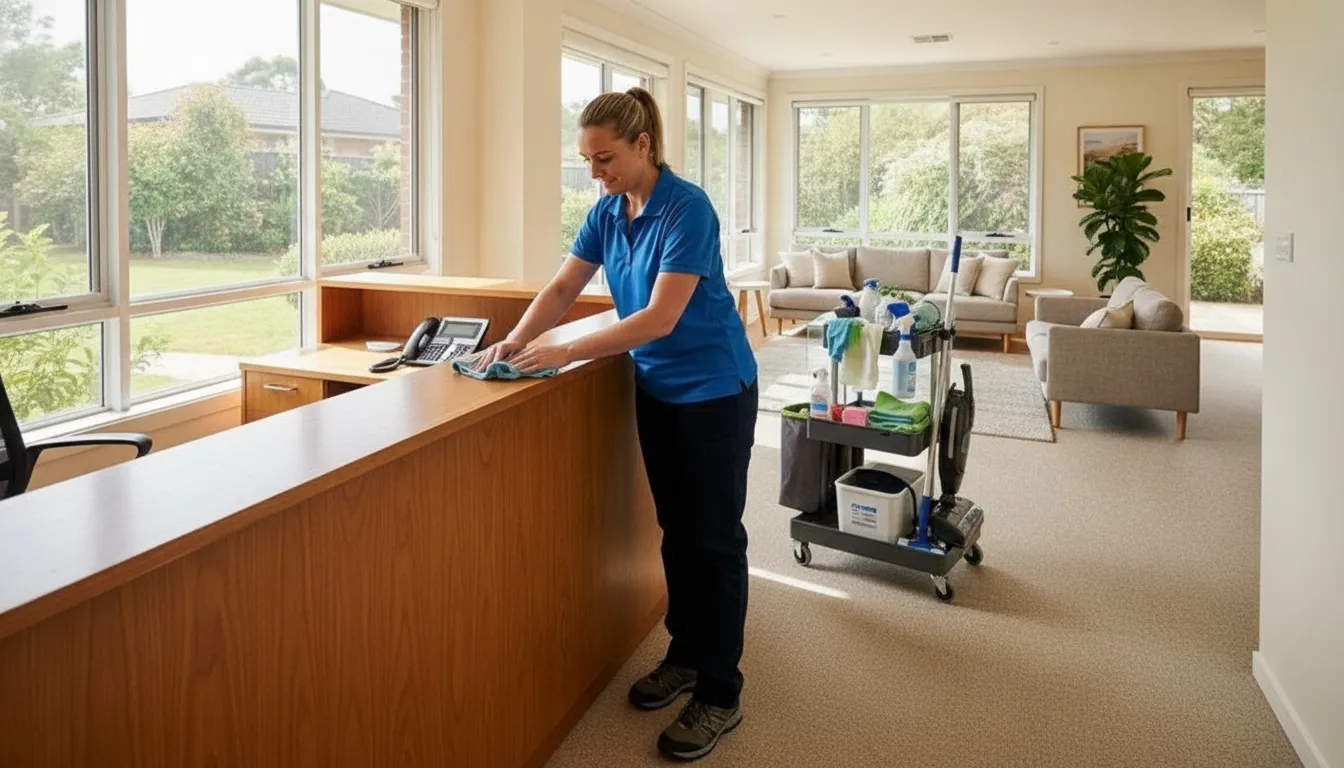
How can an office compare commercial cleaning proposals fairly?
Comparing proposals becomes difficult when each provider uses different labels. One may describe a complete office clean while another separates restrooms, floors, waste, and high-touch surfaces. Use the same questions for every provider, and record the answers in a simple decision matrix.
Score the service model, not the marketing language
Ask each provider to respond to the same five areas: facility coverage, staffing ownership, schedule fit, quality control, and communication. A proposal that is easy to compare is often a sign that the provider has a repeatable operating system. A proposal that relies on broad assurances may require more follow-up before it can be approved.
| Decision area | What to verify | Why it matters |
|---|---|---|
| Scope | Rooms, surfaces, waste points, exclusions, and task frequency | Prevents gaps and makes a missed task identifiable |
| Staffing | Assigned team, supervisor, backup coverage, and access responsibilities | Shows who owns the work when schedules change |
| Supplies | Equipment, products, dispensers, liners, and replenishment duties | Prevents surprise responsibilities for office staff |
| Schedule | Visit windows, after-hours access, holidays, and event changes | Protects business operations and building security |
| Quality | Inspection method, contact path, response standard, and follow-up | Turns service quality into an observable process |
Ask for exclusions before they become disputes
Every office cleaning relationship has boundaries. Ask whether the proposal excludes interior appliance cleaning, exterior windows, carpet extraction, high work, moving heavy furniture, or event cleanup. Exclusions are not automatically a problem. Unclear exclusions are the problem because they create different expectations for the office manager and the cleaning team.
Also ask how additions are approved. A business may add a conference room, change its operating hours, or need extra attention before an event. The provider should explain whether the scope can be adjusted, who authorizes the change, and how the revised expectation is communicated to the team. This makes the relationship easier to manage than an informal request passed from employee to employee.
What staffing model fits an Oklahoma City office?
Staffing is not only a question of how many people arrive. It includes team continuity, supervision, access control, arrival timing, and backup coverage. A smaller office with a stable schedule may need a different model from a busy workplace with frequent visitors and several shared spaces.
Confirm who owns the work on every visit
Ask whether the provider assigns a regular team, a team leader, or another named point of responsibility. Consistent assignments can help the crew learn the facility and help the office recognize who is authorized to enter. If regular staff are unavailable, ask how a substitute is briefed on the scope and access rules.
Do not accept a staffing promise without asking how quality is checked. A supervisor or team leader should have a defined role in reviewing the work, recording concerns, and communicating changes. The objective is not to micromanage the crew. It is to know who is accountable when the work needs clarification.
Match the visit window to business activity
Cleaning may occur before opening, after employees leave, or during a controlled daytime window. Discuss alarm procedures, keys or access codes, occupied rooms, deliveries, sensitive areas, and the process for securing the building after service. A provider that asks these questions early is more likely to protect the office's real operating needs.
Schedule fit also includes unusual weeks. Ask what happens around holidays, office closures, move dates, or a large event. A dependable plan describes how the office requests a change and how the provider confirms it. That communication matters as much as the ordinary recurring schedule.
Use a coverage plan instead of relying on one person
Ask what happens when a team member is sick, a vehicle is delayed, or the building cannot be accessed at the normal time. The answer should explain how the provider communicates the change, protects the agreed scope, and records any follow-up. A continuity plan reduces the chance that the office manager discovers a missed visit only after employees arrive.
What safety, supplies, and insurance questions should a buyer ask?
Commercial cleaning touches shared surfaces, floors, restrooms, waste, equipment, and sometimes occupied spaces. A buyer should understand what the cleaning company supplies, how products are selected, and what documentation supports the relationship. This is a due-diligence conversation, not a request for the office manager to become a chemical specialist.
Confirm the provider brings the agreed equipment
Ask whether the provider supplies cleaning products, tools, vacuums, mops, liners, and other routine equipment. Maid OK's company materials state that supplies and equipment are provided, but each business should still confirm what is included for its own commercial scope. Clarify how damaged equipment, special floor surfaces, and replacement supplies are handled.
Product questions should focus on use and control. Ask how products are labeled, stored, transported, and kept away from employees or visitors. If the workplace has indoor-air, scent, or occupancy concerns, share them during the walk-through and ask which practices can address them. The EPA guide to indoor air quality in office buildings provides useful background for that discussion.
Request current insurance and licensing information
Ask the provider to explain its licensing and insurance status, what documentation is available, and how often it is updated. These questions help a business verify accountability before employees give a vendor regular access to the property. Avoid relying on an unsupported badge or a vague statement that the company is covered.
Also ask how the company hires and prepares cleaning professionals. The precise process will vary, but a provider should be willing to explain its training, supervision, and screening approach. For work involving products, waste, or occupied spaces, the provider should be able to discuss basic hazard controls. OSHA's cleaning industry hazards and solutions guidance can help an office manager create informed questions.
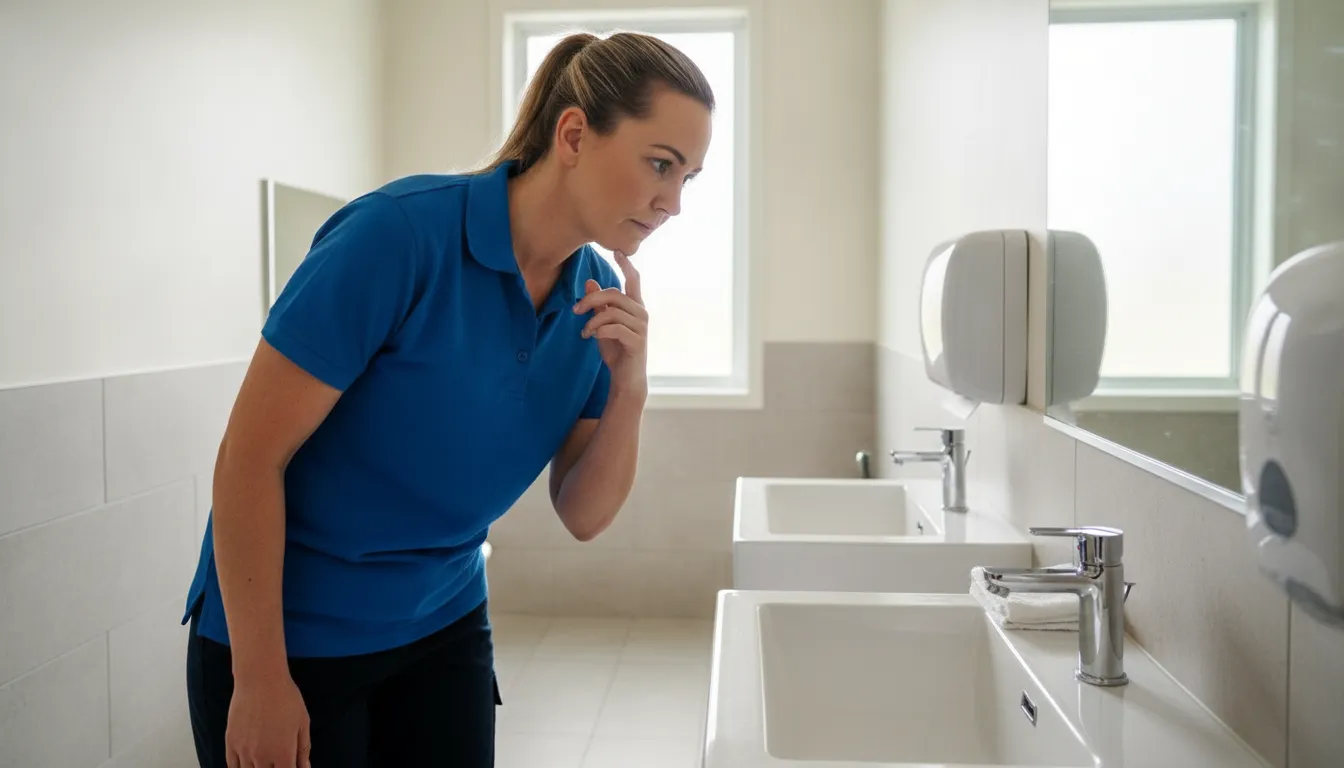
How should inspections and issue communication work?
The service is easier to manage when quality is checked through a repeatable process. An office manager should not have to discover every problem by walking through the facility after a visit. Ask how the provider inspects work, who receives feedback, and what happens after a concern is reported.
Look for documented checkpoints
Ask whether the company uses a checklist, team-leader review, customer confirmation, or another quality-control method. Maid OK describes a 49-point inspection standard and a 100% satisfaction guarantee in its company materials. Those trust signals are most useful when the office also understands how the provider applies its quality process to the commercial scope.
The inspection should connect to the agreed scope. If the proposal identifies restrooms, breakrooms, floors, entries, and touch points, the quality review should make those areas observable. A useful record can note the location, concern, requested correction, and follow-up status. That creates a shared reference when the facility changes.
Define the escalation path before the first visit
Ask who the office contacts, which channel is preferred, what information should be included, and how the provider confirms receipt. The process should work even when the regular account contact is unavailable. A clear path keeps a small issue from becoming a recurring frustration.
Maid OK offers a 48-hour resolution promise for concerns. A buyer should confirm how that promise applies to the proposed commercial service and what information helps the team respond. The point is not to demand that every concern be resolved in the same way. It is to establish a known next step when the agreed standard is missed.
What should an office confirm before signing an agreement?
Before approving a cleaning partner, review the written proposal as an operating document. It should allow an office manager, cleaning supervisor, and backup contact to understand the same expectations without relying on memory from the sales meeting.
Use a final approval checklist
- Facility: Confirm the rooms, surfaces, access points, and traffic patterns covered by the walk-through.
- Scope: Confirm recurring tasks, frequency, exclusions, special requests, and who supplies routine equipment.
- Staffing: Confirm the assigned team, supervision, substitute process, and access responsibilities.
- Schedule: Confirm service windows, closure dates, holiday handling, event changes, and arrival communication.
- Quality: Confirm inspection checkpoints, the contact path, issue documentation, and the response commitment.
- Business terms: Confirm the quote, payment process, cancellation language, and whether the arrangement requires a contract.
Choose clarity over the longest task list
The right professional commercial cleaners are not necessarily the provider with the longest proposal. The better choice is the team whose scope fits the facility and whose operating process is clear enough to manage. A concise plan with defined ownership can be more useful than an impressive list that leaves frequency, exclusions, and follow-up unresolved.
Maid OK is a locally owned company established 1977 and serves residential and commercial customers in the greater Oklahoma City area. Its commercial materials emphasize flexible service, supplied equipment, licensed and insured operations, quality checks, and communication. Review the current commercial janitorial service details, then confirm the specific plan with the team.
Get a tailored commercial cleaning quote
Frequently Asked Questions
What do professional commercial cleaners do for an office?
Professional commercial cleaners can maintain the areas and surfaces defined in a business's scope. Depending on the facility, that may include entries, shared workspaces, restrooms, breakrooms, floors, touch points, and waste areas. The exact duties, frequency, exclusions, and supplies should be documented before service begins.
How should an office compare commercial cleaning companies?
Compare providers using the same questions about scope, staffing, supplies, schedule, quality inspections, insurance, and communication. Look for a written plan that identifies responsibility and exclusions. A provider that explains how it handles substitutions, concerns, and schedule changes is easier to manage than one that offers only a general promise.
Do commercial cleaners bring their own supplies and equipment?
Many providers supply routine products and equipment, but the buyer should confirm the details in writing. Ask about vacuums, mops, liners, dispensers, product storage, special floor surfaces, and replenishment duties. Maid OK states that supplies and equipment are provided, while the final commercial scope should define what that means for the individual workplace.
How often should an Oklahoma City office schedule cleaning?
The right schedule depends on employee traffic, visitors, restrooms, breakrooms, floor surfaces, operating hours, and the standard the business wants to maintain. Ask the provider to recommend a cadence based on a walk-through rather than choosing a frequency without discussing how the office is used.
What should an office do when cleaning quality misses the agreed standard?
Use the agreed contact path and identify the location, task, date, and requested correction. A documented process helps the provider respond and lets both sides see whether the issue is isolated or recurring. Before signing, confirm the provider's resolution commitment and how follow-up is recorded.
Ready to evaluate your commercial cleaning options?
A productive quote conversation starts with the facility details that affect service: the areas to maintain. Operating hours, access requirements, traffic patterns, quality priorities, and the support your team expects. Maid OK can review those needs and help your Oklahoma City area business define a practical commercial cleaning plan.
Need a hand with the actual cleaning? Get a free Maid OK quote.