
Professional Home Organizing: A Step-by-Step Service Guide
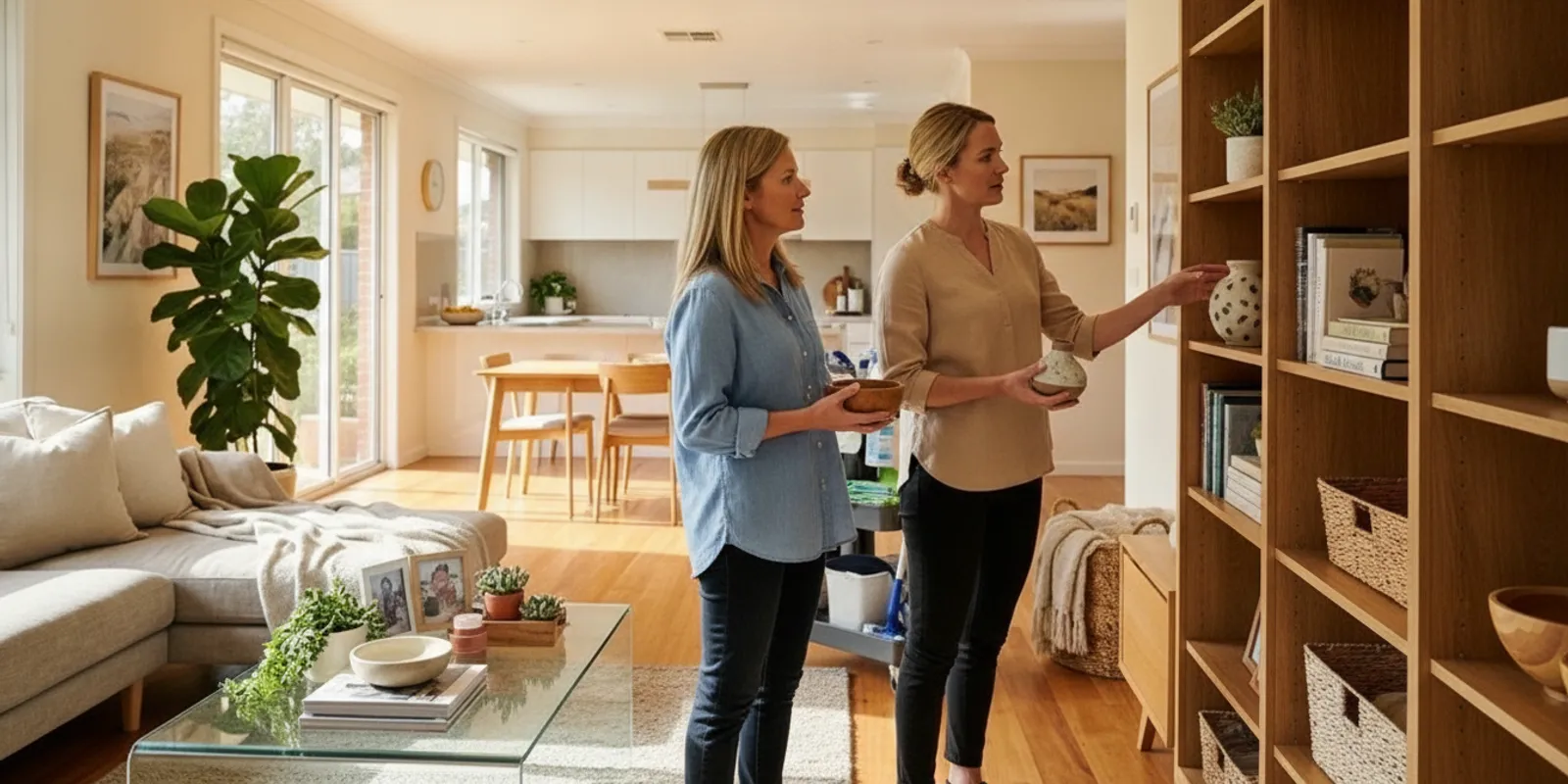
Professional home organizing is not just about putting items into matching containers. A useful project starts with the way you live, identifies what is getting in the way, and builds a clear plan for sorting, placement, and everyday upkeep. Whether a crowded entryway slows down mornings or a spare room has become hard to use, a step-by-step process can make the work feel manageable.
Maid OK offers professional organizing services in the Oklahoma City area. The details of a project depend on the space and the help you are looking for, so it is useful to begin with your priorities rather than assume every organizing visit follows the same formula. Here is what a thoughtful engagement can involve and how to prepare for one.
What does a professional home organizing engagement involve?
Organizing is a sequence of decisions, not a single makeover. First, you and the organizer identify a problem area and define what “working better” would mean. Then you sort and make decisions about belongings, determine where useful items should live, and create simple routines that support the new arrangement.
The goal is not to make a home look like a showroom. A system should fit your household’s habits. Frequently used items need to be easy to reach; occasional items may be stored farther away. Family members should be able to understand where things belong without having to remember a complicated set of rules.
Projects can focus on one room, a specific storage area, or a few connected trouble spots. An entryway and nearby closet, for example, may work better as a shared project if both affect how shoes, bags, and coats move through the home. You can learn more about Maid OK’s professional organizing service and ask which scope makes sense for your priorities.
How do you set priorities before sorting?
Start with the problem you want to solve, not the container you think you need. A useful first conversation is concrete: “We cannot find the school bags in the morning,” or “The dining table is covered with papers.” That describes a daily obstacle. “Make the house perfect” is too broad to guide decisions.
Choose a starting area by considering how often it causes friction, who uses it, and whether it is manageable to address now. A small, frequently used space may offer a satisfying first project. A large storage area can make sense when it blocks access to things the household needs. There is no universal best room; the right choice is the one with a clear purpose and realistic scope.
- Name the pain point: What takes too long, gets misplaced, or prevents the space from being used?
- Describe a practical result: What should be easy to find, reach, put away, or do in this area?
- Identify the users: Who needs to use the system, including children or other household members?
- Set a boundary: Choose a room, closet, shelf, or category so the project has a workable edge.
- Note constraints: Consider access, mobility, available storage, shared spaces, and items that need special care.
It also helps to distinguish a visible symptom from its cause. If mail piles up on a counter, the issue may be that there is no agreed place to review it, not that the counter needs a decorative tray. If cleaning supplies are scattered, the practical question is where they are safe and convenient to store. A good plan aims at the routine behind the clutter.
What happens during the sorting stage?
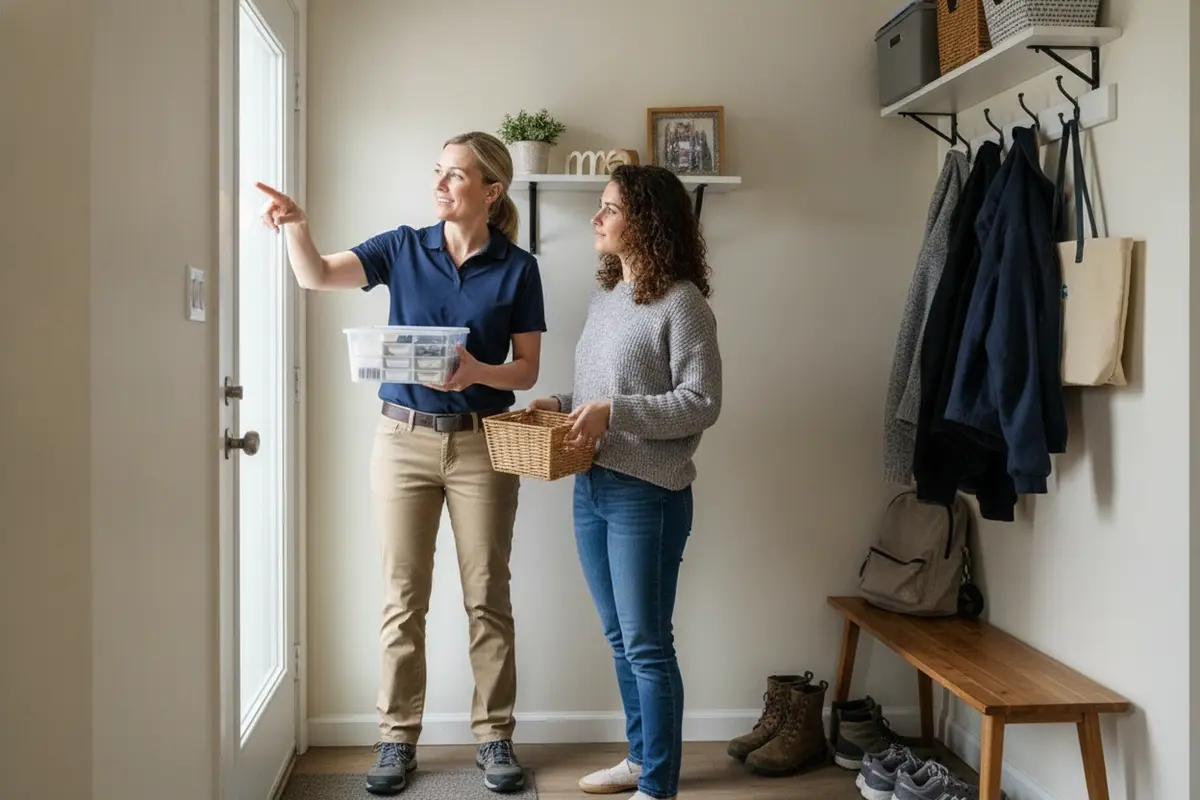
Sorting brings decisions into the open. Items are grouped in a way that makes choices easier, such as keeping together belongings that serve the same activity. The organizer and homeowner can then consider what is useful, what belongs somewhere else, and what the owner is ready to let go of. The homeowner remains the decision-maker for personal belongings.
A careful pace matters. You do not need to decide the fate of every object in the home at once. Work within the agreed area and pause when a decision requires more time or input from another household member. If an item belongs to someone who is not present, set it aside for their review instead of making the choice on their behalf.
Make distinct destinations for items that are staying, relocating to another room, or leaving the space. Keep those categories physically separate. Otherwise, an item that was only moved temporarily can return to the same pile. For uncertain items, a clearly labeled review box can create a pause without letting undecided belongings spread across the room. Agree on when the box will be revisited so it does not become permanent storage by default.
For household paperwork, gather papers in one place before deciding what needs action, filing, or secure disposal. If records are part of the project, use a consistent filing approach and avoid keeping unnecessary duplicate copies; the Preserving Professional Papers guide discusses organizing materials and avoiding redundant copies. For sensitive records, follow appropriate privacy and disposal practices rather than leaving them exposed during a project.
Sorting is not a test of how quickly someone can part with belongings. Some items carry memories, represent a current need, or belong to another person. A respectful process creates room for those decisions and does not treat discarding as the only measure of progress.
How do you turn decisions into useful placements?
Once you know what is staying, decide where it should live based on how and when it is used. Keep daily essentials near the point of use. Place occasional or seasonal items in less accessible storage, as long as they remain identifiable and reachable when needed. Group items by activity or purpose so people can find a complete set without searching several rooms.
Before buying organizers, look at the storage already available. A drawer divider, a labeled box, or a simple shelf arrangement may be enough. Measure a shelf or drawer before choosing a container, and leave enough room to remove items easily. Too many bins can hide belongings, consume useful space, and make it harder to put things away.
Think about safety and comfort, too. Heavy items are generally better stored where they can be lifted without reaching high or bending awkwardly. Items used by children should be placed at a height they can manage, when appropriate. Keep walkways and frequently used surfaces clear enough for the household to move through the space comfortably.
| Area or item type | Placement principle | Simple maintenance cue |
|---|---|---|
| Daily essentials | Keep close to the place where they are used | Return each item after the routine |
| Shared household supplies | Choose one location that all users can identify | Check the home location before buying replacements |
| Occasional or seasonal items | Use less accessible storage, but keep contents identifiable | Review when the relevant season or activity returns |
| Papers needing action | Separate from papers being kept for reference | Set a regular time to review the action area |
| Items awaiting a decision | Keep in one contained, clearly identified place | Choose a date to revisit rather than adding indefinitely |
Use the table as a starting point, not a fixed rulebook. A system that looks neat but is inconvenient will be hard to maintain. Ask whether the people who use the space can reach the item, recognize its home, and put it back with little effort.
How can a household maintain the new system?
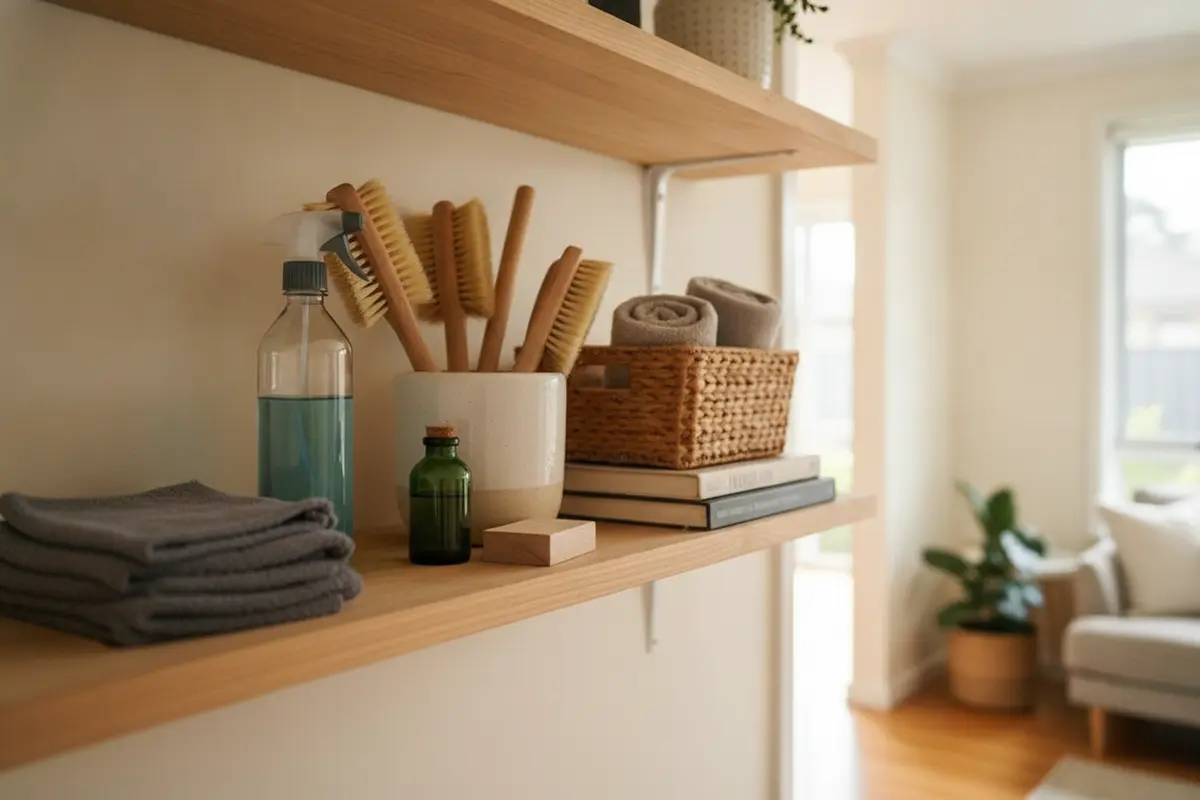
Maintenance works best when it is built into ordinary routines. A short reset at the end of a day may return items to their homes; a weekly check may clear papers or notice that a shared category is overflowing. Keep the routine small enough to repeat. If the system requires a lengthy cleanup every time, simplify it.
Make the homes for items visible and intuitive. Labels can help where several people share a space or where containers look alike, but labels are not needed on every shelf. A clear category and a consistent location often do more than a complicated labeling scheme. For family spaces, explain the arrangement and invite the people who use it to point out what is awkward.
Expect a little adjustment. If bags keep landing beside the hook, perhaps the hook is inconvenient or there are not enough places for the people using it. Treat recurring drop zones as information about the system. Change the placement or routine instead of assuming everyone will follow an arrangement that does not fit daily life.
Review the space after the household has used it for a while. Notice what is easy to put away and what still collects in a pile. The most useful system is not necessarily the most elaborate; it is one that helps the household find and return things in the course of normal activity.
What should you prepare before asking for organizing help?
You do not need to pre-organize the room before asking for help. Instead, gather enough information to explain what is not working and what you want to be able to do. A few clear examples help frame the conversation without requiring you to solve the problem in advance.
- Identify the room or category you would like to focus on first.
- Describe the main frustration and the practical change you hope to see.
- Think about who uses the space and who should participate in decisions.
- Point out items that need special handling or cannot be moved.
- Share any relevant limits, such as a small closet, existing storage, or a preference to use what you already own.
- Consider whether there are connected spaces that affect the same routine.
If your needs include broader household cleaning as well as organization, be clear about which tasks you want to discuss. Maid OK’s house cleaning services and its organizing service are separate topics to clarify when requesting information. You can also review the house cleaning FAQ for general service questions, or use the contact page to ask about a request that needs explanation.
How do you decide whether professional organizing is a fit?
Outside help may be worth discussing when a space repeatedly disrupts daily routines, when decisions feel difficult to tackle alone, or when household members have different ideas about where things belong. A professional can bring structure to the process and help keep attention on the agreed area. The household still supplies essential knowledge about its belongings, routines, and priorities.
It may help to begin with a defined area rather than expecting a single project to address every room. You can ask what information is needed to discuss scope, how the session would be approached, and what decisions you should expect to make. Ask whether you should have supplies ready or wait until you know what the space needs. Avoid assuming that a quote, timeline, or particular project outcome is guaranteed before the details are discussed.
Some situations call for a different kind of specialist or service. If the main need is a repair, construction, or handling of items requiring specialized care, identify that before arranging an organizing project. Clear expectations help ensure that the requested support matches the actual need.
For a first step, describe one area, one recurring frustration, and what a more usable space would let you do. Visit Maid OK’s organizing page to learn about the service, then ask for details based on your home and priorities.
Frequently Asked Questions
Do I need to declutter before a professional organizer comes?
No. You can explain what is not working and identify your preferred starting area without sorting everything first. The decisions about belongings are part of the organizing process, and you should be involved in choices about your own items.
Should I buy bins and organizers before the project?
It is usually sensible to wait until you understand what will remain and where it should go. Existing shelves, drawers, or boxes may already meet the need. Measuring storage and considering access first can help avoid buying containers that do not fit or make items harder to reach.
Can a project focus on just one room or storage area?
A focused area can be a practical starting point, especially when it has a clear purpose. If another space directly affects the same routine, mention it while discussing the scope so the work can be planned around how the areas connect.
How do I know whether the organizing system is working?
Check whether household members can find what they need and return it without extra steps. Notice recurring piles or items that do not fit their assigned places. Those signals may mean a location or routine needs a small adjustment.
What information should I share when requesting a quote?
Describe the area, the main difficulty, who uses it, and what you hope will become easier. Mention relevant constraints or special handling needs. The service provider can then discuss the request and the next steps with you.
A professional home organizing project works best when the plan respects real routines, gives the household a voice in decisions, and keeps the new system simple enough to use every day.