
A Practical Winter Cleaning List for Oklahoma Homes

A winter cleaning list can help an Oklahoma household prepare for colder days without turning one weekend into an exhausting project. As routines move indoors, tracked-in grit, dusty surfaces, damp footwear, and busy shared rooms can become more noticeable. The most useful plan starts with the spaces you use most, gives each task a clear stopping point, and leaves room for the realities of work, weather, and family life.
Request a residential cleaning quote
What should you decide before starting a winter clean?
Begin by choosing the purpose of the reset. You may be preparing for visitors, making daily routines easier, catching up after a busy fall, or creating a calmer place to spend more time indoors. Pick one main goal and identify the rooms that support it. This keeps the list realistic and helps you decide what can wait.
Walk through the home with a notepad or phone. Write down visible tasks instead of broad goals such as “clean everything.” “Clear the kitchen counter,” “wipe the front-door glass,” and “vacuum the sofa area” are specific enough to complete and check off. Note surfaces that need special care and follow the care instructions for flooring, upholstery, appliances, and finishes.
Decide whether you are doing a maintenance clean or a deeper reset. Maintenance focuses on the tasks that keep a home usable week to week. A reset adds neglected corners, accumulated dust, and areas that are difficult to reach during a normal routine. If organizing is the main challenge, separate that work from surface cleaning so you can judge the time and help needed more accurately.
Gather supplies before you begin: clean cloths, a duster, a vacuum, a mop suitable for your flooring, a small wastebasket, gloves if you use them, and products you already know how to use safely. Read labels, follow directions for dilution and ventilation, and never mix cleaning products. The U.S. Environmental Protection Agency offers consumer information about household product safety at EPA.gov. Keep supplies away from children and pets.
How can you refresh the entry and living areas?
The entry is the first place to address because it collects shoes, dust, leaves, and moisture brought in from outside. Shake out or vacuum the entry mat, sweep or vacuum the floor, and wipe the door handle, light switch, and other frequently touched surfaces with a method suitable for each material. Put a tray or washable mat where wet footwear can sit. A small basket or set of hooks gives coats, hats, gloves, and scarves a predictable home.
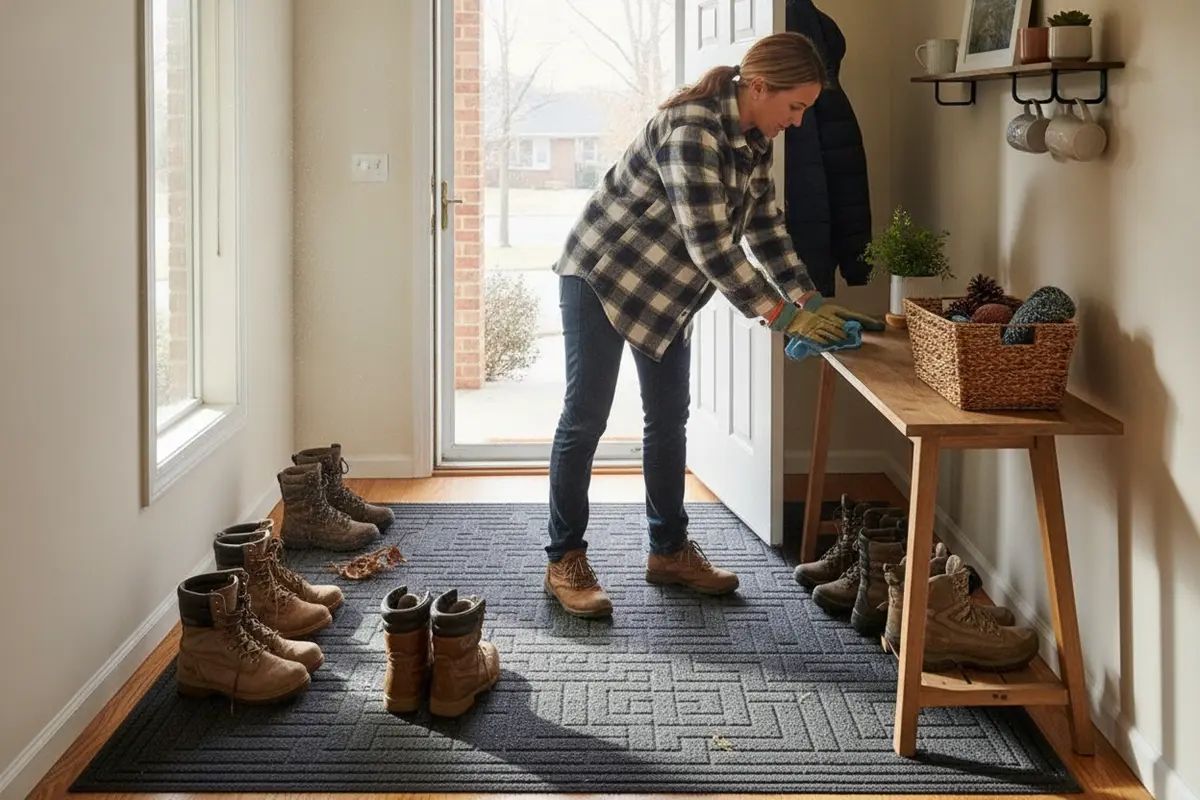
Check the area just beyond the entry as well. Look along baseboards, behind the door, and beneath a bench or console. These spots often collect grit even when the middle of the floor looks clean. Vacuum first, then mop only with a product and amount of moisture appropriate for the floor. Allow wet surfaces to dry before placing rugs or footwear back in position.
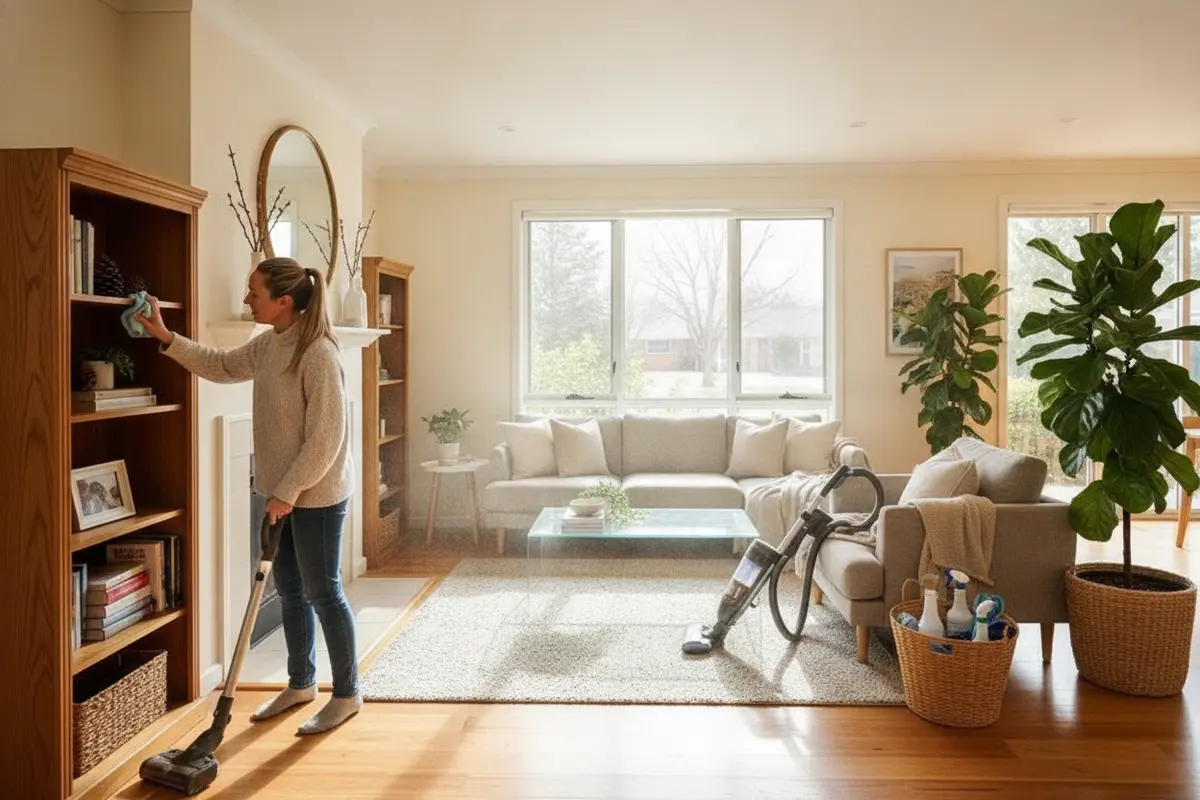
In the living room, put away items that have accumulated on tables, seating, and the floor. Dust shelves and reachable ledges from higher surfaces down, then vacuum rugs and flooring. Move light furniture only when it is safe to do so; avoid straining or lifting heavy pieces alone. Wipe remotes, switches, and handles using a method appropriate for the item, and do not spray directly onto electronics.
Check soft furnishings for crumbs and dust. Vacuum upholstery with the correct attachment if its care instructions allow it. Launder removable covers according to their labels. If throws are used more often in cold weather, wash them and designate a basket or shelf for clean ones. A clear coffee table, a usable walkway, and a clean seating area often make a room feel more settled without requiring a full rearrangement.
Which kitchen and bathroom tasks make a difference?
In the kitchen, clear one work area first. Wipe counters and the table, clean the sink, and sweep or vacuum the floor. Wipe cabinet pulls, refrigerator handles, and appliance controls with a method suitable for the surface. Check the refrigerator for food that should be used or discarded, then wipe reachable spills. A short counter reset is often more useful than trying to reorganize every cabinet at once.
Work in an order that prevents repeated effort. Put away items, remove waste, dust or wipe higher surfaces, clean counters and the sink, and finish with the floor. If you plan to clean an appliance, read its instructions before using a product. Do not assume that a strong product is appropriate for stainless steel, stone, finished wood, or coated surfaces. When in doubt, use the surface manufacturer’s guidance.
For the bathroom, focus on the sink, mirror, toilet, shower or tub, and floor. Remove products from the counter before wiping it, and return only what you use regularly. Replace used towels and wash bath mats according to their care labels. Dust the exhaust-fan cover from the outside if its instructions permit it; do not take apart equipment unless the manufacturer says it is safe.
Keep products intended for different surfaces separate. Follow label directions for contact time, dilution, protective equipment, and ventilation. Never combine products. If a room has poor airflow, take a break and improve ventilation according to the product label rather than trying to finish faster. For a household with children, pets, allergies, or sensitive finishes, make the plan more conservative and use products that are appropriate for the situation.
How should you prepare bedrooms for cooler weather?
Change bedding and wash sheets, pillowcases, and washable blankets according to their labels. Dust nightstands, lamps, headboards, and reachable trim, then vacuum the floor and beneath the bed where accessible. Return clothes to closets or drawers instead of letting them collect on chairs. If you bring out seasonal bedding, make room for it before storing lighter items so the closet does not become a second project.
Inspect the bedroom from the doorway before you start. Look for blocked walking paths, laundry without a designated place, and surfaces that are difficult to reach. Clear the floor first, then work around the bed and other furniture. If a household member has mobility limits, keep pathways open and avoid moving furniture without help. A bedroom does not need to be redesigned to feel better; a made bed, clear floor, and usable nightstand can be enough for a first pass.
Keep the routine modest. Put laundry in one designated place, return reading materials to a shelf, and make a short list of tasks that need another day. If you have several bedrooms, handle the ones used daily first and schedule less-used rooms separately. This prevents a lower-priority room from consuming the time needed for the rest of the home.
What should you include in less-visible winter tasks?
A seasonal reset is a good time to look beyond the center of each room. Check reachable baseboards, door edges, window sills, vents, stair railings, and the space beneath movable furniture. These areas do not all need the same frequency. Choose two or three for the current session and rotate the rest through the month.
Review the places where winter items are stored. Shake out baskets, wipe a shelf before returning hats and gloves, and remove items that no longer fit the household’s routine. Keep wet items separate from clean, dry ones. If you use a humidifier or other seasonal equipment, follow its manufacturer’s cleaning and maintenance directions rather than improvising.
Consider the home’s traffic pattern. A household may need more frequent floor attention near the entry and less in a guest room. A kitchen used throughout the day may need a short evening reset, while a spare bathroom may need a weekly check. Assign effort according to use instead of treating every room as equally urgent.
How can you divide the work across a weekend?
A room-by-room approach prevents repeated trips and gives you a clear stopping point. Adjust the plan to your home, mobility, available time, and household needs. You can divide the work among household members or spread it over several short sessions. The table below gives starting points rather than rigid promises.
| Plan | Best fit | Example tasks | Stopping point |
|---|---|---|---|
| One focused session | A small reset or one priority room | Entryway, kitchen counters, and a quick floor pass | Priority surfaces and traffic path are usable |
| Two shorter sessions | A household dividing the effort | Living areas first; kitchen, bath, and bedrooms next | Each session ends after its assigned rooms |
| Room by room | Limited time or a larger home | Complete one room before moving to the next | One finished room per day or weekend |
| Residential cleaning help | A catch-up clean or seasonal reset | Discuss priorities and home condition when requesting a quote | Confirm the requested scope before scheduling |
For a two-session weekend, use the first session for shared spaces. Clear surfaces, dust, clean the entry, and vacuum the living room. In the second session, clean the kitchen and bathroom, change bedding, and finish floors. Leave time for breaks, keep a clear place for supplies, and put products away safely between sessions.
Another workable method is to separate tasks by type. Start with decluttering and putting items away, move to dusting and wiping, then vacuum or mop. This reduces the chance of cleaning a surface only to cover it with dust from a nearby task. If more than one person is helping, assign rooms or categories clearly instead of asking everyone to “pitch in.”
Some households prefer a checklist; others work better by setting a timer for one task and stopping when it rings. Either method is fine. The goal is to make the next step obvious and avoid expanding the project every time you notice something else. You can use Maid OK’s cleaning checklist guide as a starting point, then remove tasks that do not fit your home.
How is a seasonal reset different from routine cleaning?
Routine cleaning is the repeatable work that keeps frequently used rooms manageable: wiping common surfaces, handling spills, checking the entry, cleaning the bathroom, and caring for high-traffic floors. A seasonal reset usually adds tasks that have been postponed, such as dusting reachable trim, cleaning under accessible furniture, washing throws, or preparing storage for a change in weather.
The distinction matters when you ask for help. If the home is generally maintained but needs extra attention in selected areas, a one-time visit may match the request. If the same tasks keep being delayed, recurring residential cleaning may provide a more consistent rhythm. If buildup has accumulated in several rooms, review deep cleaning and explain the condition rather than relying on a service label alone.
Organizing is a separate question when the main obstacle is deciding what belongs in the home or where it should go. In that case, review Maid OK’s home organizing support. Cleaning can make surfaces clearer, but it cannot make storage decisions for you unless that work is included in the requested scope.
What should you decide before requesting residential cleaning?
Before asking for a quote, decide which rooms matter most, whether you want a one-time visit or ongoing help, and whether there are areas you would like prioritized. Share relevant details about the home and its current condition so the quote can reflect the actual request. Maid OK provides quote-based pricing as a range; its stated minimum is $95 for two hours, with $40 per additional hour, and the final amount can vary with the home’s condition.
Use the residential quote form to describe the service you need. You can also read the company’s house-cleaning FAQs or use the contact page for a question that needs clarification. Maid OK serves households in the Oklahoma City area and nearby communities; confirm that your address is within the current service area when discussing availability.
A clear request can include the home size, rooms to prioritize, whether the visit is a seasonal catch-up or ongoing upkeep, and any surfaces that require special instructions. Mention pets, access details, and timing needs when relevant. If you are comparing a one-time residential cleaning visit with a deeper reset, ask what tasks are included in each proposed scope.
How can you keep the home comfortable through winter?
After the main reset, use short maintenance tasks instead of repeating the entire list. Wipe spills when they happen, return items to their places, and vacuum high-traffic areas when they need it. Shake or clean entry mats regularly, especially after wet or windy days. Keep an eye on the kitchen and bathroom, where frequent use can make small messes build up quickly.
A simple weekly rhythm might include a quick entry and floor check, a kitchen surface reset, fresh towels, and one rotating task. Add a deeper room task when it suits your schedule: dust a shelf, clean a mirror, vacuum upholstery, or check beneath a piece of movable furniture. You do not have to assign the same task to the same day every week. A flexible list is easier to maintain when weather, work, and family plans change.
At the end of each week, ask three practical questions: Which room became difficult to use? Which task was skipped repeatedly? Which supply or storage decision would make the next clean easier? The answers help you revise the list instead of blaming yourself for not following an unrealistic schedule.
Frequently Asked Questions
When should I start a winter clean?
Start whenever the home would benefit from a reset. You can focus on one room before colder weather or spread tasks across the first few weeks of the season. There is no need to finish the whole list in one day.
Should I clean every room in one weekend?
No. Choose priority rooms and divide the work into manageable sessions. A smaller completed plan is more useful than an ambitious list that leaves you exhausted or unfinished.
What supplies should I have ready?
Use clean cloths, a duster, a vacuum, a suitable mop, a wastebasket, and products appropriate for the surfaces in your home. Read labels, provide ventilation when directed, and never mix products. Keep supplies secured when children or pets are present.
Can I ask for help with only certain areas?
Tell the company which rooms or tasks matter most when requesting a quote. The requested work and the home’s condition help determine what can be included and the price range.
Use this winter cleaning list as a starting point, adjust it to your household, and take the season one practical task at a time.
Need a hand with the actual cleaning? Get a free Maid OK quote.