Commercial Floor Cleaning Services for OKC Businesses
By Maid OK
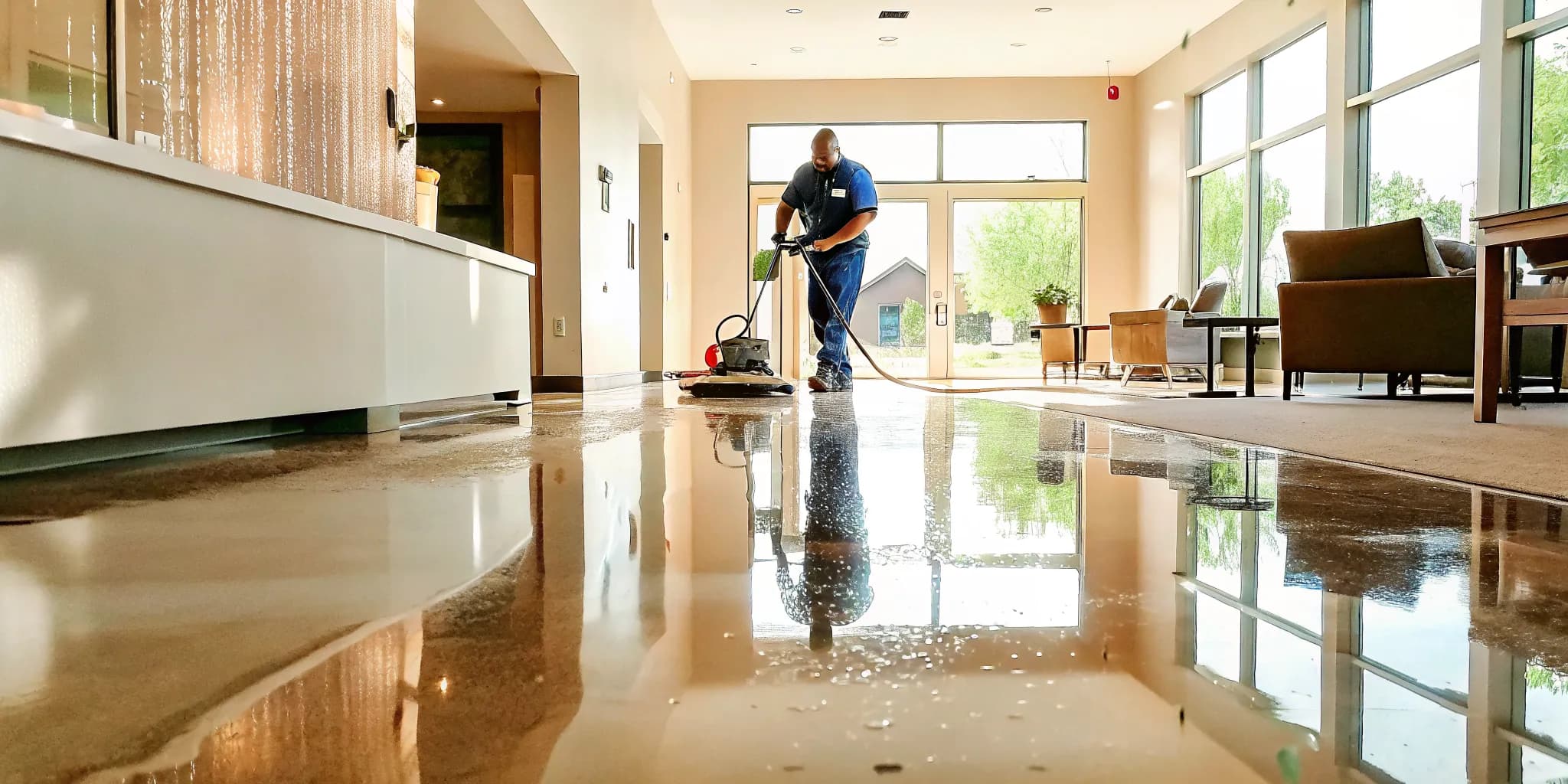
Floors are among the first parts of an Oklahoma City workplace that customers, employees, and facility managers notice. Dust at entryways, dull VCT, tracked-in grit, and neglected grout can make a busy office or retail space feel poorly maintained, even when the rest of the building is clean.
Get a Free Commercial Cleaning Quote
Commercial floor cleaning keeps tile, vinyl, hardwood, carpet, and other business flooring safer, more presentable, and better protected through methods and schedules matched to the space. Maid OK provides specialized floor care as part of customizable commercial janitorial service, with professional-grade supplies and equipment included.
For OKC businesses, the right plan is not simply a matter of mopping more often. Traffic patterns, flooring materials, operating hours, and long-term maintenance needs all affect the result. Understanding those factors shows why professional care can support a healthier, more welcoming workplace while helping prevent avoidable wear.
Why Professional Commercial Floor Cleaning Matters for OKC Businesses
Floors are among the hardest-working surfaces in an Oklahoma City workplace. Employees, customers, deliveries, and equipment bring soil into entrances, corridors, restrooms, and shared areas every day. Without a consistent maintenance plan, that buildup can affect more than appearance. It can contribute to premature wear, make a facility feel neglected, and create extra work for the person responsible for keeping the building ready.
A cleaner floor supports a healthier workplace
Routine surface cleaning is recommended to help control the spread of pathogens in high-traffic environments, according to research indexed by the National Library of Medicine. The same study found that moist and wet mopping methods were more effective at reducing organic soil and bacteria than spray mopping methods. Those findings reinforce an important facility-management principle: the method matters, not just how often someone passes a mop over the floor.
Mop hygiene matters, too. A review in Healthcare notes that reusing traditional cotton string mop and bucket systems can spread contamination when the equipment is not disinfected properly. A professional team should use a controlled process, clean tools appropriately, and match the approach to the floor and area being serviced. Read the floor-cleaning study and review the research on mop hygiene for more detail.
Maintenance protects the floor and the impression it makes
High-traffic areas wear faster than lightly used rooms. Regular attention helps remove soil before it becomes embedded and reduces the risk that daily foot traffic will shorten the useful life of tile. VCT, or other hard surfaces. That is a practical cost-control measure: preserving the existing floor is usually preferable to allowing neglect to lead to heavy buildup, premature refinishing, or replacement work.
Clean, well-maintained floors also shape how people experience a business. Visitors often form an impression before they speak with anyone, while employees spend their working day noticing whether the environment feels cared for. A cleaner workplace can support employee comfort and morale, while a neglected entrance or visibly dirty corridor can undermine confidence in the business. For an overview of professional commercial cleaning benefits, consider how floor care fits into the wider facility routine.
For OKC facility managers and small business owners, the goal is not simply to make floors look clean for one morning. It is to establish dependable maintenance that supports health, protects surfaces, and keeps the workplace presentable. Working with reliable janitorial services in OKC can make that standard easier to maintain across busy weeks.
What Commercial Floor Cleaning Services Include
A well-planned floor cleaning service starts with identifying the surfaces in each area of your facility, then matching the cleaning method to the material, traffic level, and finish. That matters because tile, VCT, sealed concrete, and other hard surfaces do not all respond well to the same products or equipment.
Floor types and surface-specific care
Commercial crews commonly maintain ceramic or porcelain tile, VCT (vinyl composition tile), sealed concrete, and other hard-surface flooring. They can also adjust the approach for sealed floors where preserving the protective finish is a priority. Tile areas may need careful attention around grout lines, while VCT may require routine cleaning followed by periodic machine work to maintain its appearance. A facility manager should expect the cleaning plan to account for entrances, hallways, break rooms, restrooms, and other areas where soil and foot traffic vary.
Consistent maintenance also helps prevent stubborn stains and heavy dirt buildup from damaging floors over time. This is especially important in entryways and other high-use zones, where tracked-in soil can become harder to remove if it is allowed to accumulate. The goal is not simply to make the floor look clean for one day, but to maintain the surface and its finish as part of the facility's regular care.
Methods used for commercial floors
Depending on the surface and condition, service may include:
- Dust mopping to collect loose dirt and grit before it is tracked or ground into the floor.
- Damp or wet mopping to remove adhered soil from hard surfaces.
- Machine scrubbing for more intensive cleaning in high-traffic or heavily soiled areas.
- Buffing or burnishing when the floor finish and maintenance plan call for additional polishing.
Moist and wet mopping methods have been found more effective than spray mopping for reducing organic soil and bacteria on floors in a research setting. Read the published floor-cleaning research for the study details. Professional methods also require attention to mop hygiene, product selection, dwell time, and safe drying, rather than treating every surface as interchangeable.
Supplies and equipment are included
Maid OK provides the professional-grade cleaning supplies and equipment needed for the service, so your staff does not have to purchase, store, or manage a separate floor-care inventory. Specialized equipment supports deeper and more efficient cleaning, while the team can select the appropriate tools for the materials in your building. For a facility manager, that means a clearer scope of work and less day-to-day coordination around floor maintenance.
How Often Should Commercial Floors Be Cleaned?
There is no single schedule for every Oklahoma City workplace. A busy retail entrance in Moore or a medical office waiting area will need more attention than a lightly used back office. Start with the flooring material, then adjust the cadence for foot traffic, weather, spills, and the amount of dirt tracked in from parking lots and sidewalks.
Practical commercial floor cleaning cadence by surface
| Floor surface | Routine care | Periodic care |
|---|---|---|
| Tile | Dust mop and mop daily, especially at entrances, corridors, and restrooms. | Clean grout once or twice per year, or sooner when soil remains after routine mopping. |
| Concrete | Remove dust and tracked-in dirt daily to limit surface wear. | Buff about monthly and schedule a thorough deep clean annually. |
| VCT | Clean according to foot traffic. High-use areas may need daily mopping, while quieter zones can follow a less frequent routine. | Plan periodic restorative care based on finish condition, scuffing, and soil buildup. |
| Sealed hard surfaces | Dust and damp mop regularly, increasing frequency where employees, customers, or delivery traffic is heaviest. | Inspect the finish periodically and deep clean before embedded soil causes discoloration or wear. |
| Hardwood | Damp mop about every two months in lower-traffic areas, using a method appropriate for the finish. | Schedule a thorough cleaning annually. Busy areas may require more frequent maintenance. |
The cadence above is a useful starting point, not a substitute for a walkthrough. Entrances, checkout lanes, elevators, break rooms, and main corridors typically need daily attention because they collect grit faster. High-traffic areas require more frequent care to prevent rapid wear and preserve durability. In Oklahoma's changing weather, rain, mud, and road dust can also justify extra visits during wet or windy periods. Maid OK's floor maintenance guidance supports tailoring care to the condition and use of each facility.
Consistent service also protects the maintenance budget. Routine cleaning helps prevent stubborn buildup and reduces the likelihood of expensive restoration projects. A recurring plan can be adjusted as traffic patterns change, while a reliable schedule keeps floors presentable without forcing staff to handle cleaning between daily responsibilities. Commercial janitorial services can coordinate that schedule around your business hours and facility needs.
For an office, retail space, or other commercial property in the OKC metro, the right plan may combine daily touchpoint cleaning with weekly, monthly, and annual floor-care tasks. The goal is steady prevention, not waiting until the finish looks damaged.
Tile, VCT, and Hard Surface Floor Care Explained
Different floors respond to different cleaning methods. A process that works for resilient vinyl may leave tile grout dull, or damage a polished concrete finish. For an Oklahoma City facility manager, the goal is not simply to make every floor look wet and clean at closing time. It is to remove soil without stripping protection, pushing buildup into seams, or shortening the life of the surface.
Tile and grout need more than routine mopping
Tile commonly needs daily dust and soil removal, followed by damp mopping suited to the tile finish. Grout requires separate attention because it is porous and sits lower than the tile face. If dirt and moisture remain in those joints, the grout can darken and hold buildup even when the tile itself looks clean. Periodic grout cleaning, typically once or twice a year in a busy commercial setting, helps reset the surface. Sealing may also be appropriate after cleaning, depending on the grout and the facility's maintenance plan.
Entryways, restrooms, break rooms, and other high-traffic areas often need attention sooner than lightly used corridors. Adjusting the schedule by traffic pattern is more effective than applying one identical routine to the entire building.
VCT care depends on protecting the finish
Vinyl composition tile, or VCT, can collect tracked-in grit that acts like sandpaper under foot traffic. Daily dust removal and regular damp mopping reduce that abrasion. When the finish begins to look dull, machine buffing can restore appearance and help protect the tile, but the pad, solution, and frequency should match the existing finish. Overworking the floor or using an overly aggressive chemical can create haze, leave residue, or wear through protection.
VCT maintenance is easiest when spills are handled promptly and the facility keeps a consistent routine. That approach limits sticky buildup and reduces the need for disruptive restoration work.
Concrete, sealed, and polished floors require measured methods
Hard surfaces such as concrete and polished floors need controlled moisture and non-abrasive products. Daily dust removal is especially important for concrete because grit can damage the surface over time. Monthly buffing may suit some sealed concrete floors, while a deeper annual cleaning can remove embedded soil that routine service cannot reach. Polished concrete may need a different pad and process, so the finish should be identified before equipment is used.
Routine maintenance is a cost-effective safeguard. Consistent care prevents stubborn stains and heavy buildup that can permanently damage floors, while reducing the likelihood of an expensive restoration project. A floor-focused professional office cleaning checklist can help managers coordinate daily tasks with periodic service instead of waiting until the surface visibly fails.
Choosing a Commercial Floor Cleaning Team in Oklahoma City
The right provider should do more than make a floor look clean after a visit. For an Oklahoma City facility, look for a team that understands your traffic patterns. Protects your property, communicates clearly, and can maintain consistent results without creating extra work for your staff.
Look for a local team with clear standards
A family-owned local company offers a more personal point of contact than a rotating national vendor. Maid OK is rooted in Norman and serves businesses throughout the Oklahoma City metro and within a 50-mile service radius from Moore. That local perspective helps the team understand the needs of offices, retail spaces, and other commercial properties in the area.
Ask whether the company is licensed, insured, and bonded. Those protections matter when cleaners are working around employees, customers, equipment, and valuable flooring. It is also reasonable to ask how team members are screened. Maid OK uses a vetted, background-checked, and drug-tested team, giving business owners added confidence about who enters the workplace.
Confirm what the service includes
Before comparing quotes, clarify whether the provider supplies professional-grade equipment and cleaning products. Maid OK provides the supplies and equipment needed for the work, so your business does not have to manage a separate floor-care inventory. The team can also coordinate floor maintenance through its broader commercial janitorial program, rather than treating floors as an isolated task.
Ask how inspections and follow-up are handled. Maid OK backs its work with a 100% satisfaction guarantee, a 49-point inspection, and a 48-hour resolution promise. These details provide a practical accountability structure: the service is checked. Concerns have a defined response window, and quality does not depend on a single cleaner remembering every detail.
Choose flexibility over a rigid contract
Your cleaning needs may change with staffing, seasons, events, or changes in building use. A no-contract service makes it easier to adjust without being locked into a long commitment. Review the scope, schedule, floor types, high-traffic areas, and after-hours access before service begins. A professional office cleaning checklist can help you identify what to discuss with the provider and what should be verified after each visit.
The best choice is a dependable local partner with transparent standards, trained people, appropriate equipment, and a process for resolving concerns. That combination helps facility managers protect the appearance and condition of their floors while keeping daily operations focused on the business.
Request a Free Commercial Cleaning Quote
Frequently Asked Questions
How much does commercial floor cleaning cost?
Pricing depends on the floor materials, square footage, traffic levels, current condition, service frequency, and whether the work is scheduled during or after business hours. A tailored quote is more useful than a flat rate because an office, retail space, and light commercial facility can require very different methods and time. Ask for a commercial assessment that clearly separates routine service from periodic deep cleaning.
How do professionals clean commercial floors?
Professionals first identify the flooring and remove loose dust and debris, then select the appropriate equipment, solution, and moisture level. Tile, VCT, sealed hard surfaces, and hardwood each require different care. Moist and wet mopping methods have been found more effective at reducing soil and bacteria than spray mopping in an academic study of floor-cleaning methods (PubMed).
How often should an office floor be cleaned?
There is no single schedule for every business. Entrances, corridors, break areas, and other high-traffic zones generally need more frequent attention than lightly used rooms. Many facilities combine daily dust and spot care with weekly routine cleaning and periodic grout, VCT, sealing, or deep-cleaning work. A professional can adjust the plan around traffic, floor type, weather, and operating hours.
Can a cleaning company work around our business hours?
Yes. A commercial plan can be scheduled before opening, after closing, or at another agreed time to reduce disruption. During the assessment, share access requirements, busy periods, security procedures, and any areas that need special attention. A recurring schedule helps keep floors presentable and supports consistent facility maintenance without requiring your staff to manage the cleaning inventory.
Ready to Get a Free Commercial Cleaning Quote?
Clean, well-maintained floors can help your Oklahoma City business present a professional environment while making routine facility care easier to manage. Maid OK can help you plan service around your space, floor types, and operating schedule. To discuss your needs and get a free commercial cleaning quote, get started with the commercial quote form.
Need a hand with the actual cleaning? Get a free Maid OK quote.