Commercial Restroom Cleaning Services Plan Guide
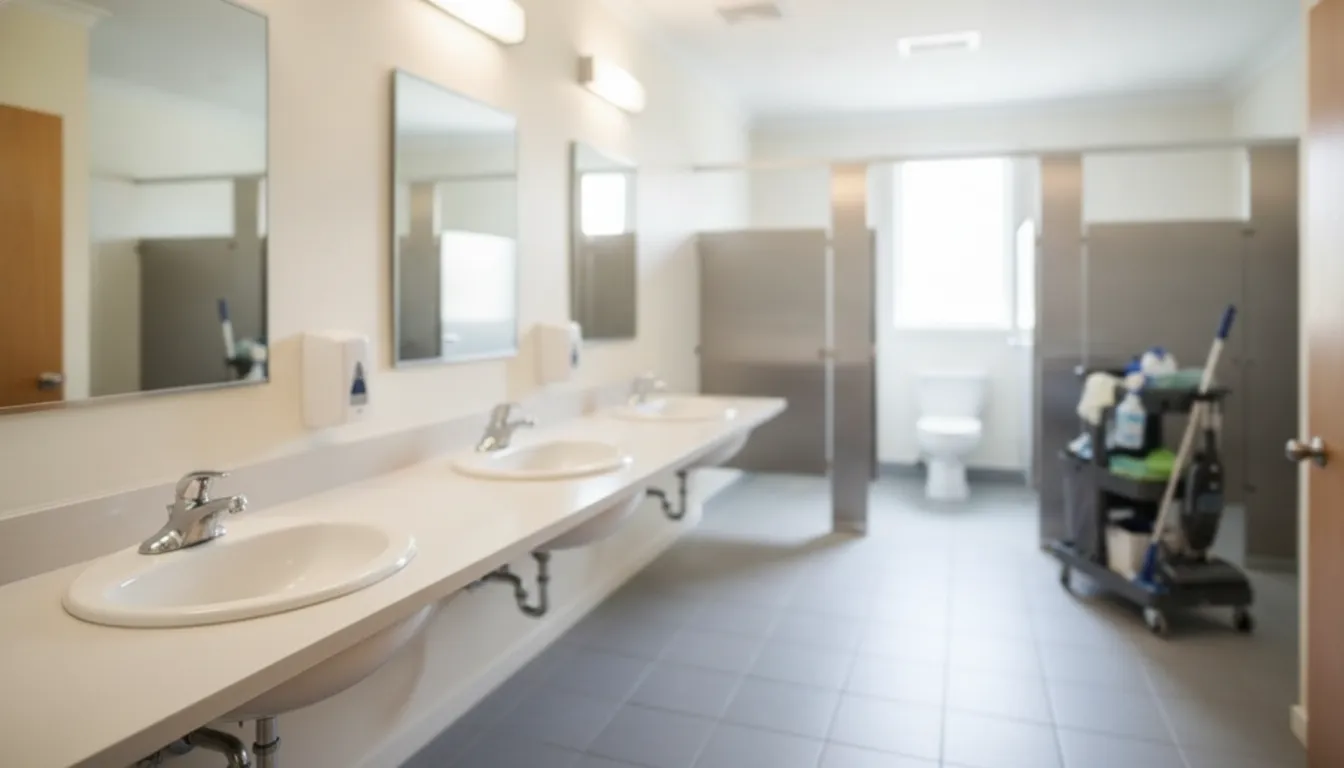
Commercial restroom cleaning services should account for more than a quick wipe-down. A restroom can look clean at opening and still create problems by midday when traffic increases. Shared touch points, supply levels, and timing all belong in a clear service plan. Dependable restroom care is less about isolated chores. It is about assigning responsibility for the full cycle, from routine cleaning and restocking to inspection and follow-up.
Explore Maid OK commercial janitorial services
Complete commercial restroom cleaning services should cover recurring fixture and surface care, floors and waste handling, and appropriate cleaning supplies. They should also define consumable responsibilities, quality checks, issue reporting, and a schedule shaped around traffic and operating hours. The exact scope should be customized after the facility is assessed.
That plan works best when everyone understands what happens during each visit, what belongs in periodic detail work, and how concerns are resolved. Start by defining the service scope so your team and cleaning provider share the same expectations.
What should commercial restroom cleaning services include?
A complete restroom service plan should define more than a quick wipe-down. It should explain which surfaces are cleaned, which supplies are replenished, how the space is checked, and how problems are reported. That scope gives a business a clear standard for a restroom that is sanitary, presentable, and ready for employees and visitors.
Core cleaning and touch-point care
The routine scope should cover toilets, urinals, partitions, sinks, faucets, counters, mirrors, and other restroom fixtures. Door handles, stall latches, flush controls, dispensers, and light switches deserve particular attention because they are frequently touched. The CDC identifies restroom fixtures as high-touch surfaces and recommends cleaning high-touch surfaces regularly. Hard surfaces, including floors and counters, should be cleaned with products appropriate for the material.
Floors should be swept or vacuumed as appropriate and damp-mopped to address tracked soil and visible residue. Wastebaskets should be emptied, liners replaced when needed, and the surrounding area checked for spills or debris. Mirrors and other reflective surfaces should be left clear of smears. These details affect both cleanliness and the way customers experience the facility.
Supplies, odors, and maintenance communication
A well-defined plan also states what happens with dispensers and consumables. Depending on the agreement, the provider may restock items such as hand soap. Paper towels, and toilet tissue, or may notify the business when customer-supplied products are running low. Maid OK makes restroom supply restocking available as part of its commercial service. The cleaning scope should identify that responsibility before service begins.
Odor control should focus on finding and addressing the source rather than simply masking it. The team should also report maintenance concerns that cleaning cannot resolve, such as a leaking fixture, damaged dispenser, slow drain, broken light, or persistent odor. Clear reporting helps the facility manager assign repairs instead of allowing a small issue to become a recurring complaint.
Routine service versus periodic work
Routine visits address the surfaces and touch points that need regular attention. Periodic work may be added for heavier buildup, detailed floor care, or areas that do not require the same treatment on every visit. The exact division depends on traffic, occupancy, restroom count, and the condition of the facility. Cleaning should come before sanitizing or disinfecting, since dirt can reduce the effectiveness of those steps, according to the CDC's facility cleaning guidance. A provider should review the facility and document a customized scope rather than present every business with the same checklist.
How should recurring restroom tasks be organized?
A recurring plan works best when it separates what keeps the restroom ready for daily use from the detail work that prevents buildup over time. The right cadence is not a universal package. It should reflect how the facility is used, then be adjusted when traffic, occupancy, or soil patterns change.
- Start with the every-visit standard. Define the tasks that protect the restroom's day-to-day condition. These may include cleaning high-touch restroom fixtures, removing waste, addressing visible soil, checking floors, and noting empty or low dispensers. The CDC identifies restroom fixtures as high-touch surfaces that should be cleaned regularly, while other surfaces can be cleaned when visibly dirty. CDC facility guidance also distinguishes cleaning from sanitizing and disinfecting, so the service scope should state which treatment applies to each situation.
- Assign periodic detail work separately. Routine service should not be expected to cover every buildup-prone area at the same level on every visit. Add a planned detail rotation for grout, corners, edges, fixture bases, partitions, vents, and other areas that collect soil gradually. This keeps the recurring scope realistic and makes it easier to identify work that needs extra attention rather than allowing it to disappear between visits.
- Use traffic and occupancy to set the starting cadence. A restroom serving a busy retail space, customer-facing business, or densely occupied office will experience different soil and touch patterns than a lightly used workplace. The CDC notes that high-traffic areas may need more frequent cleaning or disinfection in addition to cleaning. Consider visitor volume, employee count, restroom count, operating hours, and whether one restroom carries most of the facility's use.
- Account for facility type and soil patterns. Food, dust, tracked-in debris, moisture, odors, and hard-water residue can create different maintenance demands. Observe where the condition develops first: floors, sinks, toilets, urinals, dispensers, or touch points. That observation should guide the balance between every-visit tasks and periodic detail work, without promising a rigid frequency before the space has been assessed.
- Review the plan using visible results. A recurring schedule should include a simple way to report missed supplies, recurring soil, access problems, or areas that need a scope adjustment. Commercial cleaning frequencies can be customized to business needs, and commercial restroom cleaning services can be structured around that assessment rather than a one-size-fits-all calendar.
Who provides cleaning supplies and restroom consumables?
Supply responsibility should be clear before a commercial restroom cleaning plan begins. In a complete service package, Maid OK provides the cleaning supplies and equipment needed for the work. That means the service team arrives prepared to clean restroom fixtures, surfaces, floors, and other assigned areas without asking your staff to assemble chemicals or specialized equipment.
Restroom consumables are a separate part of the conversation. Paper products, hand soap, and trash-can liners are used by employees and visitors, so your proposal should state whether your business purchases them. Whether the provider purchases them on your behalf, or whether restocking is included in the service. Maid OK offers restroom supply restocking as part of its commercial restroom cleaning services, so businesses can discuss that responsibility when building a customized plan. Clear ownership helps prevent empty dispensers, duplicate orders, and confusion about what is included in each visit.
Cleaning products and equipment
Maid OK uses EPA-approved disinfectants for restroom cleaning and brings the equipment required for its complete service package. The specific products and tools should be appropriate for the surfaces being treated. A provider should be able to explain what it supplies without promising an unverified brand, chemical concentration, or contact time. Those details can vary by product and surface, and should follow the product label.
Cleaning comes before disinfecting
Disinfecting is not a substitute for removing soil first. The Centers for Disease Control and Prevention advises cleaning surfaces before sanitizing or disinfecting because dirt and other impurities can make it harder for those chemicals to work. Cleaning with soap or detergent removes soil and decreases the number of germs on a surface. Disinfecting can then address harmful germs that remain after cleaning. Restroom fixtures are high-touch surfaces, so they should receive regular attention based on the facility's use.
When comparing commercial janitorial services, ask three practical questions: Which cleaning supplies and equipment are included? Who owns paper, soap, and liner inventory? How are low supplies reported or restocked? The answers turn a general cleaning promise into a workable restroom plan for your team.
How does a quality check fit into the plan?
A quality check turns a cleaning visit from a list of completed tasks into a repeatable service process. The first step is an initial walk-through of the facility. This gives the team a practical view of the restroom layout, surfaces, traffic patterns, access points, and any areas that need special attention. It also helps define what the recurring plan should cover rather than forcing the business into a generic package.
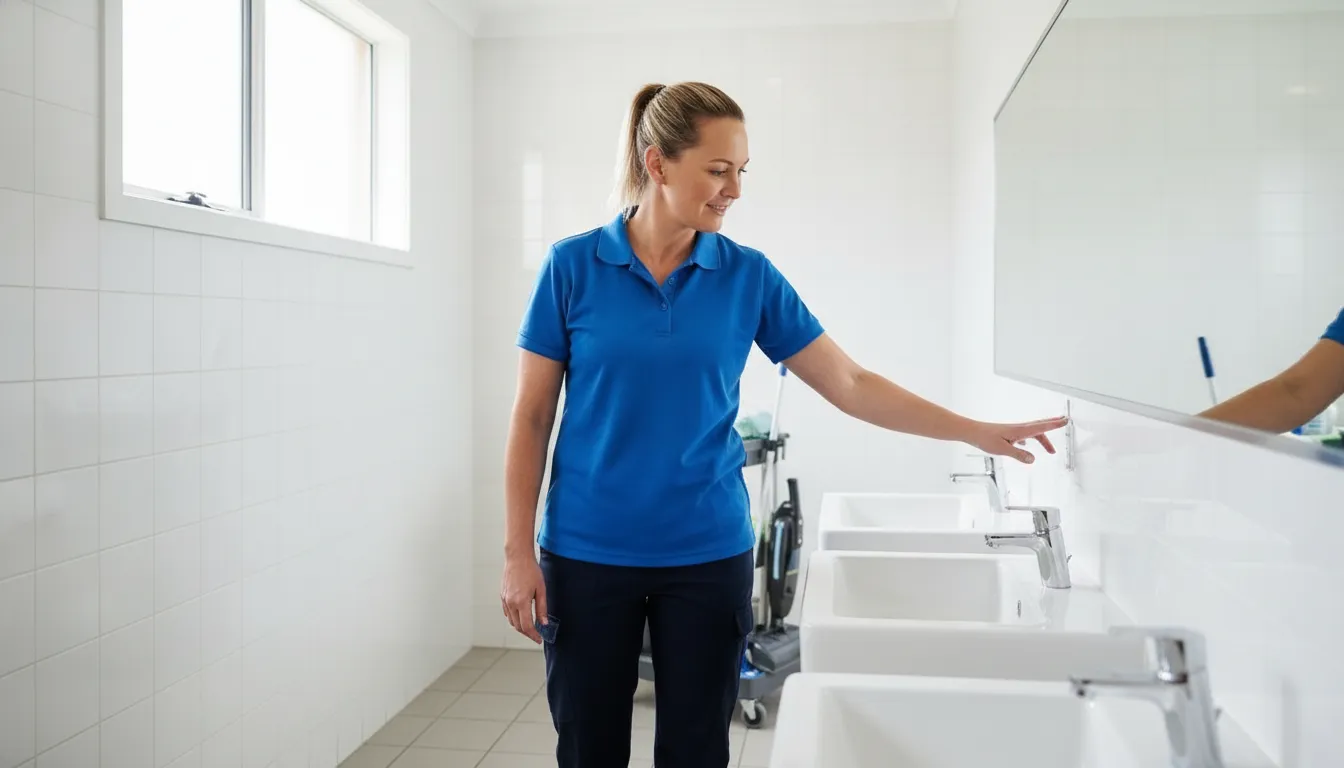
Once the scope is clear, the cleaning team works systematically through a checklist. That process should cover the agreed restroom tasks in a consistent order, including the fixtures, touch points, surfaces, floors, waste areas, and supply points included in the plan. Cleaning and disinfecting are related but not identical steps. The CDC advises cleaning surfaces before sanitizing or disinfecting because dirt can reduce the effectiveness of those products. Restroom fixtures are also examples of high-touch surfaces that should be cleaned regularly. CDC facility cleaning guidance provides useful background for that distinction.
After the checklist-based work, the team performs a point-by-point inspection rather than assuming that completion means quality. A designated team leader then conducts a final check and looks for missed details, inconsistent results, or supply issues that need attention. Maid OK describes its quality process as including an initial walk-through, systematic checklist-based cleaning, point-by-point inspection, a team-leader final check, and customer satisfaction confirmation. The company also provides a broad 49-point inspection process. That process is not a restroom-only checklist; it can include wider areas such as bathroom fixtures and surfaces, flooring, windows, light fixtures, and baseboards.
The final step is communication with the customer. If an issue is found, the service team can record it, explain what needs to happen next, and confirm whether the recurring scope or schedule needs adjustment. That feedback loop matters because a restroom plan should stay aligned with how the business actually operates. A documented inspection process and clear customer confirmation make it easier to maintain consistent commercial cleaning services as needs change.
How often should commercial restroom cleaning services be scheduled?
There is no useful universal answer for every workplace. The right schedule reflects how quickly a restroom becomes visibly soiled, how often people use it, and what standard your customers and employees expect when they walk in. A low-occupancy office with predictable hours may need a different plan from a busy retail location, event venue, or facility with several restrooms.
Start by looking at the whole operating pattern rather than choosing a frequency from a menu. High-traffic areas may need more frequent cleaning, and restroom fixtures are among the high-touch surfaces that should be cleaned regularly. Occupancy, shift changes, public access, and the amount of soap, paper, and other supplies used between visits can all affect the practical schedule.
| Facility factor | Planning question | Scheduling implication |
|---|---|---|
| Traffic and occupancy | How many people use the restrooms during a typical day, and when are the busiest periods? | Higher use may call for more frequent service or additional attention during peak periods. |
| Operating hours | When is the building open, and when can a cleaning team work without disrupting operations? | Service windows should fit the building's access pattern and may require staggered visits. |
| Restroom count | How many restrooms and fixtures must remain presentable at the same time? | More rooms can increase the time and staffing needed for each visit or service cycle. |
| Facility type | Is the space a private office, retail site, or another setting with changing visitor patterns? | The plan should reflect public exposure, peak days, and the expectations of the people using the space. |
| Supply use | How quickly do soap, paper products, and other restroom consumables run low? | Restocking checks may need to be built into visits or paired with a separate monitoring process. |
| Presentation standard | What condition do employees, visitors, tenants, or customers expect throughout the day? | A higher presentation standard may justify more frequent service or focused checks during busy times. |
A practical plan can also distinguish routine visits from periodic detail work. Review the schedule after changes in staffing, occupancy, hours, events, or complaints. Commercial restroom cleaning services should be adjusted when actual use changes, not left on autopilot because the original schedule once worked.
What scheduling decisions should businesses make?
The best recurring plan fits the way your facility actually operates. Before the first visit, decide when cleaning can happen without disrupting employees, customers, deliveries, or building security. A provider should be able to discuss those details with you rather than assume that one standard schedule works for every business.
Choose a service window that matches your operation
Some businesses prefer cleaning before opening, while others need service after employees leave. A daytime window may work well when restrooms can be temporarily closed one at a time. If the facility has peak customer periods, shift changes, classes, appointments, or public events, identify those times in advance. The goal is to make the restroom available when people need it while giving the cleaning team enough time to work carefully.
Consider the number of restrooms, expected traffic, occupancy patterns, and the presentation standard you want throughout the day. High-traffic areas may need more frequent attention. OSHA also notes that restroom access needs vary among workers, so scheduling should not create unreasonable restrictions or leave people without a practical option. OSHA restroom sanitation guidance provides useful workplace context.
Set access, security, and communication expectations
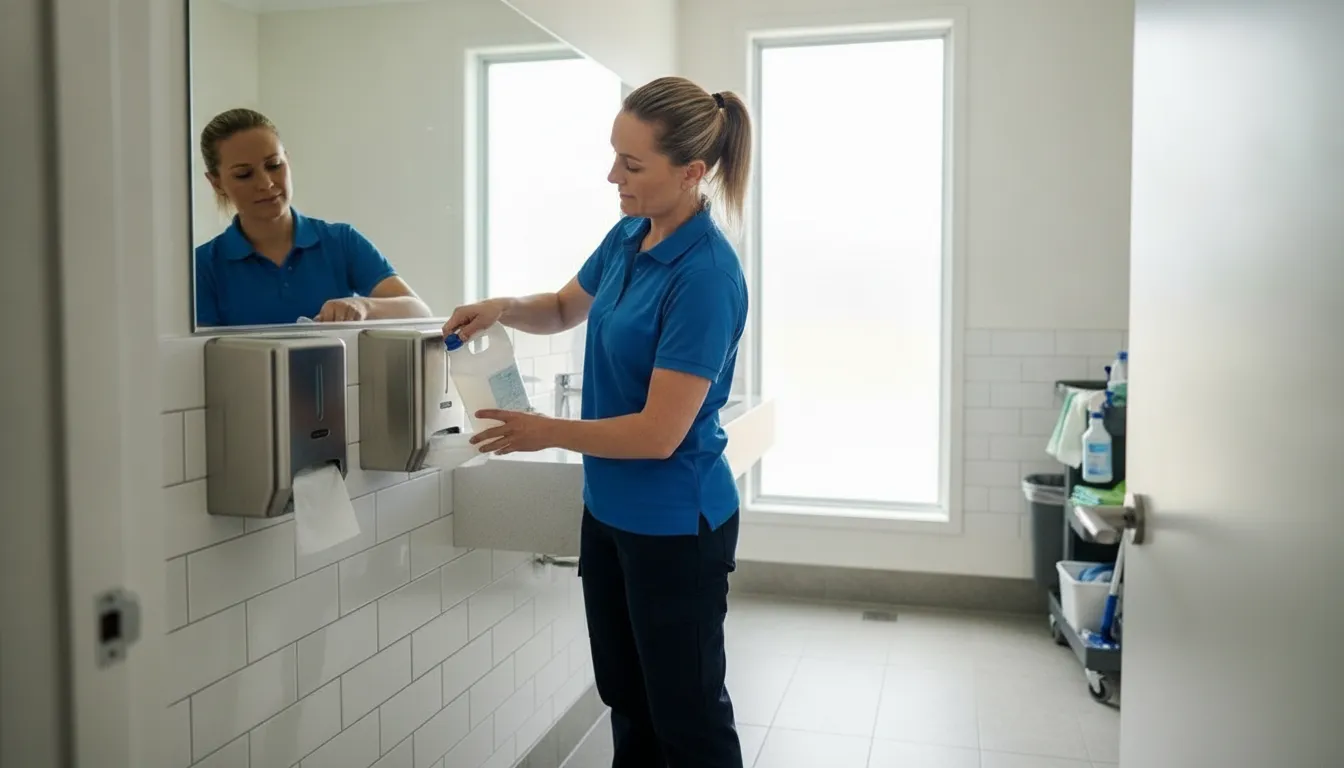
Clarify how cleaners will enter the building, which doors or elevators they may use, and whether keys, badges, alarm codes, or an escort are required. Limit access to what the team needs, and decide who is responsible for securing the facility after service. If restrooms remain occupied, establish a simple process for placing a restroom temporarily out of service and reopening it promptly.
Name one contact for schedule changes, supply concerns, damage reports, or missed details. Also agree on how much notice is practical for special events, closures, severe weather, and holidays. A recurring plan may need an occasional adjustment when your business changes hours or hosts an unusually busy gathering.
Maid OK describes commercial cleaning frequencies as customized to business needs and offers scheduled office and restroom cleaning. When reviewing commercial janitorial services, ask how the provider handles schedule changes, access instructions, and scope updates. Confirm what happens when your needs change instead of assuming the original plan will cover every future situation.
What should you ask before choosing a provider?
A strong provider conversation should clarify how the service will work in your building, not just list cleaning tasks. Ask for a walkthrough before the plan is finalized. The provider should understand your restroom count, traffic patterns, operating hours, access requirements, and presentation standards, then explain how those details shape the service plan.
Questions about scope and periodic work
- What is included on each scheduled visit, and what is treated as periodic detail work?
- Are fixtures, touch points, floors, waste areas, dispensers, and odor or maintenance observations included in the written scope?
- How will the plan address buildup or floor-care needs that routine visits do not cover?
The goal is a scope that is specific enough for both sides to recognize a complete visit. If floor maintenance is a separate need, ask how it can coordinate with commercial floor cleaning rather than assuming restroom service includes every type of floor care.
Questions about supplies and restocking
- Which cleaning supplies and equipment does the provider bring?
- Who supplies and monitors hand soap, paper products, liners, and other restroom consumables?
- How are low-stock conditions reported, and who approves replenishment?
Maid OK states that its complete service package includes cleaning supplies and equipment, and that restroom supply restocking is available. Confirm what that means for your facility before service begins, since cleaning materials and customer-facing consumables may be handled differently.
Questions about quality and communication
- Is there an initial walkthrough and a point-by-point inspection process?
- Who performs the final check, and how are missed items or concerns escalated?
- Who is your contact when access, events, occupancy, or schedule needs change?
Maid OK describes a process that includes a walkthrough, systematic cleaning, inspection, a team-leader final check, and customer satisfaction confirmation. Those checkpoints help turn a recurring service into an accountable operating relationship. The existing restroom checklist article can help you think through task details, but this evaluation is different: it focuses on who owns the work, supplies, checks, communication, and adjustments. Choose a provider willing to revisit the plan as your facility changes, rather than forcing you into a rigid package.
Frequently Asked Questions
What is included in a recurring commercial restroom cleaning plan?
A complete plan typically covers restroom fixtures, sinks, counters, touch points, floors, waste removal, visible soil, odor concerns, and dispenser checks. The scope should also identify what is cleaned at each visit, what receives periodic detail work, and how maintenance issues are reported.
How often should a business schedule restroom cleaning?
There is no responsible one-size-fits-all answer. The right schedule depends on traffic, occupancy, the number of restrooms, operating hours, and the presentation standard your business needs. High-traffic spaces may need more frequent cleaning or additional disinfection, as the CDC notes: high-traffic areas may require more frequent cleaning.
Who supplies the cleaning products and restroom consumables?
Confirm this before service begins. Maid OK provides cleaning supplies and equipment for its complete service package, and supply restocking can be included in restroom cleaning. Your written plan should distinguish provider-supplied chemicals and equipment from paper goods, soap, and other consumables, including who monitors inventory.
How is the quality of recurring restroom cleaning checked?
A strong process includes an initial walk-through, checklist-based cleaning, point-by-point inspection, a team-leader final check, and customer satisfaction confirmation. Ask how missed tasks, supply shortages, odors, damage, or maintenance concerns are documented and communicated after a visit.
Can Maid OK customize commercial restroom cleaning services?
Yes. Maid OK creates scheduled commercial cleaning plans around each business's needs rather than forcing every facility into the same frequency. After reviewing your restrooms, traffic patterns, operating hours, and service priorities, the team can discuss a practical plan, including after-hours service when that helps reduce disruption.
Get started with a commercial restroom cleaning plan
A clear recurring plan helps your team maintain a consistent restroom experience without managing every task, supply question, or quality check alone. Maid OK can review your facility needs and help define a practical service scope, schedule, and communication process. Request a customized commercial cleaning plan from Maid OK to discuss the right next step for your business.
Need a hand with the actual cleaning? Get a free Maid OK quote.