
Commercial Floor Cleaning Schedule: A Practical Plan
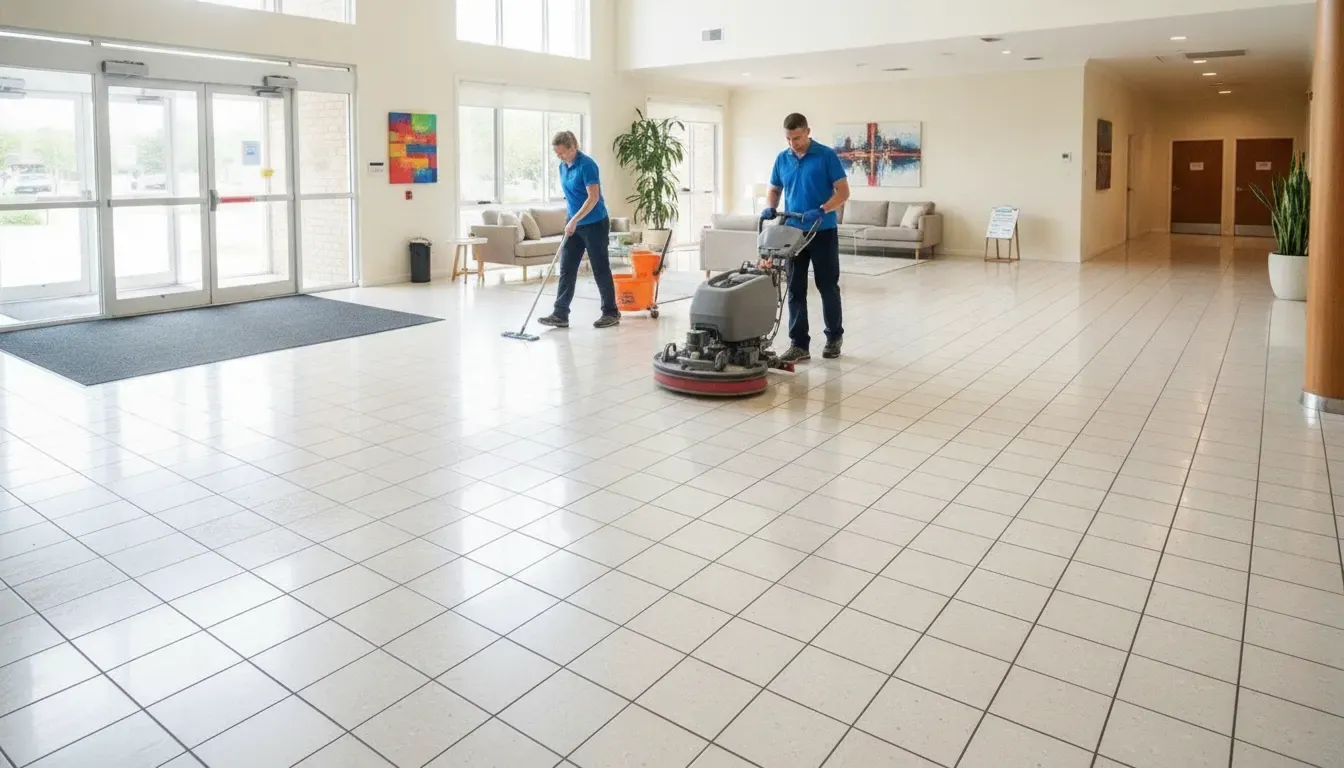
A commercial floor cleaning schedule should do more than assign a mop to a calendar. It should match each area of your facility to its floor type, traffic, soil level, operating hours, and maintenance needs. A practical plan helps your team prevent buildup, respond to spills, and know when routine care is no longer enough.
Request a commercial cleaning quote
A strong commercial floor cleaning schedule combines daily soil control, weekly detail work, monthly inspections, and periodic restorative care. Set the starting cadence by floor type and traffic, then adjust it when entrances, corridors, restrooms, or customer-facing areas show faster wear.
This guide focuses on building and managing that schedule for an office, retail store, or other commercial property in the Oklahoma City metro. For a broader look at service scope and provider questions, review Maid OK's commercial floor cleaning guide and commercial cleaning and janitorial services overview.
What should a commercial floor cleaning schedule include?
A useful schedule separates prevention, routine cleaning, inspection, and restoration. It also assigns each task to a zone and a responsible person or service team. That structure keeps high-traffic areas from being treated like quiet offices and prevents periodic floor care from disappearing behind daily work.
Four layers of floor maintenance
- Immediate response: Address spills, tracked-in moisture, and visible hazards as soon as they are reported.
- Daily soil control: Remove loose grit, dust, and debris from entrances, corridors, and other busy areas.
- Routine detail work: Mop, vacuum, scrub, and inspect areas according to their surface and use.
- Periodic care: Schedule grout cleaning, machine scrubbing, buffing, carpet extraction, or finish work when the floor condition calls for it.
The schedule should also identify who provides products and equipment, where access is permitted, how wet-floor warnings are handled, and how an unfinished task is reported. Clear ownership matters whether the work is completed by in-house staff, a janitorial team, or a combination of both.
How do you set the right cleaning frequency?
Begin with the busiest zone, not the average room. Entrances, checkout lanes, corridors, elevators, restrooms, and break rooms usually collect more soil than private offices or storage areas. Then consider the floor material, weather exposure, customer traffic, delivery activity, and the hours when cleaning can occur without disrupting work.

Map the building into cleaning zones
Walk through the facility and divide it into practical zones. A retail property may need separate plans for the front entrance, sales floor, fitting areas, checkout lanes, employee areas, and restrooms. An office may use zones for the lobby, corridors, conference rooms, kitchens, restrooms, work areas, and lower-traffic rooms.
For each zone, record the floor material, approximate traffic, visible soil, spill risk, preferred service window, and current problem areas. This simple map gives a cleaning provider or facilities team enough information to recommend different frequencies instead of applying one routine to every square foot.
Use condition signals to adjust the plan
Set a starting cadence, then inspect the result after several service visits. Increase attention when you see dull traffic lanes, recurring residue, darkening grout, sticky spots, tracked-in grit, or moisture that remains near entrances. Decrease or reassign work only when the area consistently meets the expected standard and the change does not create a new problem elsewhere.
Weather can change the workload quickly in the Oklahoma City area. Rain, mud, wind, and road dust may require more frequent entrance attention, mat care, and spot cleaning. A flexible schedule is more useful than a fixed promise that ignores the conditions outside the building.
Daily commercial floor cleaning tasks
Daily work protects the floor before soil becomes embedded. It should focus on entrances, high-traffic paths, visible spills, and any area that affects safety or the first impression of the business. A daily checklist also gives the next shift a clear handoff instead of relying on memory.
Start with entrances and mats
Inspect exterior approaches, entry mats, vestibules, and the first section of flooring inside the door. Remove loose grit, check for tracked-in moisture, and clean or vacuum mats as appropriate for their material. Mats cannot trap soil indefinitely, so the schedule should state when they are cleaned, moved, replaced, or escalated for attention.
Remove dry soil before wet cleaning
Dust mop, sweep, or vacuum before damp or wet cleaning. Dry soil left on the surface can spread during mopping and may contribute to abrasion under foot traffic. Select tools that collect debris without scattering it into occupied areas, and adapt the process to the floor finish.
Handle spills and visible spots promptly
Make spill response part of the daily routine, not an optional add-on. A schedule should explain who reports the spill, who places a warning sign when needed, which team handles cleanup, and how the area is checked before it returns to normal use. Prompt response supports a cleaner appearance and helps reduce avoidable slip risks.
Check the result before the space reopens
Use a short closeout check for wet areas, visible residue, missed corners, loose debris, and equipment left in a walkway. For after-hours service, the team leader or facilities contact can review the highest-priority zones before employees or customers arrive. Record exceptions so the next visit can address patterns rather than isolated complaints.
Weekly and monthly floor care tasks
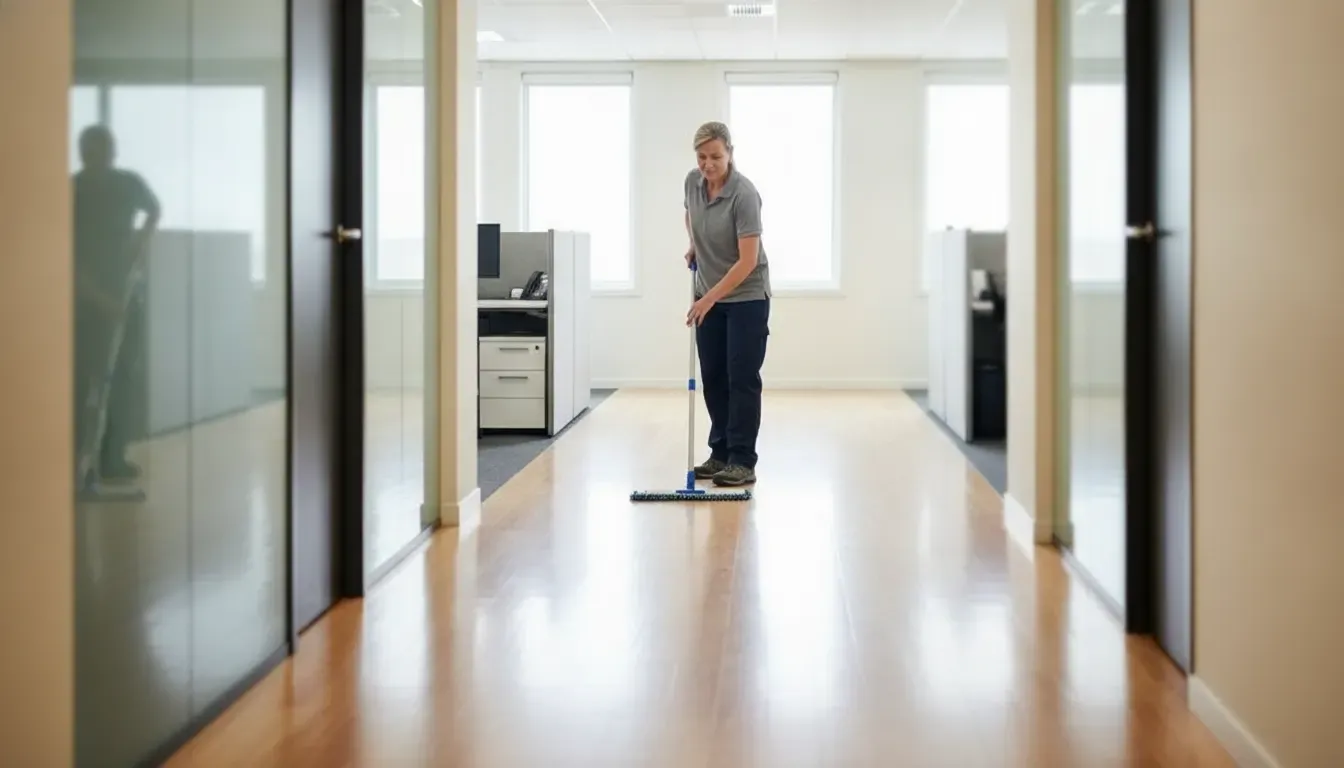
Daily cleaning controls loose soil, but weekly and monthly tasks address buildup and changing floor conditions. The exact cadence depends on the facility. A busy store may need more frequent machine work in entry and checkout zones, while a lower-traffic office may place more emphasis on inspection and targeted detail work.
Weekly tasks
- Inspect edges, corners, thresholds, baseboards, and areas behind movable fixtures.
- Detail grout lines, textured surfaces, and other places where routine mopping leaves soil behind.
- Clean under or around equipment when the area can be accessed safely.
- Review entry mats, spill patterns, and high-traffic lanes for signs that the daily cadence needs adjustment.
- Confirm that the right products, pads, tools, warning signs, and protective equipment are available.
Monthly tasks
- Review each zone's condition against the standard agreed upon for the facility.
- Schedule machine scrubbing, buffing, or targeted floor care where routine methods no longer restore the expected appearance.
- Inspect finishes for scuffing, dullness, residue, discoloration, or other changes that need a surface-specific response.
- Compare completed tasks with the service scope and note any access or scheduling problem.
- Discuss recurring issues with the cleaning team and update the plan when traffic, occupancy, or business hours change.
Monthly review is a good time to separate a cleaning problem from a floor-condition problem. More frequent mopping may not correct worn finish, damaged grout, poor mat placement, or a product that is not appropriate for the surface. Escalate those conditions instead of adding repeated work that does not solve the cause.
Request a commercial floor cleaning quote
When should you schedule deeper or restorative floor care?
Periodic floor care is appropriate when routine cleaning cannot restore the expected appearance or when the surface needs protection beyond daily soil removal. The trigger may be a condition signal, a seasonal change, a planned event, or a maintenance interval recommended for the specific floor and finish.
Common triggers for periodic service
- Traffic lanes remain dull or visibly different after routine cleaning.
- Grout, textured tile, or seams hold soil that regular mopping does not remove.
- Scuffs, residue, or embedded dirt return quickly after daily service.
- A renovation, move, event, or change in occupancy creates unusual soil or traffic.
- Rainy or windy conditions increase the amount of moisture and grit entering the facility.
- The floor finish needs inspection, buffing, recoating, sealing, or another specialized process.
Do not apply the same restoration method to every surface. Tile, VCT, sealed concrete, hardwood, and carpet each have different care requirements. A professional assessment should identify the material, finish, condition, equipment, products, drying needs, and service window before work begins.
Build seasonal checkpoints into the calendar
Seasonal checkpoints help a facility prepare for predictable changes. Before wetter periods, inspect mats, entryways, thresholds, and drainage paths. Before a busy season or major event, review customer-facing zones and decide whether an extra detail visit is needed. After the period ends, compare soil patterns and update the next cycle rather than returning automatically to the old schedule.
The goal is not to schedule every possible task in advance. It is to make the decision points visible so the property does not wait for a floor to look neglected before someone responds.
Sample commercial floor cleaning schedule
The table below is a starting framework for a commercial facility. Adapt it by zone, floor material, traffic level, and operating hours. A written plan should identify the exact areas included and the person responsible for confirming completion.
| Frequency | Priority work | Best fit | Review signal |
|---|---|---|---|
| As needed | Spill response, tracked-in moisture, visible hazards, and spot cleaning. | Entrances, restrooms, food areas, checkout lanes, and active work zones. | Any spill, hazard, or visible soil that affects use or presentation. |
| Daily | Mat care, dust removal, sweeping or vacuuming, damp cleaning, and closeout inspection. | High-traffic paths, customer-facing areas, corridors, and shared spaces. | Grit, residue, missed corners, wet areas, or recurring complaints. |
| Weekly | Edge and corner detail, grout or texture attention, under-equipment access, and supply review. | All zones, with extra attention to busy or hard-to-reach areas. | Soil remains after routine service or the zone is harder to reset. |
| Monthly | Condition review, targeted machine work, scope check, and schedule adjustment. | Traffic lanes, finishes, entry systems, and areas with recurring issues. | Dullness, scuffing, residue, wear, or a change in building use. |
| Periodic | Deep, restorative, or surface-specific care based on material and condition. | Floors needing specialized equipment, finish work, or a major reset. | Routine methods no longer achieve the facility's expected standard. |
This schedule works best when the cleaning scope is visible to everyone involved. Keep the checklist where the facilities contact and cleaning team can review it, and note exceptions instead of marking a task complete when the area was inaccessible. That record makes it easier to adjust service and explain what changed.
How can a business tell whether the schedule is working?
A schedule is working when floors remain consistently presentable, tasks are completed without disrupting operations, and recurring problems are addressed at their source. Use a short monthly review to compare the plan with what employees, customers, and the cleaning team are actually seeing.
Review these practical indicators
- High-traffic areas can be reset without repeated emergency cleanups.
- Entrances remain orderly after normal weather and customer activity.
- There is less visible residue, tracked-in grit, and recurring spot buildup.
- Periodic floor work is planned before condition problems become urgent.
- Staff know how to report spills, access issues, and unfinished tasks.
- The service team can explain what was completed and what needs follow-up.
If the same issue appears repeatedly, change the plan rather than simply reminding people to work harder. The right adjustment may be a different frequency, a better mat strategy, a new service window, a surface-specific method, or a clearer division of responsibilities.
Maid OK provides commercial janitorial service for Oklahoma City area businesses, including floor care, office cleaning, and restroom cleaning. A tailored program can account for your facility's layout, traffic, floor surfaces, operating hours, and priorities. See the commercial janitorial service page to review the available service path.
Talk with Maid OK about a commercial floor cleaning schedule
Frequently Asked Questions
How often should commercial floors be professionally cleaned?
Professional cleaning frequency depends on floor type, traffic, soil, weather, business hours, and the condition of the surface. Many facilities use daily soil control, weekly detail work, monthly inspections, and periodic deep or restorative care. A walkthrough can identify which zones need more attention and which can follow a lighter routine.
What is included in daily commercial floor cleaning?
Daily work may include checking mats and entrances, removing loose dirt, sweeping or vacuuming, damp cleaning, responding to spills, and inspecting the area before employees or customers return. The exact tasks should be written by zone so high-traffic paths receive the attention they need.
Should every area in a commercial building use the same schedule?
No. Entrances, corridors, restrooms, checkout areas, and break rooms usually experience different traffic and soil levels from private offices or storage rooms. A zone-based schedule allows the facility to assign more frequent care where it is needed without over-cleaning every area.
When does a floor need deep or restorative cleaning?
Consider deeper care when routine service no longer removes visible soil, traffic lanes remain dull, grout holds buildup, residue returns quickly, or the floor finish needs specialized attention. The method should be selected for the material and condition rather than copied from another floor.
Can a commercial cleaning company work around business hours?
Yes. A cleaning plan can be arranged before opening, after closing, or during another agreed service window. Discuss access, alarms, security procedures, busy periods, drying time, and the best contact for schedule changes before service begins.
Need a hand with the actual cleaning? Get a free Maid OK quote.