Commercial Cleaning and Janitorial Services Guide

Choosing commercial cleaning and janitorial services is a business decision, not just a facilities task. The right provider should make the work clear, fit service around operating hours, and protect customer-facing spaces.
Request a commercial cleaning quote
The best commercial cleaning and janitorial services combine a documented scope, an appropriate schedule, accountable cleaners, clear communication, and quality checks that match the facility. Before choosing a provider, compare what will be cleaned, when it will be cleaned, who supplies equipment, and how issues are resolved.
Maid OK is a family-owned cleaning company headquartered in Norman and serving commercial customers across the Oklahoma City metro. Its commercial service offering includes scheduled office cleaning, floor cleaning, and restroom cleaning. This guide helps business buyers prepare for a useful quote.
What do commercial cleaning and janitorial services include?
Commercial cleaning and janitorial services are scheduled cleaning programs for workplaces and other business facilities. A program may include routine cleaning on each visit, periodic detail work, restroom care, floor maintenance, trash removal, and agreed-upon supply support.
The exact scope should be based on the building rather than copied from a generic package. A strong proposal separates recurring tasks from periodic work.
It identifies the rooms included, the expected standard, visit frequency, supplies and equipment, and the person responsible for communicating changes.
- Work areas: Dusting accessible surfaces, vacuuming carpets, sweeping or mopping hard floors, and maintaining shared spaces.
- Restrooms: Cleaning fixtures and surfaces, maintaining floors, and clarifying replenishment responsibilities.
- Break rooms: Wiping counters, cleaning sinks, addressing floors, and clarifying how shared appliances are handled.
- Entrances and common areas: Maintaining high-traffic floors, reception areas, corridors, and other customer-facing spaces.
- Periodic detail work: Planning tasks such as deeper floor care, baseboards, or less frequent areas separately when needed.
This level of detail makes the service easier to evaluate. It also prevents important responsibilities from being assumed but never documented.
Start with the facility's needs, not a one-size-fits-all package
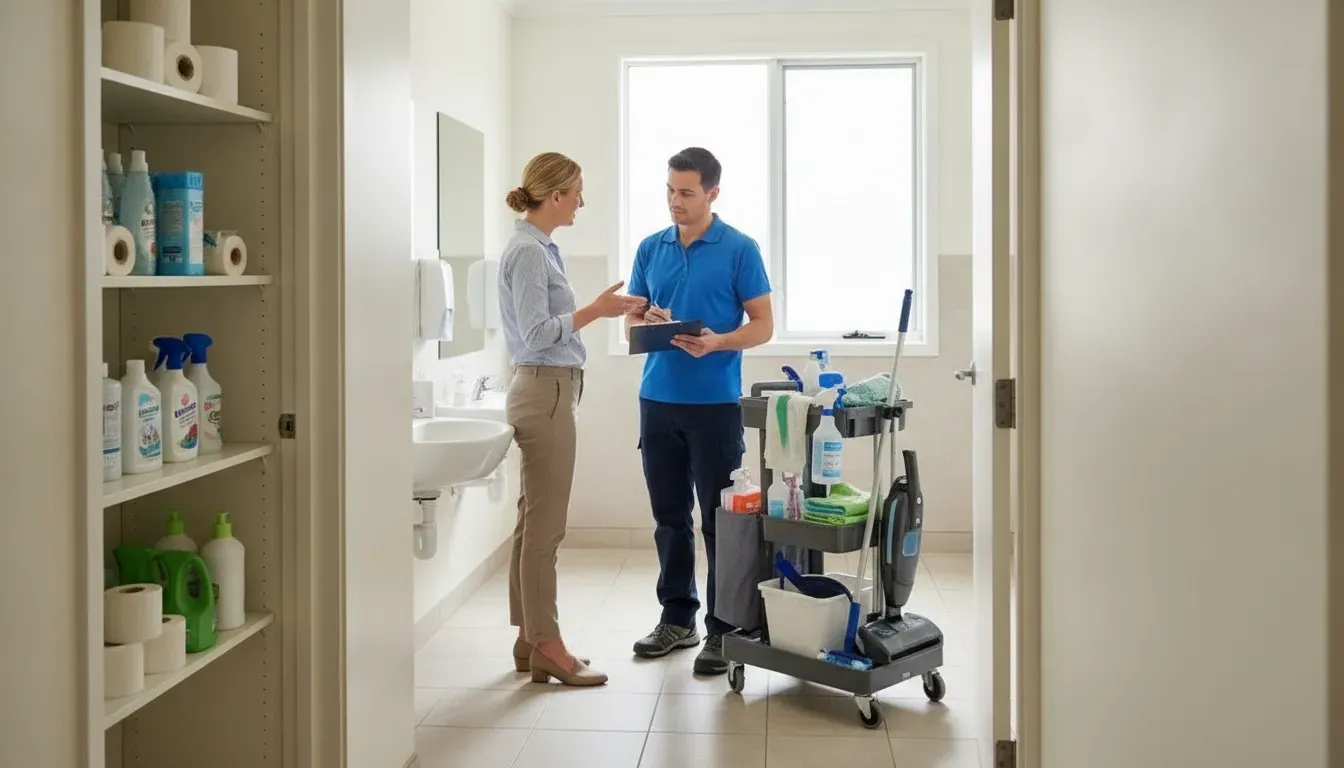
Before contacting providers, walk through the facility as a buyer. Note the spaces that affect employees and visitors most, where traffic is highest, which surfaces require special care, and when cleaners can work without disrupting the business. A practical office cleaning checklist can help organize the conversation.
Record the details a provider will need to prepare a useful quote:
- Approximate square footage and number of floors
- Number and type of restrooms
- Floor surfaces such as carpet, tile, vinyl, or sealed hard flooring
- Break rooms, kitchens, reception areas, conference rooms, and shared spaces
- High-traffic or high-touch zones that need extra attention
- Preferred service windows and after-hours access options
- Supply closets, access procedures, alarm requirements, and security restrictions
- Upcoming events, seasonal demands, or periodic cleaning needs
For a retail location, include entrances, customer pathways, checkout areas, fitting areas, and other spaces visible to shoppers. For an office, include workstations, meeting rooms, kitchens, restrooms, and shared corridors.
It also helps to separate must-have tasks from nice-to-have improvements. Must-have work protects daily operations, employee comfort, and the public areas customers see. Nice-to-have work may include periodic detail cleaning that can be scheduled around budget, occupancy, or seasonal needs. This distinction gives a provider useful priorities without turning the first quote into an unmanageable wish list.
Ask for assumptions to be written down. For example, a proposal may assume that desks are clear, a room is unlocked, or a manager supplies paper products. Those details can change the result even when the cleaning team follows its task list. A clear scope gives everyone a fair way to discuss what happened and what needs to change.

How often should a business schedule janitorial service?
There is no universal answer. Service frequency should reflect traffic, occupancy, restroom use, customer expectations, floor conditions, and the amount of cleaning your internal team can safely handle between visits.
A low-traffic office may need a different schedule from a busy retail space. One building may also need different frequencies for restrooms, floors, and private work areas.
Use these questions when discussing frequency with a provider:
- How many people use the facility on a typical day?
- Do customers or members of the public enter the space?
- How quickly do restrooms, entrances, and floors show visible use?
- Does the business operate seven days a week or host occasional events?
- Can cleaning happen after closing, before opening, or during a quiet operating window?
- Which tasks must happen every visit, and which can be monthly, quarterly, or seasonal?
Many businesses benefit from a layered schedule. Routine cleaning can happen on each visit, while floor care and detailed work are planned at intervals that match the surfaces and traffic. This approach supports consistent upkeep without treating every task as equally frequent.
Ask how the recommended schedule would change if traffic increases or the business adds space. A useful plan should be adjustable without losing track of the original scope.
Discuss your facility's cleaning needs
How should you compare commercial cleaning and janitorial services?
Price matters, but it should not be the only comparison point. Two quotes can look similar while including different levels of service, communication, and accountability. Compare providers using the same questions so the decision reflects the full operating relationship.
| What to compare | What a strong proposal should explain |
|---|---|
| Scope | Rooms, recurring tasks, exclusions, and periodic work |
| Schedule | Visit frequency, service window, and how changes are handled |
| Quality control | Inspections, checklists, follow-up, and issue resolution |
| Supplies and equipment | What the provider supplies and what the business supplies |
| Communication | Primary contact, response process, and escalation path |
| Access | Keys, codes, alarms, closing procedures, and staffing changes |
Review the table with the person who manages the facility day to day. A business owner may focus on cost and contract flexibility. An office manager may focus on timing, access, and response speed. A property manager may need a scope that separates shared spaces from tenant areas. Bringing those priorities together before the quote reduces revisions later.
Do not compare proposals by price alone when one provider has left important work undefined. A lower number can look attractive if restroom frequency, floor maintenance, or periodic tasks are missing from the scope. Ask each provider to price the same core requirements, then consider service process and flexibility alongside the total.
Scope clarity
The proposal should state which rooms and tasks are included, what is excluded, and how periodic work is handled. Look for language that a manager can use to check whether the agreed service occurred.
Team consistency and access
Businesses often care who enters the building, especially when cleaning occurs before opening or after closing. Ask how the provider handles team assignments, keys, codes, access logs, and changes in staffing.
Quality control
Ask how the provider checks completed work and how a concern is documented. A checklist, supervisor review, inspection process, or follow-up procedure gives the buyer a clearer standard than a general promise of quality. Maid OK highlights a 49-point inspection and a 100% satisfaction guarantee as part of its service approach.
Supplies and equipment
Clarify what the provider brings, what the business must supply, and how specialty equipment or products are handled. Maid OK states that supplies and equipment are provided for its cleaning services. Confirm whether the commercial proposal includes the specific floor or restroom needs in your building.
Communication and issue resolution
Ask who receives requests, how concerns are acknowledged, and what happens when a task is missed. Maid OK promotes a 48-hour resolution promise for service concerns, subject to the service terms.
Flexibility
Offices add employees, retail locations adjust hours, and seasonal activity can affect traffic. Ask whether the provider can modify the schedule, add a periodic task, or update the scope through a clear process.
What questions should you ask before accepting a janitorial quote?
A short conversation before booking can reveal whether a provider understands the facility. Consider asking:
- Which areas are included in the recurring scope?
- Which tasks are completed on every visit?
- Which tasks are periodic, and how are they scheduled?
- What service frequency do you recommend for this building, and why?
- Who provides cleaning supplies, equipment, paper products, and other consumables?
- How do you protect access information and coordinate after-hours entry?
- How is completed work checked?
- Who should the manager contact with a service concern?
- Can the scope change if the facility's traffic, hours, or layout changes?
- What is included in the quote, and which requests require a separate estimate?
These questions turn a broad request for cleaning into a plan that both sides can understand. A provider that asks thoughtful questions about the building is better positioned to create a useful scope than one that quotes without seeing or discussing the facility.
How do commercial programs differ for offices and retail spaces?
The same provider may serve different business types, but the cleaning priorities are not identical. An office program may emphasize work areas, conference rooms, kitchens, restrooms, and a quiet after-hours schedule.
A retail program may place more weight on entrances, customer pathways, visible floors, fitting areas, and opening-time readiness. Ask for the proposal to reflect how customers and employees use the space.
If some areas are rarely occupied while others receive constant traffic, a thoughtful plan should account for that difference. The goal is to direct time toward the places that affect the business most, while keeping essential maintenance from being overlooked.
For facilities with hard flooring, discuss surface-specific maintenance rather than treating every floor the same. Maid OK provides commercial floor cleaning, and its commercial floor cleaning guide can help a business prepare questions about carpet, tile, vinyl, and other surfaces. The commercial restroom cleaning plan guide offers another way to organize restroom discussions.
What makes a commercial cleaning relationship dependable?
Dependability is visible in the details between visits. The provider should know the agreed scope, arrive within the planned service window, communicate when circumstances change, and give the manager a straightforward way to request help.
Before choosing a provider, look for evidence of an organized service process:
- A written scope that names spaces and recurring tasks
- A clear contact for schedule changes and concerns
- A reasonable plan for access, keys, codes, and closing procedures
- Quality checks that can be explained to the facility manager
- Transparent treatment of periodic tasks and additional requests
- A service area and schedule that fit the business
Reliability also depends on a realistic handoff. The manager should know what to do before the first visit, how cleaners will enter, where supplies belong, and how a schedule change is approved. The provider should know who can authorize additional work and who should receive follow-up messages. Simple ownership rules prevent small questions from becoming missed tasks.
Ask how the relationship is reviewed after service begins. A short check-in can identify whether the visit window works, whether priorities were understood, and whether the scope needs adjustment. This is especially useful during the first few weeks, when the provider and facility team are learning the building's routines.
Maid OK was established in 1977, is locally owned, licensed, and insured, and serves businesses in the Oklahoma City metro from its Norman headquarters. Its commercial service page describes scheduled office cleaning, floor cleaning, restroom cleaning, supplies and equipment provided, no contracts, and a satisfaction guarantee. Confirm the exact terms, scope, and schedule in the commercial quote for your facility.
How should you prepare for a commercial cleaning quote?
Gather basic facility information before contacting a provider. If possible, walk the building during normal operating hours and identify the spaces that need attention most often. Note access limitations, preferred cleaning windows, current pain points, and work your employees already handle.
During the assessment, be direct about what success looks like. You might need consistently clean restrooms, presentable floors before opening, fewer interruptions during business hours, or a dependable schedule for shared spaces.
After the assessment, review the proposal against your notes. Confirm the building, included spaces, frequency, access plan, supply responsibilities, periodic work, contact process, and quote assumptions. The best quote is not necessarily the longest document. It is the one that makes the service easy to understand and manage.
Request a commercial cleaning quote
Frequently asked questions
What is the difference between commercial cleaning and janitorial services?
Commercial cleaning is the broader category for cleaning business facilities. Janitorial services usually refer to recurring upkeep such as restrooms, floors, trash, shared spaces, and routine maintenance. Providers may use the terms differently, so compare the actual scope instead of relying on the label.
How do I choose commercial cleaning and janitorial services?
Choose a provider that can document the scope, recommend a schedule based on your facility. Explain quality checks, coordinate access, communicate consistently, and provide a quote that matches your business needs.
Can a janitorial service clean an office after hours?
Many commercial providers can schedule work before opening, after closing, or during another agreed service window. Confirm availability, access procedures, alarm requirements, and the communication process before booking.
What should be included in a commercial cleaning quote?
A commercial cleaning quote should identify the facility, included areas, recurring tasks, visit frequency, periodic services, supplies and equipment, access expectations, communication process, and pricing assumptions.
Does Maid OK provide commercial cleaning in the Oklahoma City area?
Yes. Maid OK is headquartered in Norman and provides commercial cleaning and janitorial services for businesses across the Oklahoma City metro. Including scheduled office cleaning, floor cleaning, and restroom cleaning. Request a quote to discuss your facility's scope and schedule.
Need a hand with the actual cleaning? Get a free Maid OK quote.